
Leia a noticia completa
Minister Dias Toffoli, of the Federal Supreme Court (STF), voted this Thursday (11) so that providers have 60 days to implement the measures determined by the court that increased the responsibility of platforms for the content they publish.
Toffoli is one of the rapporteurs of the 12 appeals presented by big techs and entities in the technology sector that ask for clarifications and adjustments to the decision.
Among other points, the companies ask that the rules be valid after a period of six months or only after the closure of all chances of appeals in court.
Toffoli understands that the rules should already be applied two months after the analysis of the appeals by the Supreme Court.
This applies to the adoption of so-called duty of care actions (measures to reduce the risk of offenses against fundamental rights and combat illicit acts), self-regulation and the provision of specific service channels for withdrawal requests. contents.
Now on g1
The minister also proposes that the thesis of corporate responsibility should be applied to actions presented to the Court from June 27, 2025, when the minutes were published with the result of the Supreme Court's judgment that expanded the duties of providers.
Toffoli proposed adjustments to the thesis set by the STF last year, but the vote preserves the platforms' obligations, demanding more actions against cases involving anti-democratic crimes, terrorism, incitement to racism and induction of suicide, in addition to punishment in case of systemic failure.
Adjustments
The minister highlighted that the Supreme Court authorized companies to adopt the necessary measures to guarantee the duty of care, ensuring agility for analysis and removal of content.
Toffoli highlighted that the deadlines of 24 hours for removal and 7 days for analyzing notifications are reasonable, considering the peculiarities of the specific case.
The so-called additional duties will be charged to providers with more than 1 million registered users in Brazil.
Toffoli maintained the requirement for headquarters and representative in the country for providers operating in Brazil. Initially, the judge wanted to restrict the obligation to providers with "economic activity in Brazil".
The minister also clarified that the provider will also be responsible for unjustified omission in removing content after notification, responding together with the author of the post.
Extrajudicial notification requires identification of the offensive content and proof that the request is made by the party involved.
The minister argues that the responsibility of neutral providers, therefore, those who have low or little interference in the communication flow, is subject to need for a court decision. This would apply, for example, to Wikipedia, which does not promote content.
Toffoli rejects Facebook's request to include in the thesis the expression clearly intended to analyze illicit or criminal content. The company claimed that this would make a distinction between clear and more complex cases.
The minister understood that this would affect the Supreme Court's understanding of accountability.
STF decision
STF increases the responsibility of digital platforms for what they publish
In June last year, by 8 votes to 3, the STF declared the partial unconstitutionality of article 19 of the Marco Civil da Internet. The plenary analyzed two appeals that discussed the validity of this section of the rule.
The article says that "the internet application provider can only be held civilly liable for damages resulting from content generated by third parties" if, after a court order, it "does not take measures" to remove the content.
The majority of the Supreme Court established as a general rule that digital platforms are responsible for the content published by the user and must be held responsible if they do not remove illicit posts or criminals.
Institutional
Toffoli came out in defense of the STF's understanding.
The minister stated that the court provided an institutional response to an issue that concerns Justice and Legislatures around the world.
"We were very balanced in unanimously establishing this thesis. It is not about censorship, as some claim. Anyone who had content removed as determined by the platform can go to court to have it reinstated. And this will not generate compensation for the platform. It is the model of checks and balances in this new world that we are living and experiencing", he stated.
The rapporteur also highlighted that there is no imposition for the removal of content and that platforms can make their assessments. He also said that companies will be liable for material and immaterial losses when negligence or omission in the removal of illegal content that has already been notified is proven.
Toffoli stated that providers cannot create requirements that are not provided for by law to receive notification to remove content, such as identifying the material identified as infringing and being involved in the case. of its notification, the provider is liable for the material and immaterial losses caused by its unjustified inertia or negligence, that is, by its legally relevant omission regarding the removal of the content", he said.
"Thus, if the illicit content continues to circulate driven by algorithms, and the fraudulent website continues to deceive and obtain undue advantage, or if the false profile continues to disseminate offenses, the already notified application provider starts to respond jointly with the agent who published the illicit content, or put the fraudulent website on the air, or created and makes use of the false profile due to the resulting losses", continued the minister.
The rapporteur pointed out that the rules defined by the Supreme Court have come into effect since the publication of the minutes with the result of last year's trial, therefore, the companies' liability would already be valid. suffered." This is a paradigmatic change with great practical impact.
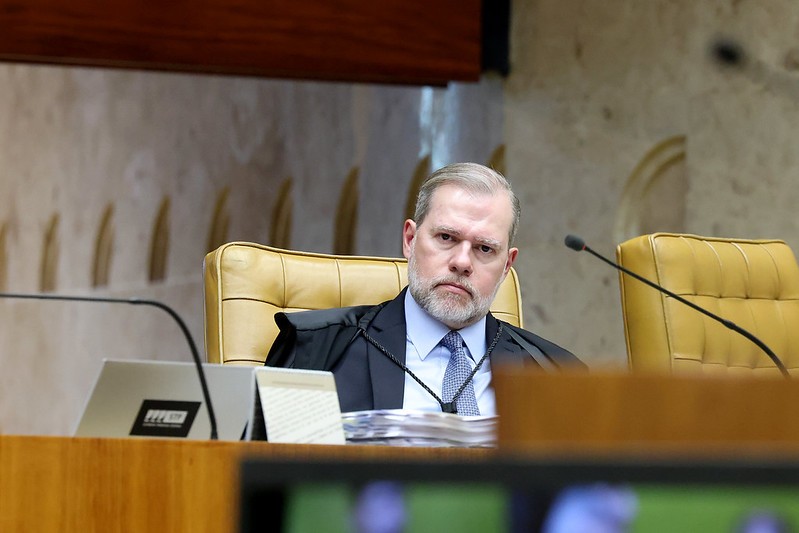
Minister of the STF Dias Toffoli
Luiz Silveira/STF
Source: G1



Toque agora.
As músicas que o Mundo está tocando agora
-
1
 Balancê
Sara Tavares
Balancê
Sara Tavares
-
2
 Majestade
Carlos A. Moyses
Majestade
Carlos A. Moyses
-
3
 It's A Great Day (for Me To Whoop Somebody's Ass)
Paul Thorn
It's A Great Day (for Me To Whoop Somebody's Ass)
Paul Thorn
-
4
 Paraíso
Danilo Santos
Paraíso
Danilo Santos
-
5
 Yesterday
Petula Clark
Yesterday
Petula Clark
-
6
 Maybe someday
The Cure
Maybe someday
The Cure
-
7
 Un Trocito De Cielo
Jaci Velasquez
Un Trocito De Cielo
Jaci Velasquez
-
8
 Call Me Up
Ezio
Call Me Up
Ezio
-
9
 Por Onde Anda Você?
Nina Fernandes
Por Onde Anda Você?
Nina Fernandes
-
10
 Con El Cielo
Hillsong Worship
Con El Cielo
Hillsong Worship
-
11
 Vem Com Teu Fogo
Adorazione
Vem Com Teu Fogo
Adorazione
-
12
 Excelente
Lucas Santos Tiago
Excelente
Lucas Santos Tiago
-
13
 Fake Amor
Melody
Fake Amor
Melody
-
14
 Rock And Roll In The Hay
Brad Cotter
Rock And Roll In The Hay
Brad Cotter
-
15
 Nunca Había Sentido Tanto Miedo
Alejandro Neri
Nunca Había Sentido Tanto Miedo
Alejandro Neri
-
16
 Hipnose
Manu Gavassi
Hipnose
Manu Gavassi
-
17
 Hey, Good Lookin'
Dean Martin
Hey, Good Lookin'
Dean Martin
-
18
 Augusta, Angélica e Consolação
Tom Zé
Augusta, Angélica e Consolação
Tom Zé
-
19
 Enquanto Cê Não Vem
Eu, Trovador
Enquanto Cê Não Vem
Eu, Trovador
-
20
 Pelo Teu Nome
Leonardo Campos
Pelo Teu Nome
Leonardo Campos
Historias das musicas em destaque
 Historia da musica
Learn to play Yesterday, by Petula Clark, and discover a beautiful classical interpretation
07/07/2026
Singer Petula Clark built a career marked by elegant interpretations and hits that spanned decades. His version of "Yesterday" presents...
 Historia da musica
Learn to play Call Me Up, by Ezio, and discover folk music full of personality
07/07/2026
The Ezio group is recognized for its compositions that combine folk, rock and sophisticated melodies. The song "Call Me Up" draws atten...
 Historia da musica
Learn to play Maybe Someday, by The Cure, and improve on the guitar
07/07/2026
Among alternative rock's most influential bands, The Cure has built a career full of memorable songs. "Maybe Someday" is one of the son...
 Historia da musica
Learn to play It's a Great Day for Me to Whoop Somebody's Ass by Paul Thorn
07/07/2026
With great humor and a vibe that mixes country, blues and rock, "It's a Great Day for Me to Whoop Somebody's Ass", by Paul Thorn, becam...
 Historia da musica
Learn to play Balancê, by Sara Tavares, and discover all the richness of Lusophone music
07/07/2026
Singer Sara Tavares marked international music with her unique identity, mixing African, Portuguese influences and contemporary sounds....
 Historia da musica
Learn to play Majestade, by Carlos A. Moyses, on the guitar with more emotion and technique
07/07/2026
Some songs manage to cross generations carrying messages of faith, hope and adoration. "Majesty", performed by Carlos A. Moyses, is one...
 Historia da musica
Learn to play Quem Você Exalta, by ExaltaSamba, on the guitar
07/07/2026
For those who like samba and pagode, "Quem Você Exalta", by ExaltaSamba, is a great song to develop new guitar skills. With a character...
 Historia da musica
Learn to play Con el Cielo, by Hillsong Worship, and strengthen your worship repertoire
07/07/2026
Hillsong Worship's "Con el Cielo" is an excellent choice for musicians who enjoy congregational worship and want to develop a solid gui...
 Historia da musica
Learn to play Por Onde Anda Você, by Nina Fernandes, and improve on the guitar
07/07/2026
The song "Por Onde Anda Você", performed by Nina Fernandes, conquers with the delicacy of the melody and the way it conveys feelings th...
 Historia da musica
Learn to play Para Só, by Danilo Santos, on the guitar with more emotion and technique
07/07/2026
If you're looking for an exciting song to expand your guitar repertoire, "Para Só", by Danilo Santos, is an excellent choice. The song...
Mais noticias para voce
 Noticia
09/07/2026
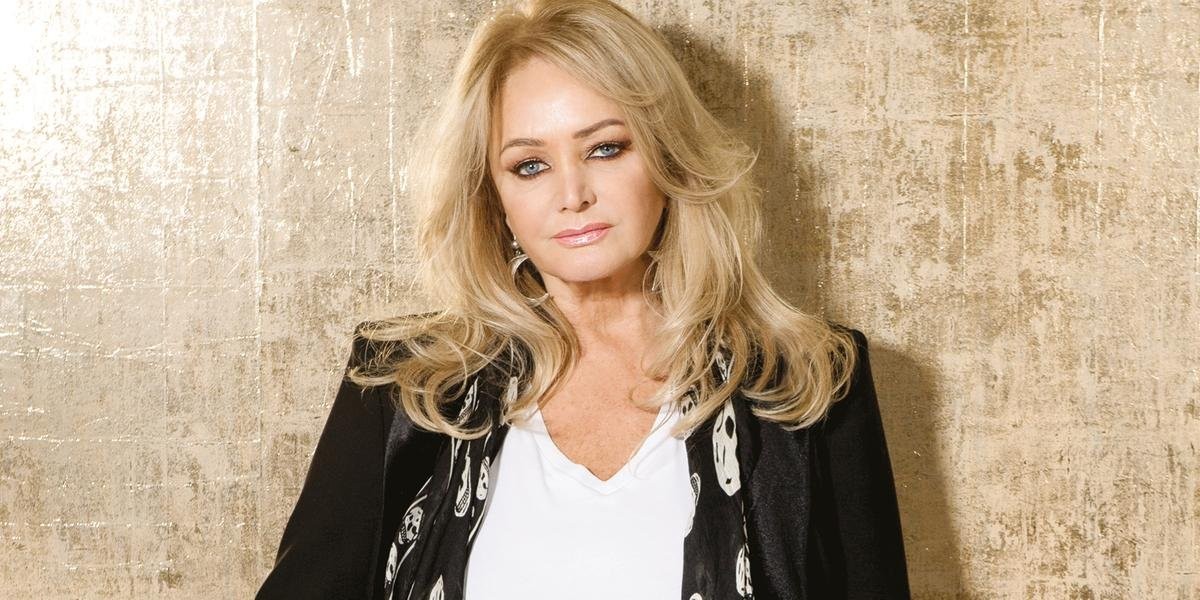
Who was Bonnie Tyler, singer who marked pop and rock in the 1980s
Singer Bonnie Tyler has died at the age of 75, according to an official statement published on her website. The Welsh woman had been hospitalized since May afte...
 Noticia
09/07/2026
Senate approves MP of R$15 billion for exporters, understand impacts on agriculture
Amid increasing international trade tensions, the Senate approved Provisional Measure (MP) 1,345/2026, which authorizes the Union to mobilize up to R$15 billion...
 Noticia
09/07/2026
FIFA refereeing chief rejects bias in Argentina vs Egypt
Fifa's head of refereeing, Pierluigi Collina, defended the referee's performance in Argentina's 3-2 victory over Egypt, in the round of 16 of the World Cup, rej...
 Noticia
09/07/2026
See how many Moroccan players could defend France in the World Cup
Morocco and France face each other this Thursday (9) in the quarter-finals of the 2026 World Cup. In the confrontation, part of the African team's squad could p...
 Noticia
09/07/2026
Asian stock exchanges close without a single direction as war unfolds
Asian stock markets closed without a single direction this Thursday (9), while investors assessed the latest developments in the Middle East. The Japanese Nikke...
 Noticia
09/07/2026
Latest from Corinthians: Filho do Terrão's new club, Diniz keeping an eye on the base and defender missing
By Meu Timão on 09 of July of 2026 at 07:30 Last Wednesday was not very eventful for Fiel. Revealed in the Corinthians youth categories, Gabriel Moscardo was an...
Participe da conversa
Seu comentario ajuda a manter a discussao viva e ainda convida outros leitores a continuar navegando pelo portal.
Seja o primeiro a comentar esta noticia.