
Leia a noticia completa
Dopamine sites: discover the platforms with the sensation of buying without spending
It has everything that exists in a traditional shopping site. You enter, choose products, read reviews, assemble a cart, reach the payment stage and monitor the delivery. But it never happens.
It could be a scam, but it isn't. The so-called "dopamine sites" reproduce the experience of an online store in almost every detail, except for the one that really matters: the purchase. You don't pay, but you don't get it either.
The name refers to dopamine, a neurotransmitter associated with reward and expectation mechanisms. It is linked to the sensations aroused during the consumption process.
On dopamine sites, the purchase does not happen, but the pleasure of buying, in a way, does. The proposal is to offer small doses of reward through digital experiences that imitate real situations.
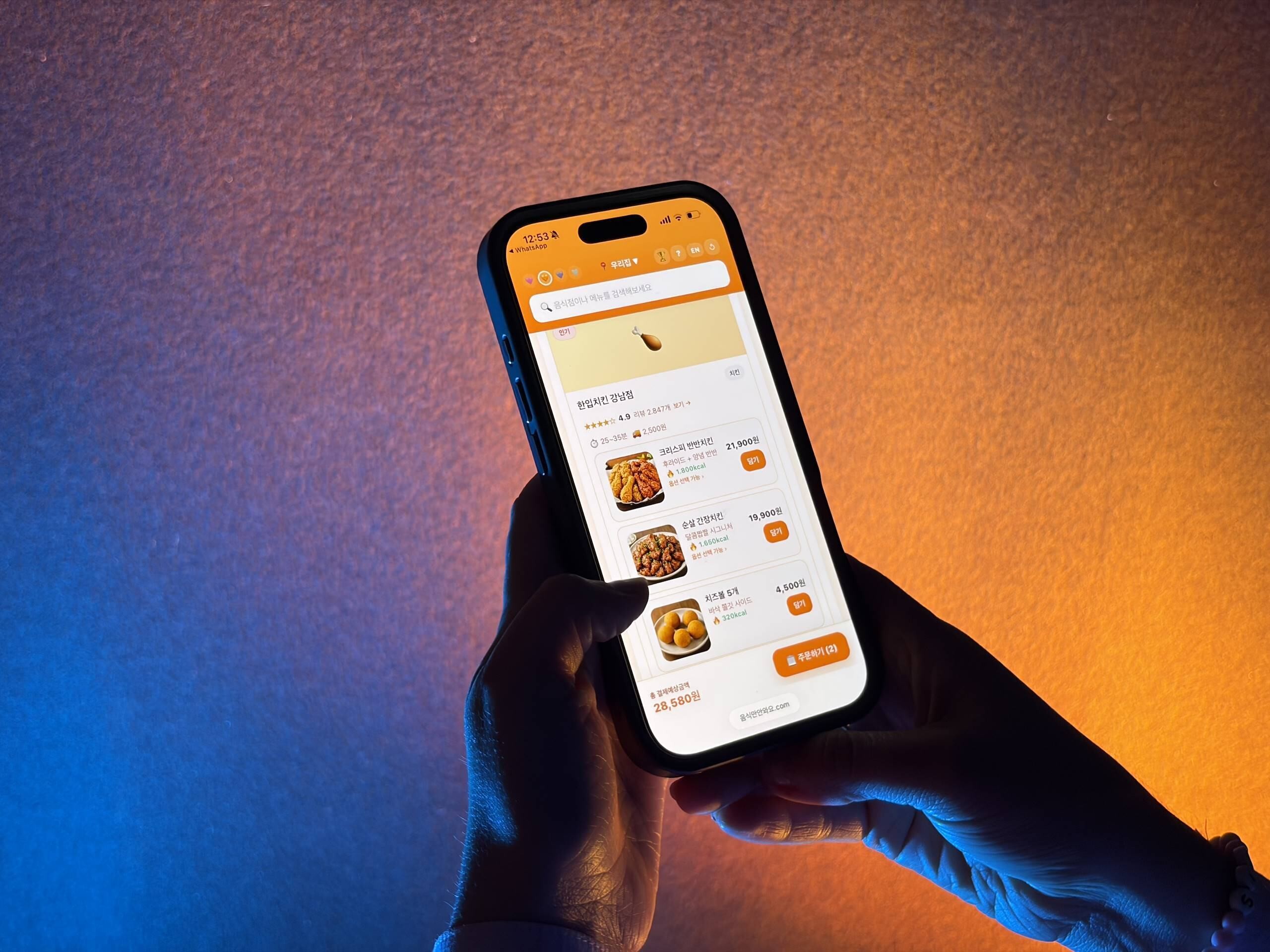
This trend first became popular in South Korea with experiences like Food Only Doesn't Come, a fictional version of food delivery apps.
The platform brings together menus, restaurants, star ratings and establishment rankings. The user can choose dishes, assemble the order and simulate delivery.
Kim, 25 years old, interviewed by the South Korean newspaper "The Korea Times" says that she usually accesses the website during the early hours of the morning, when she feels like ordering food, but prefers to avoid the expense.
"Often, I really want to eat in the early hours of the morning, but I end up not ordering to save money. It looks like a real delivery app, so I always end up looking (...) as I browse, my mood somehow improves a little", he said Kim to the newspaper.
Other platforms, such as Dopamine Shopping, reproduce the experience of an e-commerce, with categories such as clothing, electronics and cosmetics. There are coupons, discounts, recommendations, cart and even delivery tracking. Again: no purchases and no real deliveries.
For the psychologist specializing in impulsive consumption Tatiana Filomensky, the success of these platforms has an explanation: dopamine is not only present at the moment of achievement, but also in the anticipation. Researching, comparing prices and imagining the use of a product can already generate a feeling of reward.
Some questions remain: if part of the pleasure of consuming happens before the purchase, what changes when this feeling can be accessed without spending money? Can these platforms compete for space with traditional stores? And how do these sites make money if no one buys anything?
Below, explore this discussion from the following points:
What's behind dopamine sites
Is the phenomenon a threat to real stores?
The pleasure of shopping begins before payment
Shopping without buying can help you save?
Dopamine sites simulate purchases and deliveries
g1
What's behind dopamine sites
À At first glance, dopamine sites seem contradictory: they simulate the consumer experience, but they don't sell anything. But this vision is superficial.
Behind the light, almost innocent proposal, there is a model already known from the digital economy and increasingly valuable: observing, recording and interpreting user behavior.
Every click, product viewed, time spent on a page or access time leaves a trace. This information is not only used to record what the person has done, but also to predict what they might do.
"The most valuable thing is not knowing who you are, but how you act (...) it is the repeated habits, often unconscious, that help platforms predict what you will want", explains digital marketing professor Alexandre Marquesi.
This type of analysis allows you to identify behavior patterns. A person who accesses these platforms in the early hours of the morning, for example, may be more susceptible to certain offers at that time. Another, which compares products repeatedly, may be closer to a purchasing decision.
"It doesn't matter if you don't register your name on these sites.
It is possible to understand behavior even so, with IP, cookies and browsing time (...) all of this builds this user identification".
In practice, this opens up several business opportunities. The data can be used for targeted advertising, sale of ad space, more precise definition of audiences and even prediction of consumption trends.
Companies in the food, retail, education and technology sectors, among others, can use this information to better understand the moment of consumption, habits and preferences of consumers.
In addition, these platforms have direct sources of revenue. Some display advertising and establish partnerships, but in a discreet way, so as not to compromise the user experience.
In the case of Food Only Doesn't Come, one of the best-known examples, the website itself informs that it supports itself with advertisements, sponsorships and even donations. purchase.
platforms like Dopamine Shopping replicate e-commerce, with categories such as clothing, electronics and cosmetics.
Dopamine Shopping
Is the phenomenon a threat to real stores?
The logic of digital consumption has never been just rational. In addition to necessary purchases, e-commerce also depends on immediate impulses and desires. over the years. Notifications, flash discounts, personalized recommendations and one-click purchases are some examples.
Now, dopamine sites satisfy this momentary desire without the purchase happening. For Marquesi, the phenomenon can represent a threat to this specific e-commerce model.
"Everyone buys on impulse at some point (...) it's like going into the store hungry and buying things you don't need. In digital, the logic is the same (...) when something appears that reduces this impulse, final consumption may decrease."
For the expert, the problem goes beyond the loss of the sale. The risk is failing to access precisely the moment when the consumer is most susceptible to consumption.
Marquesi compares the situation to the experience of entering the supermarket hungry and leaving with much more than planned. If this impulse finds a shortcut - a way of being satisfied without spending -, it may stop turning into a purchase What's more: instead of just competing for the final sale, these platforms can compete for something even more valuable: understanding when, how and why someone decides to consume. In this scenario, whoever masters this information can influence everything else.
The trend became popular in South Korea with experiences like Food Only Doesn't Come
Food Only Doesn't Eat
The pleasure of shopping begins before payment
The idea that shopping gives pleasure is not new. manifests throughout the entire purchasing process. "Dopamine is much more linked to expectation than to the achievement itself", explains psychologist Tatiana Filomensky.
This means that the brain already reacts with a feeling of pleasure when imagining a situation. Thinking about a trip, for example, can be almost as pleasurable as taking it. specialist, this process already existed before the internet: it was a walk through the mall. The difference is that there were clearer limits, such as opening hours, the need to travel and tiredness.
In the digital environment, these barriers disappeared, and the experience became continuous.
The platforms, in turn, use different strategies to keep the consumer in this state of expectation.
Messages such as "last units", countdowns, abandoned cart alerts and suggestions such as "whoever bought this also got this" are not there by chance. According to the psychologist, these resources are designed to arouse emotions, especially urgency and fear of missing an opportunity.
"The shorter the time to think, the greater the chance that the person will buy", summarizes Tatiana.
In this context, reason loses space to impulse. And there are times when it tends to intensify, like at night.
"People are in a moment of rest, of leisure, and that feeling of 'I deserve it' arises. It works as a reward for a tiring day."
This combination creates an environment favorable to quick decisions, often made without planning.
Can shopping without buying help to save?
If, on the one hand, dopamine sites raise doubts about the impacts on retail, on the other they raise a question: do they Can they help with financial control?
According to Tatiana Filomensky, one of the guidelines for those who have difficulty controlling their purchases is precisely to place the product in the cart and wait, creating a gap between the desire and the decision.
"Create time between the desire and the decision (...) another guideline is to remove registered cards to reduce the risk of impulse purchases."
In this sense, these platforms can help to avoid expenses. But that's just one side of the issue.
The same mechanism that helps contain the impulse can also reinforce it. By encouraging the constant search for small doses of pleasure, these digital environments can keep people stuck in the habit of consuming, even without spending money, warns the expert.
There is also another relevant point: the feeling of emptiness at the end of the experience. On these sites, everything remains in the field of imagination. For some people, that's enough. For others, it can generate frustration or lose its charm over time.
According to Tatiana, those who don't have difficulties with consumption tend to gradually lose interest, because the experience can seem incomplete.
"There may come a time when a person thinks: 'ok, but nothing is enough'", he concludes.
Source: G1



Toque agora.
As músicas que o Mundo está tocando agora
-
1
 Balancê
Sara Tavares
Balancê
Sara Tavares
-
2
 Majestade
Carlos A. Moyses
Majestade
Carlos A. Moyses
-
3
 It's A Great Day (for Me To Whoop Somebody's Ass)
Paul Thorn
It's A Great Day (for Me To Whoop Somebody's Ass)
Paul Thorn
-
4
 Paraíso
Danilo Santos
Paraíso
Danilo Santos
-
5
 Yesterday
Petula Clark
Yesterday
Petula Clark
-
6
 Maybe someday
The Cure
Maybe someday
The Cure
-
7
 Un Trocito De Cielo
Jaci Velasquez
Un Trocito De Cielo
Jaci Velasquez
-
8
 Call Me Up
Ezio
Call Me Up
Ezio
-
9
 Por Onde Anda Você?
Nina Fernandes
Por Onde Anda Você?
Nina Fernandes
-
10
 Con El Cielo
Hillsong Worship
Con El Cielo
Hillsong Worship
-
11
 Vem Com Teu Fogo
Adorazione
Vem Com Teu Fogo
Adorazione
-
12
 Excelente
Lucas Santos Tiago
Excelente
Lucas Santos Tiago
-
13
 Fake Amor
Melody
Fake Amor
Melody
-
14
 Rock And Roll In The Hay
Brad Cotter
Rock And Roll In The Hay
Brad Cotter
-
15
 Nunca Había Sentido Tanto Miedo
Alejandro Neri
Nunca Había Sentido Tanto Miedo
Alejandro Neri
-
16
 Hipnose
Manu Gavassi
Hipnose
Manu Gavassi
-
17
 Hey, Good Lookin'
Dean Martin
Hey, Good Lookin'
Dean Martin
-
18
 Augusta, Angélica e Consolação
Tom Zé
Augusta, Angélica e Consolação
Tom Zé
-
19
 Enquanto Cê Não Vem
Eu, Trovador
Enquanto Cê Não Vem
Eu, Trovador
-
20
 Pelo Teu Nome
Leonardo Campos
Pelo Teu Nome
Leonardo Campos
Historias das musicas em destaque
 Historia da musica
Learn to play Yesterday, by Petula Clark, and discover a beautiful classical interpretation
07/07/2026
Singer Petula Clark built a career marked by elegant interpretations and hits that spanned decades. His version of "Yesterday" presents...
 Historia da musica
Learn to play Call Me Up, by Ezio, and discover folk music full of personality
07/07/2026
The Ezio group is recognized for its compositions that combine folk, rock and sophisticated melodies. The song "Call Me Up" draws atten...
 Historia da musica
Learn to play Maybe Someday, by The Cure, and improve on the guitar
07/07/2026
Among alternative rock's most influential bands, The Cure has built a career full of memorable songs. "Maybe Someday" is one of the son...
 Historia da musica
Learn to play It's a Great Day for Me to Whoop Somebody's Ass by Paul Thorn
07/07/2026
With great humor and a vibe that mixes country, blues and rock, "It's a Great Day for Me to Whoop Somebody's Ass", by Paul Thorn, becam...
 Historia da musica
Learn to play Balancê, by Sara Tavares, and discover all the richness of Lusophone music
07/07/2026
Singer Sara Tavares marked international music with her unique identity, mixing African, Portuguese influences and contemporary sounds....
 Historia da musica
Learn to play Majestade, by Carlos A. Moyses, on the guitar with more emotion and technique
07/07/2026
Some songs manage to cross generations carrying messages of faith, hope and adoration. "Majesty", performed by Carlos A. Moyses, is one...
 Historia da musica
Learn to play Quem Você Exalta, by ExaltaSamba, on the guitar
07/07/2026
For those who like samba and pagode, "Quem Você Exalta", by ExaltaSamba, is a great song to develop new guitar skills. With a character...
 Historia da musica
Learn to play Con el Cielo, by Hillsong Worship, and strengthen your worship repertoire
07/07/2026
Hillsong Worship's "Con el Cielo" is an excellent choice for musicians who enjoy congregational worship and want to develop a solid gui...
 Historia da musica
Learn to play Por Onde Anda Você, by Nina Fernandes, and improve on the guitar
07/07/2026
The song "Por Onde Anda Você", performed by Nina Fernandes, conquers with the delicacy of the melody and the way it conveys feelings th...
 Historia da musica
Learn to play Para Só, by Danilo Santos, on the guitar with more emotion and technique
07/07/2026
If you're looking for an exciting song to expand your guitar repertoire, "Para Só", by Danilo Santos, is an excellent choice. The song...
Mais noticias para voce
 Noticia
08/07/2026
Milei wants to imitate the USA and 'paralyze the State' if Congress does not approve the government's budget
In the Milei era, the numbers improve, but the new middle class continues to struggleThe president of Argentina, Javier Milei, announced this Tuesday (7) that h...
08/07/2026
PF and Navy seize drugs on vessel in the Atlantic with support from US agencies
The Federal Police (PF) and the Brazilian Navy carried out, on Tuesday (7), a joint operation against international drug trafficking in international waters, of...
 Noticia
08/07/2026
Citi, Morgan and Bofa join BTG in recommending the purchase of SpaceX
Citi, Morgan Stanley and Bank of America shared the same optimism regarding SpaceX (SPCX), initiating coverage of the aerospace company's shares with buy recomm...
 Noticia
08/07/2026
Glen Powell and Michelle Randolph embrace romance in 4th of July photos
Actor Glen Powell, 37, officially assumed his relationship with actress Michelle Randolph, 28, in an Instagram post last Tuesday (7). The publication, made to s...
 Noticia
08/07/2026
Brazilian soybeans are approaching R$140 per bag, the best price of the year
The global soybean market registered strong movement this week with direct impacts on the Port of Paranaguá (PR). A 60-kilo bag of Brazilian grain reached the b...
 Noticia
08/07/2026
CBF prevents Brasileirão Série A games without semi-automatic offside
The Brazilian Football Confederation (CBF) decided that Series A of the Brazilian Championship will not have games in stadiums that do not have semi-automatic o...
Participe da conversa
Seu comentario ajuda a manter a discussao viva e ainda convida outros leitores a continuar navegando pelo portal.
Seja o primeiro a comentar esta noticia.