Year of El Niño puts pressure on and causes inflation to rise, says economist
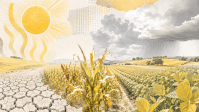
El Niño years tend to impose additional pressure on Brazilian inflation by affecting agricultural production and making fresh food, energy and other climate-sensitive items more expensive.
According to the chief economist and partner at G5 Partners, Luís Otávio Leal, in Brazil, projected inflation for 2026 is 5.3% due to the climate phenomenon.
Estimates indicate that food at home should rise 8% during the year, well above the full rate, reflecting the greater sensitivity of food to climate fluctuations.
In practice, this means that droughts, excess rainfall and productivity losses in the field tend to first contaminate the prices of basic items consumed at home, putting pressure on the cost of living and making it difficult for the IPCA to converge to the target.
The phenomenon, associated with the abnormal warming of the waters of the Equatorial Pacific, changes the rainfall and temperature regime in Brazil, causing droughts in some regions and excess precipitation in others, with a direct impact on harvests, logistics and production costs.
The magnitude of this effect already appears in market estimates and Central Bank analyses. Recent projections compiled by the monetary authority indicate that an El Niño cycle could add around 0.3 percentage points to the IPCA in the year in which the phenomenon occurs and another 0.4 points the following year, prolonging inflationary pressure even after the peak of climate effects.
The shock is spread mainly through food prices, which tend to react more quickly to crop failures, reduced supply and increased costs in the field.
In recent reports, economists from G5 Partners highlight that extreme weather events are gaining increasing importance in Brazilian inflationary dynamics, in a context in which the volatility of agricultural prices is added to uncertainties about energy, fuels and exchange rates.
Faced with this scenario, the Ministry of Finance revised its projections to consider a scenario in which inflation could exceed the target ceiling, precisely because of the additional pressure caused by the weather.
The episode reinforces how meteorological events are no longer just a risk for agribusiness and have started to play a central role in economic policy accounts, influencing both the cost of living and decisions about interest rates in the country.
Source: CNN