World Cup: what happens if the worker leaves his job to watch the game? See what the law says
World Cup: Brazil could have two more games on weekdays
The Brazilian team's qualification for the round of 16 of the 2026 World Cup increased fans' expectations. If they reach the final, the team led by Carlo Ancelotti will play four more matches until the title is decided.
The next one will be on Sunday (5), at 5pm, against Norway. But two others are scheduled for weekdays.
Do you have any suggestions for a report? Send it to g1
Even during games on Sundays - a day off for some workers -, many professionals will remain on duty, such as those who work in hospitals, airports, public transport, security and other essential sectors.
Labour legislation does not guarantee employees the right to leave work to watch the match.
Games are not considered holidays. Therefore, scheduled workers must work their shifts normally, unless there is authorization from the company, prior agreement or provision in a convention or collective agreement. (see how it works)
In cases of work on Sundays, the remuneration and any compensatory time off follow the rules of the Consolidation of Labor Laws (CLT) and, mainly, what is provided for in the category's conventions or collective agreements.
If Sunday is already part of the regular schedule and the weekly rest is granted on another day, there is no double payment just because it is a Sunday, unlike what happens on some holidays. (see how it works in these cases)
If you decide to release employees to follow the match, the company may adopt forms of compensation for the journey, as long as it respects applicable legislation and collective norms. In other words, this release depends on the employer's decision and is not a right guaranteed to the worker.
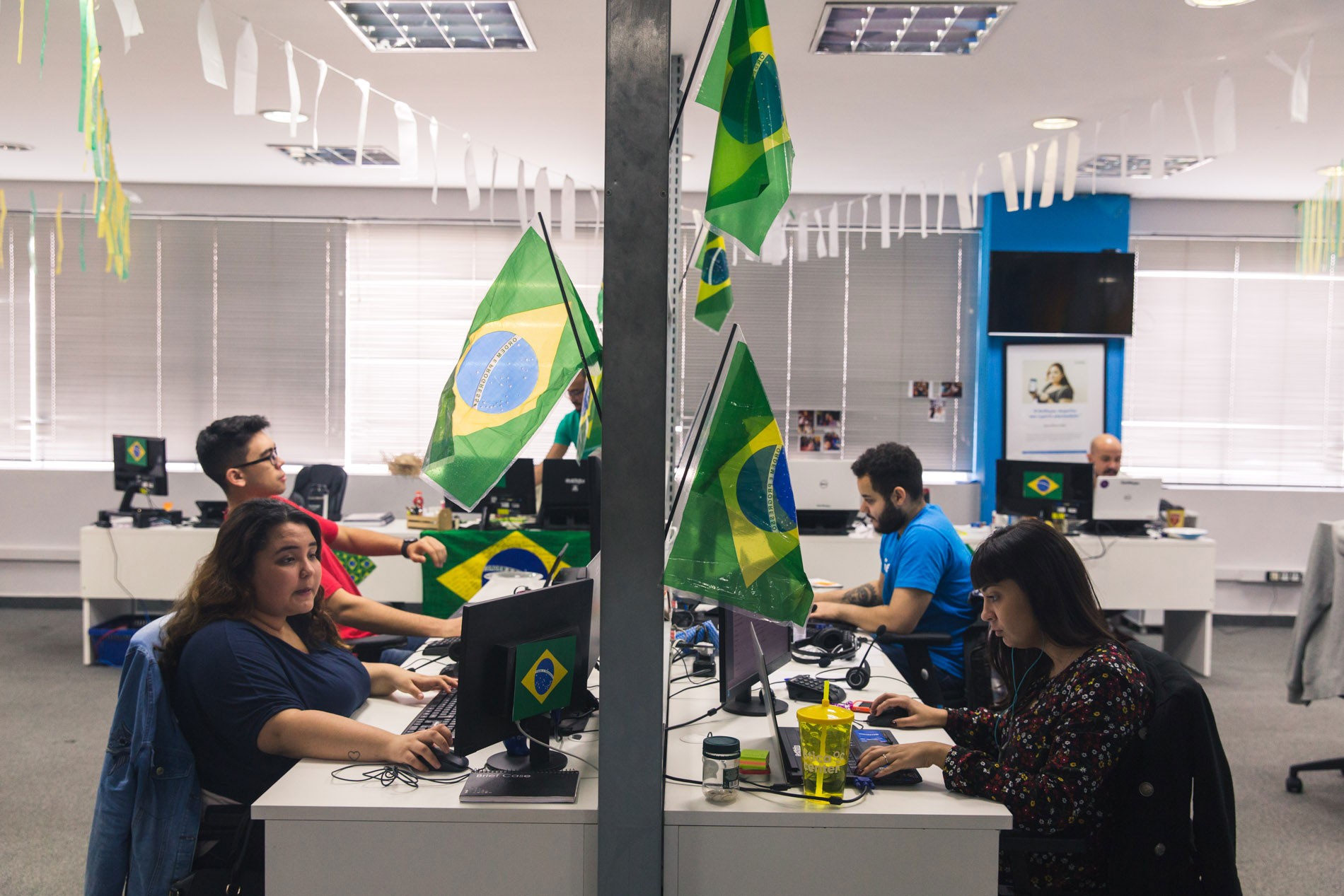
Employees work at the startup GetNinjas, which decorated the work environment for the World Cup games
Marcelo Brandt/G1
What happens to those who leave their job?
According to labor lawyer Malu Vieira Xavier, partner at the firm A.C. Burlamaqui Advocacia, an employee who leaves their position without authorization to watch the game You may suffer disciplinary penalties, such as a warning or suspension.
In more serious situations, the conduct may also result in dismissal for just cause. However, the expert emphasizes that this is the most severe penalty provided for in labor legislation and depends on the analysis of the circumstances of each case.
"Isolated conduct hardly justifies just cause. Factors such as the seriousness of the infraction, possible recurrence and the losses caused to the company are evaluated", says Malu.
The situation tends to be considered more serious in essential or continuously operating activities, such as hospitals, airports, public transport, security, energy supply and emergency services.
In these cases, abandoning the position may compromise service to the population or the continuity of the operation.
The lawyer highlights that the worker has the duty to fulfill the journey for which he was assigned. The company can make schedules more flexible, organize shifts or release part of the team to follow the match, if it considers this alternative viable.
Therefore, the recommendation is that any change in the journey be negotiated in advance with the employer. The worker, in turn, must avoid being absent without authorization.
Brazilian team at the 2026 World Cup.
Reuters/Sam Navarro
Source: G1