World Cup 2026: will the 'viral stars' be able to turn success on social media into fortune?
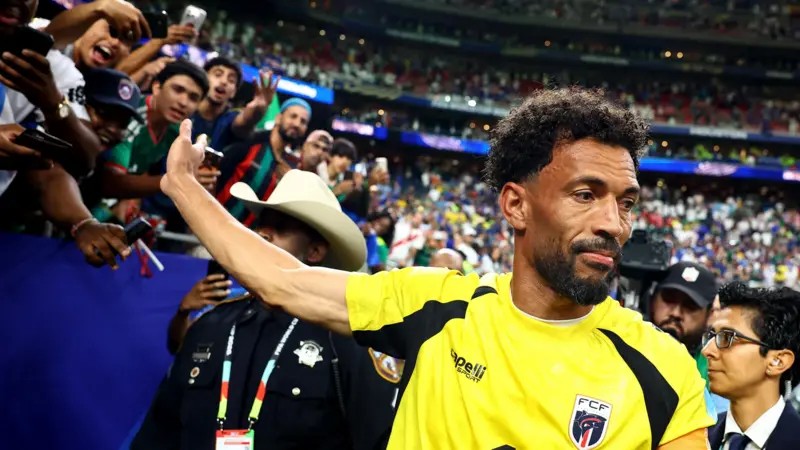
Goalkeeper Vozinha, from Cape Verde, already has more than 17 million followers on Instagram
Reuters
It took just 90 minutes for Vozinha, the 40-year-old Cape Verdean goalkeeper, to become a global sensation, with more followers on Instagram than American football legend Tom Brady.
Vozinha's impressive performance against Spain in the group stage of the World Cup led his team to a 0-0 draw with a of the tournament's favorite teams - a result celebrated as a victory by the Cape Verdeans.
Favorite g1 on Google and follow the main news of the day
The huge surprise caused the Cape Verde goalkeeper's 50 thousand followers on Instagram to skyrocket to 17.5 million, surpassing athletes like Brady, with 15.5 million.
World Cup stars like Vozinha have the opportunity to take advantage of their newfound fame on social media to generate lucrative opportunities financial.
Now on g1
But, for communications specialist Mike Serazio, this possibility may be fleeting.
"It's viral", he explains. "It grows very quickly and falls just as quickly."
Professor of social networks and digital communications Brooke Duffy, from Cornell University in the United States, says that influencers with millions of followers can receive payments that exceed six figures.
Their prominent presence on social networks can generate partnerships with brands and sponsors who pay for individual posts.
"Followers are a form of currency that is important today", explains Duffy. "More followers often translate into higher income."
Another path to stardom
New Zealand's Tim Payne during the match against Belgium in the first round of the 2026 World Cup
EPA/Shutterstock via BBC
Before the start of the tournament, New Zealand defender Tim Payne earned the nickname of the World Cup's "least known player" thanks to an Argentine influencer.
Valen Scarsini is known on the internet as "elscarso". He shared a video calling on hundreds of thousands of followers to promote Payne's profile online.
Payne got involved in the campaign, posting more and interacting with the influencer.
And, in just a few days, the player went from around 5 thousand to close to six million followers on Instagram - more than the population of New Zealand itself, which is just over 5.3 million people, as the player himself highlights.
Unlike the case of Cape Verdean Vozinha, Payne's recent fame was not due to his performance on the playing field.
This is an increasingly frequent phenomenon in the sporting world, according to Mike Serazio. He is a professor at Boston College, in the United States, and has researched the connections between communication and sport.
"We have had, in the last five to 10 years, the rise of sports stars who are the result of marketing, of followers on social networks", he explains. "His fame is not proportional to his sporting talents."
Serazio highlights that any player who makes it to his country's national team has great talents. But, in the past, athletes needed to be among the best to do commercials on television or appear on product packaging.
"You simply don't need mass communication like you used to and athletes understand that," continues the professor.
"Athletes go to social media and use it with the ambition of cultivating followers, getting contracts with brands, making money and leveraging their popularity."
Will fame last after the World Cup?
Serazio believes that going viral directs the direction of the audience sports.
"Your performance throughout the game matters less than having a single moment that works well, that reverberates in the viral confines of social media," he explains.
"The viral moment is a more valuable currency.
It matters more than the match itself."
The question is whether an athlete who participates in the World Cup and gains millions of new admirers can turn this success into a career beyond the four lines of the pitch.
"You have a window of attention there", continues the professor. "No one knew who Cape Verde's goalkeeper was... and I don't think they will know who he is after the World Cup is over."
"Messi, Cristiano Ronaldo, Neymar, Mbappé, "After they retire, they will still be able to get contracts," according to Serazio. These, according to him, are not "athletes who just have one big moment that can propel them beyond their career." Illustrated and came second on the TV series Dancing with the Stars. Maher also won the ESPY Award (the most important sports award in the United States) as Breakthrough Athlete of 2025.
For Duffy, there are long-term career opportunities for new social media stars. traditional, such as commercials on television.
"There are very few indications about what would be a reasonable income", continues the professor.
"These are individuals whose careers, until now, have been linked to football. So it's curious to imagine how they will cope with the variability of a nebulous ecosystem like the digital media economy."
The cultural capital of these viral World Cup stars is now at an all-time high. But what this means for the players' futures may depend on how they manage to keep their new admirers engaged after the tournament is over.
Source: G1