Without interaction between Lula and Trump in the G7, tariffs remain in the government's sights and reinforce the US pressure strategy
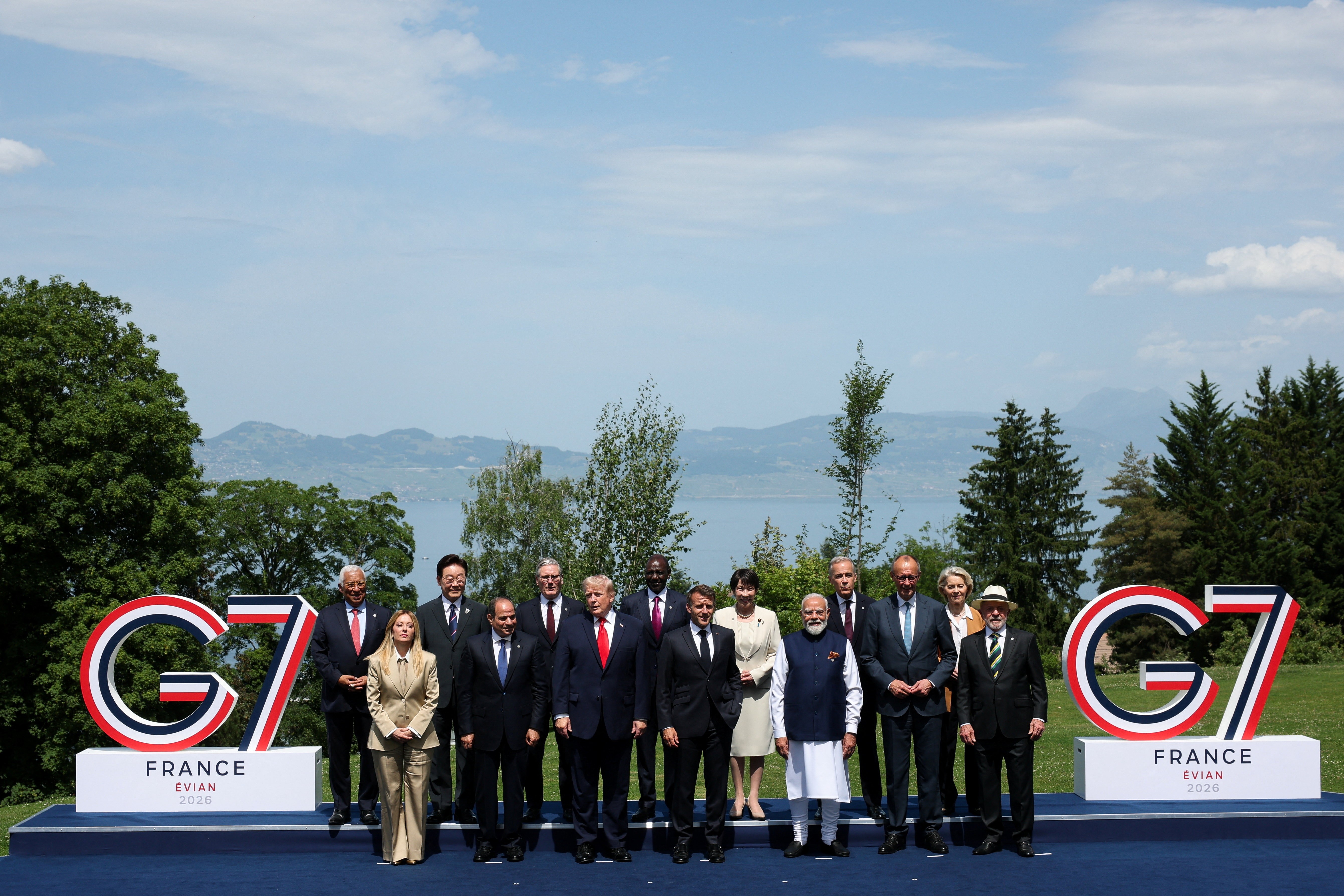
Lula and Donald Trump in a family photo at the G7 summit in Evián, France, on June 16, 2026.
Evelyn Hockstein/ Reuters
Negotiating the new tariffs imposed by United States President Donald Trump in early June is among the Brazilian government's main priorities.
There was an expectation that President Luiz Inácio Lula da Silva (PT) would arrange a meeting with the American leader at the G7 meeting, a group of the world's seven largest economies, held in France this week. Without public interactions between the two, however, negotiations continue only at ministerial level.
Do you have any suggestions for reporting? Send it to g1
The G7 brings together some of the world's main developed economies and discusses global issues, such as economy, conflicts, climate and security. Brazil is not part of the group, but can be invited to participate in meetings, as occurred at the current summit.
Brazil has been trying to negotiate the removal of tariffs since last year, when Trump announced the first import taxes on Brazilian products. There was a breakthrough in November 2025, when the White House decided to eliminate the 40% tariff applied to several items exported by the country.
Now on g1
The new 25% tariffs announced this month, according to the Brazilian government's assessment, is a measure of a more political than commercial nature. According to members of the government, the decision also ignores technical arguments presented by Brazilian commercial representatives in recent months.
But the measure follows a pattern adopted by Trump on other occasions: using tariffs as an instrument of pressure in commercial and diplomatic negotiations.
Strategy in favor of the USA
As g1 has already shown, the threat of tariffs is an old strategy of the American president in commercial and diplomatic disputes. The objective is to obtain advantages in bilateral negotiations.
In his two terms, Trump made it clear that one of his priorities is to strengthen domestic economic activity, limiting foreign competition.
In 2018, for example, Trump announced tariffs on imports of steel and aluminum, products exported by Brazil to the USA. Shortly afterwards, the two countries negotiated a quota system that allowed sales with exemption or reduction of tariffs up to a certain limit.
In the most recent episode, the American government stated that an investigation by the Office of Commerce (USTR) concluded that Brazil adopts practices considered "unreasonable" as they burden or restrict trade with the country. As a result, he proposed a 25% tariff on Brazilian products.
Why was Brazil the target of the investigation?
In a subsequent decree, Trump cited 60 countries - including Brazil - that failed to ban and monitor the import of goods produced with forced labor. As a consequence, it proposed an additional tariff of 12.5%, increasing the potential taxation on Brazilian products to 37.5%.
In both cases, however, the US published an extensive list of exceptions. In the Brazilian case, the products excluded from the measures represent around 60% of exports to the American market.
"In our assessment, the direct economic impact tends to be limited, since the list of exemptions remains extensive and covers a significant portion of Brazilian exports destined for the United States", stated analysts Luiza Paparounis and Francisco Lopes, from BTG Pactual, in a recent report.
Other examples around the world and the effects for the USA
Brazil is not the only US trading partner affected for tariffs. The European Union, China, Canada, Mexico and other countries were also targets of similar measures adopted by Trump.
In addition to alleging that these countries maintain unfair trade relations with the USA, Trump also resorted to different justifications to defend the tariffs, including combating drug trafficking, organized crime, illegal immigration, border security, digital commerce, corruption and even the Brazilian PIX.
"Trump uses this tariff issue as a weapon, and we have seen this several times.
In Brazil, when there was a clash with our judiciary, or in India, which continued to buy Russian oil", says Kelly Ferreira, director of the Faculty of International Relations at PUC-Campinas. of the Capital (PCC) as terrorist organizations would have an economic component, by giving Trump more flexibility to adopt new embargoes.
In several cases, the strategy was similar: the Republican announced tariffs, set deadlines for negotiation and sought to obtain competitive advantages, in addition to greater opening of markets for American industry.
Trump also stated, on several occasions, that tariffs would serve as a source of revenue for the government, help reduce public debt and strengthen the American economy.
The Republican was unable to fulfill these promises. Data from the US Treasury show that the budget deficit - when expenses exceed revenues - grew 2% and reached US$ 164 billion (R$ 827.1 billion) in March.
Consumer inflation rose 0.5% in May, the seventh consecutive increase in 12 months, the accumulated index reached 4.2%, more than double the American central bank's target. The country's GDP grew 1.6% in the first quarter, below market expectations. of 2%.
The feeling of deterioration in the American economy is also reflected in Trump's popularity, which has been falling since the beginning of last year.
What explains the crisis in the US president's popularity
What to expect going forward?
Even without a definition on the tariffs, the Brazilian government states that it intends to continue negotiations. Under American law, the formal investigation still needs to be completed and public consultations must take place before any measure comes into force.
President Lula stated that he would send a new letter to Trump for Trump. deal with the matter.
"Our fight is to ensure that this country is not treated at any time as if it were an insignificant republic. We have a lot of history and we cannot accept the treatment that the USA gave to Brazil this week. It's not possible," said the PT member after the announcement of the new rates.
With an extensive agenda and several relevant topics being debated in the G7, the meeting between Lula and Trump may not take place. Still, the expectation is that the Brazilian president will take advantage of the meeting to strengthen relations with other major economies and strengthen Brazil's ties with the European Union.
Source: G1