'Without a solution, the ball isn't rolling': teachers call for 100% increase in protests against the World Cup in Mexico
Police set up barriers during protesters' march near the World Cup stadium in Mexico.
REUTERS/Luis Cortes
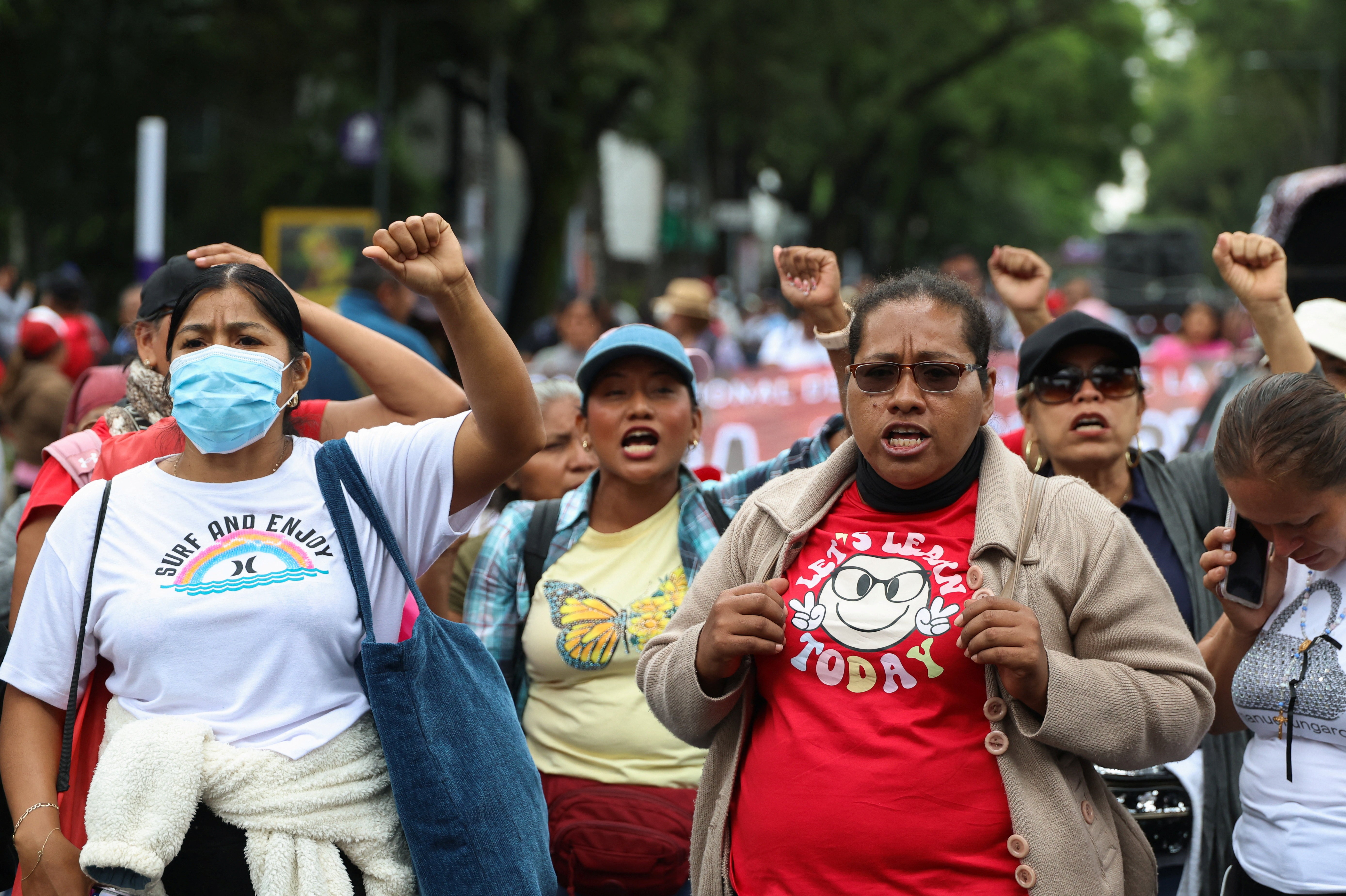
Just hours before the opening of the 2026 World Cup, scheduled for this Thursday (11), Mexico faces an escalation of protests led by teachers, who are calling for salary increases of up to 100%. The situation increases tension in the country and threatens the tournament.
Blocks of strategic roads, occupations and clashes have marked the last few days in Mexico City. The category's unions take advantage of the global visibility of the event to pressure the government for salary adjustments and changes in working conditions.
This Tuesday (9), thousands of protesters blocked an avenue that gives access to the Azteca Stadium, one of the main stages of the competition, according to the AFP agency. The venue will host the opening match of the World Cup, between Mexico and South Africa.
The mobilization is organized by the National Coordination of Education Workers (CNTE), a dissident group from the category's main union.
Now on g1
Considered the most combative wing of Mexican teachers, the CNTE called for an indefinite national strike on June 1st and, since then, has expanded its presence on the streets of the capital. In addition, the National Union of Education Workers (SNTE) also demands adjustments, although it adopts a more moderate stance.
The acts mainly bring together basic education teachers, including workers with partial contracts, who represent a significant portion of the category in the country.
100% salary adjustment
Teachers from Mexico protest before the 2026 FIFA World Cup, in Mexico City, Mexico, on June 9, 2026.
REUTERS/Luis Cortes
The main impasse is remuneration. The CNTE demands a 100% salary increase, a proposal rejected by the federal government as it was considered unfeasible.
Dissatisfaction gained strength after the announcement, in May 2025, of a 10% increase, with application scheduled only for September 2026. For the union, the percentage does not follow the increase in the cost of living.
According to data cited by Deutsche Welle, teachers' salaries in Mexico vary significantly depending on working hours and type of contract.
On average, remuneration can reach around R$6,000 per month, a value considered above the national average. However, the starting salary is between R$2,400 and R$4,200, and many professionals end up receiving less due to partial contracts. In practice, the average income for entry into teaching is around R$2,000.
In addition to the salary agenda, teachers criticize the government's educational policies and social security rules.
The SNTE defends a 13% increase for 2026, arguing that inflation has reduced the category's purchasing power.
Protesters wrote 'if there is no solution, the ball won't roll' during teachers' protests for better salaries in Mexico
REUTERS/Henry Romero
Pressure during the World Cup
The proximity of the World Cup turned the demands into an issue of international repercussion. Mexico expects to receive around 5 million foreign tourists during the tournament, making it a global showcase and increasing the visibility of the protests.
In recent days, protesters occupied the fan zone set up in the Zócalo, the capital's main square, blocked important streets and avenues, toppled sculptures of players installed for the event and burned giant shirts in protest.
In some actions, they left messages such as "no solution, the ball is not rolling", in direct reference to the competition.
Protesters march towards the World Cup stadium in Mexico.
REUTERS/Luis Cortes
The occupation of the Zócalo, which is expected to receive up to 100,000 people on Mexican national team game days, also led to the cancellation of activities organized by FIFA, including volunteer training.
The demonstrations recorded episodes of violence. Press reports indicate clashes between protesters and security forces, with the use of tear gas by the police.
A group also invaded the Ministry of Education, where a fire was reported in the building's hall.
President Claudia Sheinbaum classified the acts as a "provocation" and stated that not all those involved were teachers, attributing part of the violence to radical groups.
Despite this, the government avoided adopting a harsher repression, so as not to expose the country negatively in the international spotlight.
The impacts are already affecting the capital's routine and the economy, according to Deutsche Welle. Estimates point to losses of around R$119 million due to blockades, logistical interruptions, airport closures and episodes of vandalism.
Source: G1