Will Ukraine resist? Mourning, fatigue and nationalism mark everyday life during war
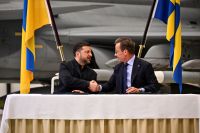
The daily life of war in Ukraine is marked by an intense combination of grief, fatigue and determination. CNN International correspondent and senior analyst Américo Martins described how the Ukrainian population has faced the devastating effects of the conflict, which has been going on for years and continues to claim civilian lives.
According to the analyst, the vast majority of Ukrainians he spoke to demonstrate a willingness to continue resisting, but recognize the difficulties of the moment. "They are tired, they are frustrated, but they also don't see a way out in the short term", reported the correspondent. "They don't want to hand over the territories they occupy. They know, in fact, that it is difficult to take back those territories."
Attacks on civilians and the weight of grief
Américo was at the scene of a missile attack in Kiev that killed 24 people in the same building. The correspondent described a scene of collective commotion: neighbors, elderly people and children bringing flowers to the scene, with toys and teddy bears placed in honor of the victims, including children aged 8, 9 and 10.
"You see the community's determination to try to honor and not forget these people, and you see the tiredness in their eyes", he said.
The correspondent also highlighted that the most vulnerable are those who suffer most from the conflict. Suburban areas, less protected by anti-aircraft defense systems, are those most affected by bombings. "The center of Kiev has super anti-aircraft defense, even closer to the government buildings. It's not the same, it's not as efficient in the suburbs of the city, the poorest areas", explained Américo.
In addition, it is the poorest who end up being recruited to fight on the front lines, often without alternatives. "They are those who were recruited practically by force, who were unable to bribe anyone, because unfortunately corruption is huge in Ukraine and also in Russia," he said.
From the optimism of 2023 to fatigue and nationalism
Américo Martins described a significant change in the country's emotional climate over the course of his three visits. In 2023, at the beginning of the European summer, there was widespread optimism. The Ukrainians had repelled the main Russian attacks at the start of the war, including battles at Bucha and Hostomel, and believed they would be able to drive Russian forces out of much of the territory.
"It was a feeling that spread throughout the country", he reported. At that moment, the analyst interviewed the Ukrainian president, Volodymyr Zelensky, who was confident: "We will be able to expel the Russians, NATO is with us, the European Union is with us."
In 2024, the scenario had changed. The Ukrainian counteroffensive attempt did not produce significant advances, and the fear of the Russian advance had become latent. "It was a feeling of tiredness", described the correspondent.
In a second interview with Zelensky that year, Américo noticed a striking difference: "He seemed tired to me, he seemed haggard, although he seemed determined. But he was visibly more tired than at the beginning."
On the most recent visit, the correspondent observed the emergence of growing ultranationalism. Ukraine has passed laws to eliminate what it considers the country's "colonial and communist legacy", and the population is increasingly resisting the idea of negotiating a deal that involves territorial loss.
"They want to continue fighting, because they think that negotiating at this time would be good, because it would end the war, but it would represent a defeat, because they would lose 20% of the territory", explained the correspondent.
Ukrainian sentiment towards Russia
When asked about how Ukrainians see Russia and President Vladimir Putin, the analyst was direct: "Putin is hated in Ukraine.
Few people are going to be willing to defend Putin or say that he has some kind of reason or some kind of justification for what he's doing."
The correspondent highlighted, however, that there is a feeling of nostalgia among some older people in relation to the Soviet Union, associated with the economic stability of that period, although he recognizes that the system was highly restrictive.
Américo Martins also mentioned that the fear of possible Russian domination is shared by other countries in the region, especially the Baltic countries - Estonia, Latvia and Lithuania -, which are part of NATO and the European Union, but are apprehensive about Russian military actions.
"We have a resurgence of Ukrainian nationalism", concluded the correspondent, considering that, in general, exacerbated nationalism in Europe has historically led to serious consequences.
The texts generated by artificial intelligence on CNN Brasil are made based on video cuts from the newspapers in its programming. All information is investigated and checked by journalists. The final text is also reviewed by the CNN journalism team. Click here to find out more.
Source: CNN