Why the economy makes this World Cup the 'craziest' of all time
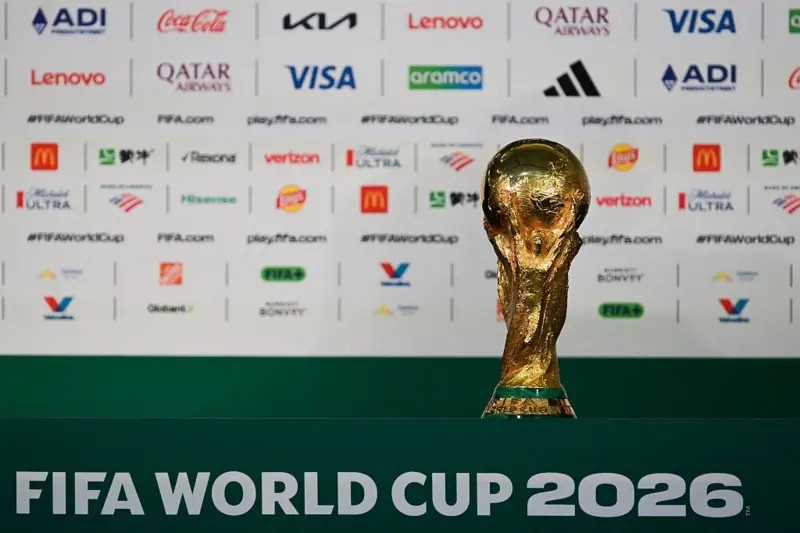
Fans are under pressure like never before because this tournament follows a very different economic model to previous ones
AFP via Getty Images
Football World Cup editions are rarely completely free from politics, but football has never had to balance on a geopolitical tightrope like this.
The main host country (United States) is at war with a participant (Iran), whose team needs to travel from another host country (Mexico) on game days.
Download GloboPop to watch short vertical videos from Globo
Added to this is the impressive coincidence that the United States, Canada and Mexico, the three countries hosting the 2026 World Cup, are in the middle of a major trade war. proportions.
In fact, in the period between the opening ceremony in Mexico, at the Azteca Stadium, and the final, at the MetLife Stadium, in New Jersey, the three countries will be renegotiating the USMCA, the North American free trade agreement.
See the trending videos on g1
Now on g1
US President Donald Trump is extremely attentive to the tournament, its sponsors and the impact of his return to the White House last year.
Trump even joked that his defeat to Joe Biden in the 2020 election had the great benefit of allowing him to return to this World Cup and the Los Angeles Olympics in 2028.
After the resumption of hostilities between Iran and Israel, Trump was quite direct in calling for an end to the attacks.
And as the minutes ticked down to the start of the tournament on Thursday night (11/06), Trump appeared to suspend further airstrikes and apparently promised that a deal to end the war was close.
Earlier that same day, he had promised to hit Iran "very hard." As always with Trump, a lot can change very quickly.
He had already controversially accepted a FIFA Peace Prize, before starting the war with Iran that led to a severe global energy and economic shock.
There is even the possibility of the US and Iran facing each other in the round of 16 on the weekend of the celebrations of the 250th anniversary of US independence.
Donald Trump received a FIFA Peace Prize before the 2026 World Cup
PA Wire via BBC
Gianni Infantino, president of FIFA, has already called for ceasefires during World Cups. If the World Cup helps to accelerate de-escalation movements, there could be a concrete impact on energy prices, supply and the world economy.
Whether the World Cup can actually influence the biggest economic conflict in the world, no one knows. But there is no doubt that another piece of the economic puzzle is unfolding before the eyes of fans around the world.
This is a complete reorganization of the economics of football and also one of the most visible examples of how some of the world's biggest economies increasingly operate.
Fans under pressure
"Football is nothing without the fans," the legendary Jock Stein, Scotland's former World Cup coach, once said.
Some fans, however, present at the biggest party in the world, will have paid previously unheard of amounts for games that could end up being of no competitive importance, in addition to paying practically the normal price of a ticket just to take the train to the stadium.
This is the case with the New Jersey Transit ticket: it normally costs US$ 12.90 (about R$ 66) round trip, but will cost US$ 100 (about R$ 510) during the tournament.
Fans are being pressured like never before because this tournament follows an economic model very different from previous ones.
To begin with, it largely takes place in American football stadiums borrowed for the event (a quarter of the games will be in Canada and Mexico), with the oval ball format leaving its mark, perhaps permanently.
This World Cup transforms football into a highly profitable game for FIFA, the tournament's organizer.
In economic terms, this could be the most impactful World Cup in history, but not for the conventional reason of boosting economic activity in host countries or stimulating enthusiasm-driven spending in countries whose teams advance in the competition.
Former Scotland manager Jock Stein was famous for the quote: "Football is nothing without the fans"
Daily Mirror/ Getty Images via BBC
Instead, this World Cup is a case study of what is known as the K-shaped economy in advanced economies traditions in the world, a situation in which different groups in society have very different financial results that, when represented on a graph, these results form a diagonal line upwards (as in the letter K), and another diagonal downwards (also as in the letter K).
It is important to say that FIFA has a very different vision and emphasizes that this abundant ticket revenue will be redistributed, Robin Hood style (in reference to the character who stole from the rich and gave to the poor), to develop football in the poorest countries in the world.
The biggest tournament
This tournament is very, very big. It will have the largest stadiums, the largest number of games by far, as the competition has expanded from 32 to 48 teams, probably the largest global television audience ever recorded for any event and the largest territorial extension ever seen, from Vancouver, Canada, to Mexico City. It is possible that the winning team will have to travel a distance equivalent to the diameter of the Earth.
Then there are ticket prices. Compared to the cost of watching elite football in any other context, the fees charged to watch the games are astronomical.
There are five-figure tickets in dollars for the final, in addition to around US$1,000 (around R$5,100) as an approximate typical price for a group game considered more attractive at the beginning of the tournament, and even the "bargains" cost a few hundred dollars (or thousands of reais) in matches without great prestige.
It is a gold mine for the economy.
And this is also the largest scale test ever made of an attempt to change the mechanism of prices for events of this type. Dynamic pricing, which adjusts prices upward as demand increases, has been seen in concert tickets and some sporting events, but never on this scale.
In the US, they may call the game soccer, but this is, without a doubt, the economics of American football. In the NFL (American football league), seat prices are defined based on revenue management: maximizing revenue is more important than filling the stadium.
Sports in the US are priced at the top of the luxury market, to the point that many stadiums are reducing their capacity, rebuilding for billions of dollars with boxes and hospitality lounges where bleachers once stood.
Many NFL stadiums adopt dynamic pricing aimed at increasing revenue, not necessarily filling every seat
Reuters via BBC
The supply of these experiences is limited by the length of the season. Na NFL, são apenas nove jogos em casa, cerca de metade do número das principais ligas europeias de futebol. So in the NFL, every game counts even more.
Dynamic pricing has given teams a method to extract revenue intensively, especially since, under NFL rules, huge TV revenues are split more equally than in football.
With all 11 World Cup stadiums in the US being NFL arenas, American football leaves its mark on its very different namesake.
This is all very different from previous tournaments.
An essential part of the rationale for hosting a World Cup was to help boost new infrastructure work, including transport and stadium construction or renovation.
The 2026 World Cup presented itself as an asset-light tournament that would avoid expensive white elephants like Miyagi in Japan, Green Point in Cape Town, South Africa, and the US$300 million (about R$1.5 billion in inflation-adjusted values) stadium in Manaus, in the middle of Amazon.
Often, the costs were covered by the investment budgets of taxpayers in the host countries. In return, these countries calculated that the investments would be worthwhile as exercises in national promotion in a more globalized world. But the three stadiums struggled to attract enough regular use after the tournaments.
The 2026 World Cup largely reversed that logic, with one small exception in Mexico. FIFA rented the stadiums, mostly paid for by American football fans, and began aggressively maximizing revenue with US-style pricing.
While previous tournaments had large construction costs paid for by taxpayers and loans, the 2026 costs are being paid by spectators. And the revenue raised is set to soar, thanks to the increase in the number of games, the size of the stadiums and, of course, those impressive ticket prices.
It is not yet clear how much will be raised from tickets and hospitality. The initial forecast was that revenue would more than triple, from US$929 million (approximately R$4.7 billion) at the 2022 World Cup in Qatar, to more than US$3 billion (approximately R$15.3 billion).
Richard Sheehan, professor of economics and specialist in sports finance at the University of Notre Dame, in the USA, believes that total revenue from tickets and hospitality for this year's tournament could exceed US$7 billion (around R$35.7 billion), a seven-fold increase.
It assumes that ticket revenue per match will not only double from the US$15 million (around R$76.5 million) of the last World Cup, but will increase almost five-fold to US$71 million (around R$362 million).
FIFA raised US$929 million (around R$4.7 billion) from ticket sales and hospitality during the 2022 World Cup in Qatar
Reuters via BBC
It could be a gold mine for the luckier host cities, stadium owners, national teams and players, but it probably won't be. Unlike what happened in the 1994 US Cup, cities do not participate in this growing ticket revenue.
The stadiums were rented for a fixed amount. The prize has already been defined. And cities will have to bear the costs of hosting the tournament.
Alan Rothenberg, who chaired the organizing committee for the 1994 US World Cup, explained to the BBC World Service: "The structure is completely different.
So, really, you can't compare. In 1994, FIFA took over the international marketing and television revenues and then handed over the entire organization of the tournament to the US Soccer Federation, which created a separate entity to manage it."
"So there was an entity in this country, managed by us. We received some attractive sponsorship categories, licensing opportunities and also the right to sell tickets," said Rothenberg.
In 2026, some cities responded by trying to recoup the security and transportation costs of hosting the tournament. The price of New York trains was multiplied tenfold, before being slightly reduced to US$98 (about R$500).
The train connection from Boston costs US$80 (approximately R$408). Park the car? Official fares range from US$ 175 (around R$ 892), and up to US$ 225 (around R$ 1,147).
This is a far cry from the free transport offered to those who had tickets to tournaments in Qatar, in 2022, in Germany, in 2006, in Japan, in 2002, and in France, in 1998.
In Japan, local volunteers spread out along routes between bullet train stations and stadiums, with residents bowing to fans, offering food and, on some occasions, after the last trains had left, paying for taxis to get them home.
According to Alan Rothenberg, organizer of the 1994 World Cup in the United States, the tournament's financial model was very different to that adopted today
Getty Images via BBC
Following the negative reaction, FIFA started to highlight the release of some tickets at lower prices, such as US$60 (approximately R$306), to be distributed by national associations.
The most notable novelty was the attempt to incorporate the secondary market, the resale of tickets, known as cambismo in Brazil, touting in the United Kingdom and scalping in the USA, into FIFA's own sales system.
Almost all fans can put their tickets back on sale with no maximum price limit, with FIFA taking a 15% fee from both the seller and the buyer.
There were also tickets distributed through a system of digital collectibles linked to cryptoassets, built on the FIFA blockchain. The organization says it is capturing the prize pool previously obtained by scalpers and allocating that value to itself and the global football community.
The extra billions of dollars in cash will initially go to FIFA's reserves, with the promise that the funds will be distributed to the global football family.
The entity cites this type of grassroots financing as one of the factors that helped Cape Verde qualify for this year's competition, thanks to improved infrastructure and the development of grassroots football.
FIFA usually distributes these development resources equally among its 211 member associations, which means that small Montserrat receives from the entity an amount equivalent to 2.5% of its annual GDP, or US$500 (about R$2,550) per person.
The equal distribution model has existed since the 1990s and was expanded by FIFA president Gianni Infantino as part of his electoral promise.
It is driven by the "one country, one vote" system, which also began to be used to choose the host countries for the World Cup from this year onwards.
FIFA claims that investments in grassroots football helped Cape Verde qualify for the 2026 World Cup
Reuters via BBC
All this happened before dynamic pricing gained momentum. If Needham's estimates are correct, FIFA's average annual revenue of US$3.9 billion (around R$19.9 billion) now exceeds the budget of the World Health Organization (WHO) and is roughly equivalent to the regular budget of the United Nations (UN). speculative and bringing everything into their own system," Needham said.
For now, this pricing model makes it uncertain exactly how much revenue will be raised, but the tickets are creating a very large amount of money.
In theory, these resources will be welcomed by the vast majority of smaller countries, which will never qualify for the World Cup or send fans capable of paying these prices, but who form the electorate in FIFA's presidential elections and decisions about tournament venues.
The golden goose is shining right now in terms of value.
But with the opening of the World Cup, there is a risk arising from this extreme commercialization.
Will the stadiums be full? Will there be armies of fans from all 48 teams creating the kind of atmosphere that would have pleased Jock Stein, Scotland's legendary World Cup coach?
Will FIFA have to repeat what happened in its Club World Cup last year and cut the price of tickets to up to US$11 (around R$56) in order to fill the seats? At this point, it remains unclear whether FIFA's dynamic pricing model prioritizes maximizing revenue or ensuring all tickets are sold.
Last month, Infantino told an economic conference that "we have to apply market prices" and that football needed to adapt to this "very special market". Clearly allowing unlimited resale prices and adopting successive aggressive rounds of demand-led increases is a choice.
A very different model
The European model adopted by clubs such as French double European champions Paris Saint-Germain combines very cheap season tickets behind the goals at both ends of the stadium with extraordinary corporate prices for the seats closest to the midfield line.
The idea is that the corporate public is attracted in part by the spectacle and noise of groups such as supporters organized behind the goals, in the cheapest sectors. The risk for the World Cup is that all of this will be lost.
There are some signs that the World Cup pricing model is facing backlash. There were drops in resale prices for lower demand games: two tickets with a face value of US$620 (approximately R$3,160) could be purchased for 171 pounds (R$1,170) on FIFA's own resale website, 64% cheaper.
Few of these US$98 (around R$500) train tickets were sold in New Jersey. Authorities in New York, New Jersey, California and the European Union have begun looking into complaints about ticket sales strategies.
"A maze of confusion, false scarcity and impossibly high prices," said Jennifer Davenport, New Jersey's attorney general and the top prosecutor in the state that will host the finals next month. It is not yet clear whether the state has jurisdiction over a "non-profit entity" based in Switzerland. FIFA declined to comment.
The open question is whether FIFA has taken this pricing experiment to the breaking point. It seems unlikely that fans in the host cities of the next World Cup, in 2030, in Spain, Portugal and Morocco, will tolerate values of this type.
British and Irish authorities have already ruled out this model for the 2028 Euro Cup, which they will host and which will bring together Europe's main football teams. This comes at a time when artificial intelligence (AI) could enable the next big innovation in service pricing: personalized prices for different individuals, based on their data.
Some Premier League clubs are testing dynamic pricing for some seats, with the aim of increasing revenue. This goes against the traditional model of loyal fans who buy a season ticket for a fixed price.
If FIFA's experiment appears successful, it could encourage owners of European clubs linked to the US NFL to try to price tickets in a similar way, especially to finance new stadiums.
The economy in K
The US NFL model was applied to an event that belongs to the world. The US "K-shaped economy", with strong growth for the richest 10%, responsible for up to half of all consumption, according to Moody's analysts, and stagnation or contraction at other income levels, could be visible in the stadiums.
Dynamic pricing is a technology that targets that 10% group and transforms a once mass experience, accessible to ordinary workers, into a niche one fueled by the technology boom.
The broader hope of many host countries is that traditional excitement effects will help boost consumer confidence and investment in football.
Research has already shown some effects, especially in well-performing host countries, in addition to negative impacts on scholarships when teams are eliminated. The latest US employment data brought some signs of tens of thousands of new jobs created, especially in hospitality, linked to the World Cup.
However, the overall boost to the economy will be limited by the size of the US economy and the boom in investment in artificial intelligence (AI).
A game between Jordan and Algeria is unlikely to attract the attention in San Francisco that is currently focused on artificial intelligence and the trillions of dollars in this market.
Rahm Emanuel, mayor of Chicago, the main US city that has given up on hosting World Cup games, seems to feel vindicated by the decision.
FIFA kept all the ticket revenue, and there are already complaints that hotel bookings in some host cities are lower than expected. Many of the stadiums hosting matches would be packed with rock concerts if it weren't for the tournament.
At first glance, the economic impact in the US of a World Cup that uses existing stadiums and directs most of the increased ticket revenue to FIFA may be limited. The potential economic benefit would be concentrated in an increase in consumer confidence.
In the United Kingdom, good campaigns from England and Scotland can serve as encouragement after years of successive political and economic crises. Retailers and companies in the hospitality sector are certainly bracing themselves for a sharp increase in sales.
During the Russian Cup in 2018, analysts at Kantar calculated that there were 13 million extra visits to supermarkets as people shopped to watch the home games.
But there is also the possibility that the UK's productivity challenges will not be helped by late-night matches.
Next Monday has already been declared a bank holiday in Scotland to help the country deal with the Scottish national team's game against Haiti, scheduled for 2am (local time).
For many, the tournament will be a welcome break from the incessant flow of news, although the particularities of the Trump White House may end up offering a broader economic opportunity.
Today's global economy is very different, and that forms the backdrop to this football festival. FIFA is conducting a relevant and controversial pricing experiment that could change sport.
At the same time, such an unusual World Cup might be able to alleviate a little the feeling of disorder that marks the current global scenario. It's more of a hope than an expectation, a feeling all too familiar to any English or Scottish fan.
Source: G1