Why some places fight to get off the UNESCO World Heritage List
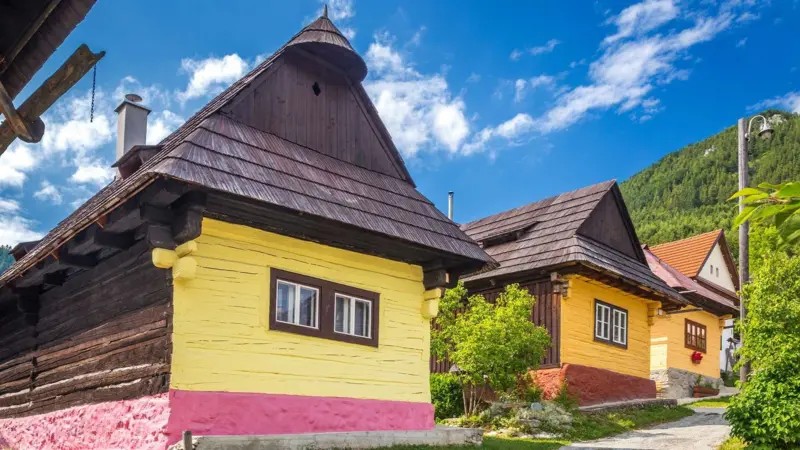
BBC DO NOT USE - Nestled in the mountains of central Slovakia, the small village of Vlkolínec is a picturesque medieval village
Getty Images
Situated in the mountains of central Slovakia, the small village of Vlkolínec is a picturesque medieval village with more houses than people. Its 20 or so permanent residents live in 45 charming cottages, painted in vibrant colors and clustered around an 18th-century bell tower.
Due to Vlkolínec's unique architecture, this remarkably preserved settlement was declared a World Heritage Site by the United Nations in 1993. Since then, more than 100,000 visitors have come to the community every year.
Recently, some residents have argued that the designation and associated tourism have created more problems than benefits and have argued for the village's removal from the list.
Now on g1
Approximately 7,000 km away in Tanzania, the International Maasai Solidarity Alliance has also called for the wildlife-rich Ngorongoro Conservation Area to be removed from the World Heritage List.
The region is home to pastoralist communities and some of Africa's most iconic safari experiences, but residents argue that conservation policies tied to its status as an internationally protected area have led to the displacement of residents from their ancestral pastoral lands.
These disputes highlight a growing debate about what happens when the interests of local communities collide with efforts to preserve places considered important to humanity.
BBC DO NOT USE - The 1,248 World Heritage Sites UNESCO sites include Wonders of the World as well as lesser-known landmarks
Getty Images
The power of UNESCO
The ever-expanding World Heritage List is overseen by UNESCO, an international committee of the United Nations that identifies and protects sites it considers to be of "exceptional cultural or natural importance to humanity."
Since enrolling its first 12 locations in 1978, the list has grown to 1,248 locations in 170 countries. These attractions range from famous landmarks such as Machu Picchu and the Great Wall of China to lesser-known places such as the Wooden Churches of Maramureș, in Romania, and the ancient settlements of clay buildings Ait Ben-Haddou, in Morocco.
In Brazil there are 23 locations listed, including the Historic Centers of Salvador, Olinda, Ouro Preto, Diamantina and São Luiz.
The World Heritage List grew out of a post-World War II effort to protect sites of cultural and environmental importance threatened by conflict, industrialization and modern development.
Because UNESCO designation can unlock international funding for conservation, it is one of the world's most influential tools for heritage protection.
Proponents of the initiative point to examples such as the Belize Barrier Reef Reserve System, which was removed from UNESCO's "Endangered" list in 2018 after the implementation of more stringent environmental protections; and Angkor Wat in Cambodia, where decades of restoration and conservation work helped save an archaeological site badly damaged by war and looting.
"Unesco's credo is about shared heritage, its conservation, celebration and recognition as an achievement of humanity," says John H. Stubbs, a preservation expert and former vice-president of the World Monuments Fund.
But since the early days of the World Heritage List, the rise of social media has increasingly transformed plus Unesco status in something that can help preserve a site and, at the same time, transform neighboring communities through tourism.
BBC DO NOT USE - Sandoli have been used for a variety of purposes throughout the city's history.
Getty Images
Greg Richards, a researcher who studies cultural tourism and overtourism, compares the Unesco designation to the star ratings in tourist guides that indicate must-see places.
He also notes that an increase in the number of visitors is one of the most predictable outcomes of inclusion on the list.
"I believe the consensus among the world's leading experts is that there are a number of possible consequences of inclusion on the UNESCO list, but one that will certainly occur is an increase in the number of visitors."
Preservation and 'museification'
Historically, UNESCO's preservation efforts have focused primarily on the protection of physical structures: monuments, archaeological sites and buildings of importance architectural. But many of these heritage sites visited by tourists are communities where residents still live and work.
Venice, Italy, which became a World Heritage Site in 1987, has seen tourism increase so much that the city has become one of the most tourist-burdened places in Europe - and as a result, more residents are leaving the city.
In Lijiang, China, a city known for its Old Town and indigenous Naxi culture, tourism increased after its designation in 1997, transforming parts of the center into areas full of inns and souvenir shops that, according to some researchers and residents, diluted local life.
In Marrakech, Morocco, the rise of tourism and foreign investment in the medina, the old center of the city, also listed by UNESCO, has sparked debate about rising property prices and gentrification.
BBC DO NOT USE - UNESCO-protected sites can be modernized but must preserve their 'outstanding universal value'.
Getty Images
Researchers sometimes describe the process as "museification": the gradual transformation of living communities into places increasingly aimed at visitors rather than residents.
Although many historic communities were already facing housing shortages and economic changes long before UNESCO recognition, in some cases - such as Venice - tourism only accelerates existing trends.
The debate becomes even more complex as ideas about authenticity and preservation evolve.
"This is one of the great debates in heritage conservation," says Richards. "Authenticity is a very dangerous word because it can be interpreted in many ways." He explains that what one group considers authentic preservation, another may consider artificial reconstruction.
Unesco heritage sites are not prohibited from being modernized, but the works are expected to preserve what the organization calls the site's "outstanding universal value" - the defining qualities that gave it the designation.
In practice, this can create tensions between preservation and contemporary needs, particularly in communities that still need updated housing and infrastructure.
Richards also states that social media has considerably accelerated the pace at which tourism pressure increases. Before platforms like TikTok and Instagram, travelers mainly used travel guides or official tourist information. "Now, more and more, you follow other tourists," he says.
BBC DON'T USE - Ngorongoro Reserve is home to some of Africa's most iconic safari experiences;
Getty Images
Unesco's new approach to tourism
Representatives say UNESCO is increasingly aware that World Heritage Sites are prone to overtourism.
"We certainly recognize that tourism has changed dramatically in recent times 10 to 15 years", says Peter DeBrine, sustainable tourism expert at UNESCO. He adds that UNESCO is now asking protected places to create visitor management plans to prepare for tourism growth and find ways to reduce overcrowding and pressure on sensitive areas.
"We are not trying to discourage tourism, but rather help tourism support conservation and heritage," he says. "World Heritage sites are for everyone. They are for all humanity.
We want people to visit them, to experience them."
This change reflects a broader evolution in UNESCO's approach. In UNESCO's earliest World Heritage guidance documents, tourism was mentioned only briefly and largely in the context of its potential conservation impacts, according to DeBrine.
BBC DO NOT USE - Local residents argue that the inclusion of Ngorongoro on the UNESCO list has led to the displacement of residents from their ancestral lands of grazing.
Getty Images
Today, UNESCO increasingly sees tourism as both a challenge and an opportunity - an opportunity that can be a strength for conservation and local economies when managed carefully.
But the concerns emerging from Vlkolínec and Ngorongoro do not fall within the scope of the World Heritage system. of damage to the attraction itself, but rather to the people who live there.
When asked whether UNESCO can intervene when local residents feel that tourism or conservation policies are harming their lives, DeBrine said: "We don't really have a mechanism for that."
Despite calls from the advocacy group for the Maasai of Vlkolínec and Ngorongoro for their World Heritage status to be reconsidered, neither site is expected to be discussed by the World Heritage Committee at its next session.
Currently, UNESCO can assess whether a landscape, monument or ecosystem is being adequately protected. It can classify sites as "endangered" due to factors such as armed conflict, climate change and uncontrolled development.
BBC DO NOT USE - The nature reserve. Arabian Oryx Sanctuary was the first World Heritage Site to be removed from the UNESCO list.
Getty Images
How to lose World Heritage designation
To date, UNESCO has removed only three sites from the World Heritage List, and in all cases, the central issue has been conservation In 2007, the Arabian Oryx Sanctuary became the first to be removed after. Oman drastically reduced protected area amid oil exploration plans.
In 2009, Dresden's Elbe Valley lost its status following the construction of a bridge, which UNESCO argued had fundamentally altered the landscape. continued to attract visitors linked to its music, sports and cultural identity after losing its World Heritage status, while Dresden also remained an important tourist destination after its removal from the list.
While residents of Vlkolínec and Ngorongoro advocate removal from the list, Stubbs argues that this is unlikely to result in any significant change.
"I think it's great that [these delisting requests] are drawing attention to the problems of overtourism," he says. In terms of the real solution that will benefit local residents as well as the monument, the answer will come from smart conservation planning that takes into account everything from economics and location to local people." More than half a century after UNESCO began preserving its first sites, debates suggest that saving a place is not the same as saving a community - and that the latter task may prove much more difficult.
Source: G1