Why reopening the Strait of Hormuz is more complex than opening up the highway
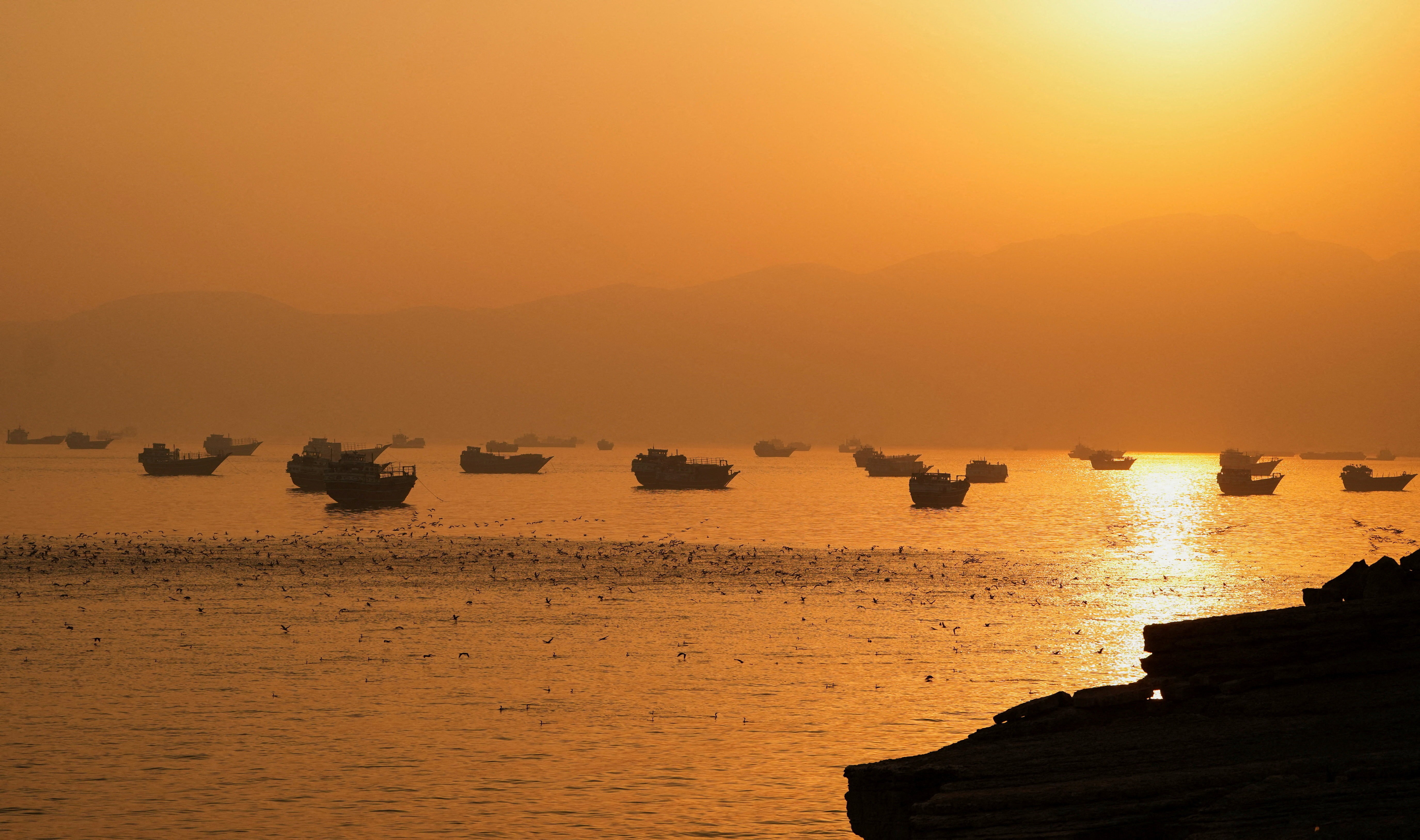
Ships are seen in the Strait of Hormuz, in Musandam, Oman, on June 16, 2026
Reuters
Despite the positive expectations of financial markets, the presence of naval mines and the very fragility of the agreement between the USA and Iran indicate that the situation will take time to return to normal.
The United States and Iran announced this Sunday (14) a preliminary agreement to end the war between the two countries. The first point highlighted by the President of the United States, Donald Trump, was the reopening of the Strait of Hormuz, through which a fifth of the world's oil supply passes.
Do you have any suggestions for a report? Send it to g1
"Ships of the world, start your engines. Let the oil flow!", wrote the president. Global financial markets reacted enthusiastically to the announcement.
But reopening a sea lane like the Strait of Hormuz is not the same thing as reopening a highway after an accident. Restoring oil, gas and container traffic to pre-war levels through this major logistical bottleneck faces significant obstacles - the biggest of which is the fragility of the agreement itself, the text of which has not been released.
Trump says US-Iran deal enters second phase
Greek maritime risk management agency Maririsks warned on Monday that the agreement should be seen as "the beginning of a de-escalation process, and not as the immediate restoration of normal shipping conditions." trade."
"Operationally, the sector is not rushing to resume activities," said Richard Meade, editor-in-chief of the maritime transport website Lloyd's List, noting that many warn that the removal of mines and the return to the use of internationally recognized transit routes are prerequisites for safe navigation.
Also read:
Trump says Strait of Hormuz will be fully reopened on Friday tariffço defends PIX and calls for technical debate
Removal of naval mines
If aggression from both the US and Iran really stops, Iran will first have to locate and remove the naval mines it installed during the conflict to make the Strait of Hormuz passable again.
Most of them can be located quickly with the use of conventional minesweeping ships and state-of-the-art underwater drones. However, some may have moved or are difficult to find, according to maritime experts.
The location and removal operation could take 40 to 50 days - until many insurance, maritime transport or oil companies feel safe enough to sail through the region, according to assessments by Western maritime security experts interviewed by the Reuters news agency.
The head of energy analysis for the Middle East and OPEC+ at Kpler, Amena Bakr, heard by AP estimated that mine clearance would take six months.
Kpler is a data and analytics company specializing in maritime logistics.
After that, independent observers will need to verify whether the sea lane is in fact safe for navigation.
German Foreign Minister Johann Wadephul has stated that Germany will consider participating in mine-clearing operations in the Strait of Hormuz only when it is clear that the fighting has stopped and that both the United States and Iran support such a mission.
Germany, France, the United Kingdom and Italy have previously expressed willingness to support the resumption of navigation through the Strait of Hormuz, including through an independent and strictly defensive mission aimed at ensuring the safety of commercial ships and carrying out mine clearance.
War risk insurance
Even after the removal of mines, shipping companies will have to bear higher war risk insurance costs to transit through the Strait of Hormuz until confidence is restored.
Currently, the amounts remain extremely high, between 1% and 4% of the vessel's value per crossing, compared with rates of less than 0.1% before the war, according to The New York Times.
For a typical $200 million oil tanker, this means additional costs of between $2 million and $8 million per crossing, compared with less than $200,000 before the war.
Lloyd's List on Monday cited an unnamed Singapore insurance risk analyst who described the amounts as "fast to rise and slow to fall."
Commodity brokerage Oil Brokerage Ltd's global head of shipping research, Anoop Singh, warned that ship owners will weigh the pros and cons based on their own risk tolerance.
"Japanese, Koreans and Chinese are less likely to take high risks, while the Greeks have a different appetite. guarantees before proceeding," Singh told Bloomberg news agency.
When will the ships be able to move?
Even if the strait is fully open, it will take time for tankers to enter, load and make the journey to Asian countries, which are the main customers for oil from Saudi Arabia, Iraq, Bahrain, the United Arab Emirates, Kuwait and Oman. A round trip to Japan can take 45 to 50 days.
Once safe corridors are established in the Strait of Hormuz, hundreds of commercial vessels and their crews, stranded for months in the Persian Gulf, will be able to begin moving.
Bloomberg, citing Kpler, reported that 300 fully loaded ships are stuck in the Gulf, while another 250 are empty, awaiting loading once the strait is cleared. reopened.
Nearby, in the Gulf of Oman, about 300 empty oil tankers await clearance to enter the Gulf.
Rathering the crew for these vessels could be another hurdle. It is estimated that around 20,000 sailors remain aboard stranded ships, according to the International Maritime Organization.
That UN agency also confirmed that 14 crew members were killed in attacks, around half of them from India, the third largest origin of sailors after the Philippines and China.
Faced with the growing reluctance of crews to accept deployments to the Gulf region, India's Directorate General of Shipping on Sunday ordered employment agencies to restrict such deployments to conflict areas.
Damaged energy facilities
With the announcement of the agreement, Gulf Arab countries can now begin to increase oil and gas production. But this can be a slow process as it requires safety inspections of energy facilities, repairs to damaged infrastructure and the gradual return of workers and maintenance crews. Some producers in the Middle East have halted oil extraction when they run out of storage space.
These countries will not resume activities until they are certain that the strait will remain open on a lasting basis and that a ceasefire will last longer than 30 or 60 days, said researcher Daniel Sternoff of Columbia University. Monday that it will take until the end of September for about 80% of energy flows through the Strait of Hormuz to resume.
Shearing warned that natural gas flows will take longer to recover and cited damage at Qatar's Ras Laffan liquefied natural gas terminal, where attacks have eliminated about 17% of the country's export capacity, likely for several years.
Iran's Tariff Collection
It is unclear whether the U.S. and Iran have reached an agreement on what "open" means in the case of the Strait of Hormuz.
Iran has demanded the right to charge fees from ships using the strait and, in some cases, has already charged to allow vessels to leave. Trump stated on his social network, Truth Social, that the agreement involved a "toll-free opening", but there was no confirmation of this from Iran.
While the US insists that the Strait of Hormuz be permanently tariff-free, Iranian authorities talk about "service fees" and maintaining control of the sea lane, along with Oman.
Toll payments would represent a dilemma for shipowners, since the US and the The European Union (EU) classifies the Islamic Revolutionary Guard Corps as a terrorist organization, and the US Treasury Department has imposed sanctions on the entity, which Iran has announced as responsible for the charge.
Unless these sanctions are changed, making the payment exposes shipping companies and banks to penalties.
In addition, legal experts say that allowing Iran to control the passage would violate international law on freedom of navigation, set out in the United Nations Convention on the Law of the Sea, which requires countries to allow peaceful passage through their territorial waters. The waters of the strait are shared by Iran, to the north, and Oman, to the south.
Fragile agreement
The biggest risk to the reopening of the Strait of Hormuz, however, is the agreement between the US and Iran itself, as it is just a draft for negotiations that seek a definitive end to the conflict.
In addition to the toll charge, there are even broader unresolved issues, such as Iran's nuclear ambitions, the relief of economic sanctions and Tehran's support for groups such as Hezbollah and the Houthis, which indicates that there is a real risk that the conflict will resume.
Strengthened by its strategic advantage over the Strait of Hormuz and having resisted the world's greatest military power, Iran can continue to test limits.
The Israeli government has highlighted that it is not bound by the agreement, despite Iran having stated that it also covers the conflict in Lebanon, which is yet another point that puts at risk the fragile preliminary agreement between United States and Iran - and the return to normality in Hormuz.
Source: G1