Why is the biggest LGBT+ parade in the world having investment problems?
LGBT+ Parade on Avenida Paulista, in SP
Reproduction
The São Paulo LGBT+ Pride Parade, which holds the title of largest in the world according to the Guinness Book, suffered a 60% reduction in its private budget for the 2026 edition, which takes place next Sunday (7), on Avenida Paulista.
The financial drain occurs precisely in the commemorative edition of the event's 30th anniversary: the total number of sponsoring brands fell from 11, in 2025, to 9 this year.
The commercial downturn contrasts with the economic impact of the event. Last year, the circuit brought together 50 thousand people, according to the Brazilian Center for Analysis and Planning (Cebrap), and injected R$548.5 million into the economy of the capital of São Paulo, according to data from the São Paulo Commercial Association (ACSP).
Now on g1
What can explain the stampede of brands
According to the Parada organization and market analysts, the reduction in private investments was already planned due to the lack of long-term contracts and a strictly commercial vision of companies, which see the LGBT+ public only as seasonal consumers.
Behind the scenes, the justifications presented by brands to deny sponsorship in 2026 are divided into five main pillars:
1. The advancement of the global 'anti-woke' agenda
The strengthening of a global conservative movement, intensified internationally after Donald Trump's victory in the United States presidential elections, acts as a mirror for the Brazilian market.
The North American term "woke" - originally associated with awareness about social injustices - started to be used by right-wing movements as a pejorative criticism of progressivism.
In the USA, brands such as Target, Bud Light and Ford suffered massive consumer boycotts following campaigns to support the LGBT+ community.
Afraid of retaliation and similar virtual lynchings in Brazil, directors of multinationals have backed away from public investments in diversity.
Disney is one of the main companies accused of being woke.
GETTY IMAGES via BBC
2. Rejection of the political content of the theme
The organization heard from brands that the theme chosen for this year's historic edition - "30 Years Parada SP: The street calls, the ballot box confirms" - drove away investors.
Many companies claimed that they would not like to link their institutional identities to a motto considered "too political" or electoral.
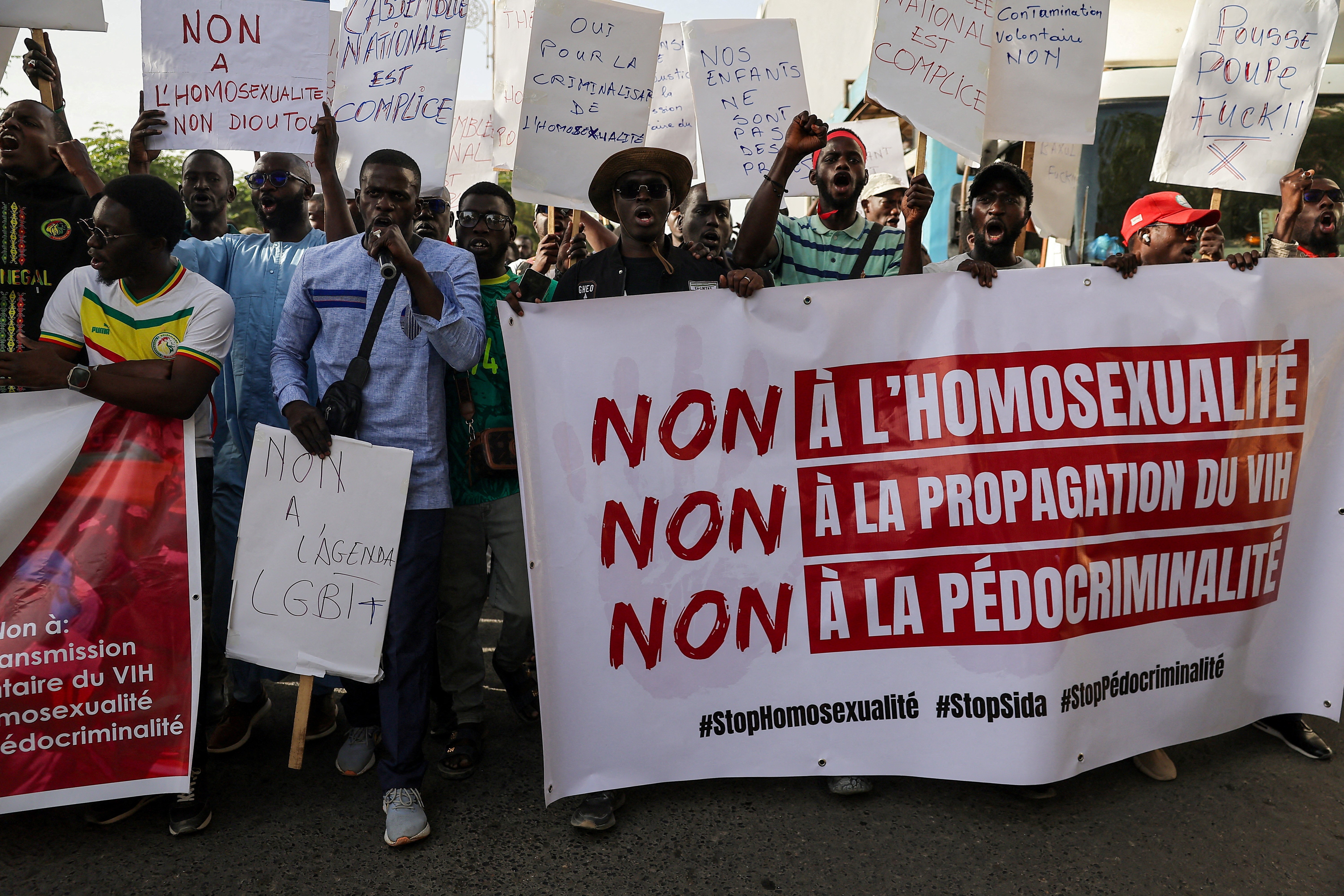
Anti-LGBT protesters march through the streets during a protest demanding stricter measures in Dakarem February 14, 2026
REUTERS/Zohra Bensemra/File Photo
3. Budget squeezed by Elections and World Cup
Companies that abandoned the circuit also justified their absence by claiming that 2026 is a year divided between municipal elections and the World Cup, which ended up decentralizing and tightening the marketing and communication budget aimed at mass events.
Municipal server in Guarujá (SP) was excluded from the working group on WhatsApp after posts alluding to Pride Day LGBT+
Social Networks
4. Migration to ESG funds
Another change highlighted by the market is that the amount previously allocated specifically to LGBT+ causes and events (the so-called "pride fund") was eliminated in several companies and absorbed by general ESG funds (environmental, social and governance acronym).
The organization criticizes the change, arguing that these values should be part of the main amount that companies invest in media and advertising, given the return in visibility that the event delivers.
Thousands march for LGBT+ rights in Hungary, even after the ban
Bernadett Szabo/Reuters
5. Legislative offensive
On the national scene, legislative houses led by conservative and evangelical fronts began to articulate bills to prohibit the presence of children and adolescents in demonstrations by the LGBT+ community, under the justification of "child protection".
In São Paulo, proposals of this nature are being processed in the City Council and the Legislative Assembly (Alesp).
LGBT+ family participates in the Pride Parade on Avenida Paulista this Sunday (22), in the center of São Paulo.
Luiz Gabriel Franco/g1
READ ALSO: 'There will be children, yes', says president of the LGBT+ Parade on the bill that bans minors from the event in SP
SP Chamber approves in 1st vote project that bans children from the LGBT Parade; for experts, it is unconstitutional
SP LGBT+ Parade will have shows by Gloria Groove, Pepita and Melody; see confirmed attractions
🏳️🌈The brands that left the circuit
LGBT+ parade brought crowds to Avenida Paulista, in SP
Miguel Schincariol/AFP
A survey carried out by g1 on the event's commercial contracts between 2022 and 2026 reveals the size of the commercial retraction.
Big brands that were popular on the circuit recently, such as Vivo, Terra, Burger King, Smirnoff, Pinterest and the cosmetics chain Sephora, left the event.
See the evolution of partner brands between 2022 and 2026:
2022: 15 brands - Terra, Smirnoff, Burger King, Amstel, Mercado Livre, Jean Paul Gaultier, Vivo, Accor, Avon, Doritos, Laboratório LAIS, Philip Morris, British Council, Agência FOME and Pevi 56.
2023: 16 brands - Smirnoff, Terra, Vivo, Amstel, Mercado Livre, L'Oréal Groupe, Burger King, Philip Morris Brasil, 3M, Kellogg's, Accor, Banco do Brasil, Pantene, Microsoft, Zurich and Warner Music Group.
2024: 14 brands - Amstel, Terra, Vivo, L'Oréal Groupe, Philip Morris Brasil, 3M, Burger King, British Council, Accor (ALL), Zurich, TV Globo, Agência FOME, Climatempo and Warner Music Brasil.
2025: 11 brands - Amstel, L'Oréal Groupe, Sephora, Vibes, Smirnoff, Philip Morris Brasil, Team, Zurich, Sympla, Pinterest and Accor (ALL).
2026: 9 brands - Amstel, L'Oréal Group in Brazil, Philip Morris Brasil, Camarote Pride, Camarote Paulista, Sympla, Accor and Zurich.
To understand the weight of this drop, it is worth highlighting that the financing of the São Paulo LGBT+ Parade by private companies is structured through a book of commercial quotas, divided between master sponsors, co-sponsors and support quotas.
For a brand to have the right to place an exclusive electric trio on the avenue, it must acquire a sponsorship or co-sponsorship quota.
The other participations come as support or specific activations in boxes.
The argument 'this money could be going to Health'
Couple kisses at the São Paulo LGBT+ Pride Parade, held on Sunday (11) on Avenida Paulista
Fábio Tito/g1
The organization also clarifies the functioning of public funds allocated to the event.
The City of São Paulo pays exclusively for the Parada's street infrastructure, which includes items such as fences, chemical toilets and medical stations.
This amount is previously established in the Budget Guidelines Law (LDO) approved the previous year, forming part of the capital's official tourism calendar, which means that the transfer does not interfere with or take away funds from areas such as health or education.
The entire artistic operation, logistics and hiring of the electric trios are under the financial responsibility of the association.
'Pinkwashing' and the debate on coherence
Trisal celebrates the 29th LGBT+ Pride Parade in São Paulo, on Avenida Paulista.
Luiz Gabriel Franco/g1
The board of APOLGBT-SP emphasizes that the charge in relation to brands is not for "alms", but for coherence of speech, combating practice of pinkwashing.
The term, in this context, defines companies that use the rainbow aesthetic in advertising campaigns to profit, but do not make real investments in the community.
"The market has learned to monetize the rainbow without investing proportionately in the LGBT community. Diversity cannot just be a June campaign, it has to be all year round. It cannot just be punctually in a year, it has to be a long-term commitment. In 30 years, I expected the support of brands that already were with us was even greater, and not that it had declined", lamented Nelson Pereira, president of APOLGBT-SP.
The argument is endorsed by the Observatory of Diversity in Advertising (ODP), a sectoral entity formed by a group of 26 advertising agencies focused on accelerating the inclusion of underrepresented groups in the Brazilian communications market. long-lasting, which go beyond commercial interest."
🎤Parada maintains programming with support from artists
Singer Pabllo Vittar during the 27th LGBT+ Pride Parade, this Sunday (11), on Avenida Paulista in São Paulo (SP).
MARCELO OLIVEIRA MARÇO/ESTADÃO CONTENT
Maintaining the structure of the Parade requires high operational costs. The average cost to place a single electric trio on the street varies between R$40,000 and R$85,000.
To guarantee the parade of the 14 electric trios scheduled for this Sunday without the ideal amount of sponsorship, the organization counted on the support of dozens of musical attractions who gave up their traditional fees or agreed to perform receiving only stipend for operational expenses.
The list of confirmed artists includes Pepita, DJ Diveras, Diego Martins, Dornelles, MC Soffia, Zumbicore, Jup do Bairro, Boombeat, Bixarte, Isma, Katy da Voz and As Abusadas, and MC Trans.
Last Thursday (28), Amstel, which remained the official sponsor of the event, also announced the inclusion of shows by Pabllo Vittar and Urias in the Avenida Paulista program, after closing negotiations with the brand.
The audience is expected to reach 2 million people.
Source: G1