Why is Sweden returning to paper and pencil? Understand change
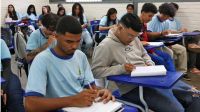
Sweden, one of the most digitalized countries in the world, is rebuilding the classroom around an object that seemed to fall into oblivion more than a decade ago: the printed book. The movement, which gained strength from 2023 and intensified in 2026, marks a turning point in Swedish educational policy, historically associated with technological avant-garde and the early replacement of physical materials by electronic devices.
The transformation began in the late 2000s. From 2009 onwards, Swedish schools began to incorporate computers at an accelerated pace, and, by 2015, around 80% of students already had individual access to a notebook or tablet. In 2019, the use of tablets formally entered the preschool curriculum, consolidating a model in which digital teaching stopped being a complement and became a central axis of learning.
The drop in Pirls that changed the debate
The turning point came with the results of the Pirls (International Reading Progress Study), an exam that measures the reading comprehension of students in the fourth year of primary school, generally between 9 and 10 years old. Between 2016 and the following edition, the Swedish score dropped from 555 to 544 points. The number was still above the European average, of 528 points, but it represented enough of a drop to trigger an alert within the Ministry of Education.
The then minister Lotta Edholm classified the result as a symptom of a structural problem. "We are at risk of creating a generation of functionally illiterate people", he stated, justifying the suspension of the digitalization plan that the National Education Agency had approved months earlier.
The decision did not come from a single cabinet: it was preceded by a consultation process that began in 2023, which brought together academic researchers, educational organizations, public agencies and municipalities, as well as technical reports prepared by more than 60 experts in educational technology, including researchers from the Karolinska Institute in Stockholm.
What changes in practice in Swedish schools
Concrete changes have accumulated since then. Since 2025, Swedish preschools are no longer required to use digital tools, and children under the age of two no longer receive tablets as part of the school routine.
For 2026, a ban on cell phones within schools is scheduled to come into force, a rule that also applies to uses classified as educational, a sign that the government is not only reducing recreational screen time, but also restricting pedagogical applications based on smartphones.
In parallel, the government has already allocated more than 2.1 billion Swedish kronor, the equivalent of around US$200 million, in subsidies for the purchase of textbooks and the production of support guides for teachers.
The goal is for this transition to be institutionally consolidated by 2028, when a new national curriculum structured around teaching based on printed books, covering reading, writing and calculation in analogue format, should be published.
"We are trying to get rid of screens", says ministry
At the head of the Education portfolio today is Joar Forsell, education spokesman for the Liberal Party and member of the government coalition led by Ulf Kristersson.
For him, the priority is to reduce the presence of screens as much as possible in the early stages of schooling. "We're actually trying to get rid of screens as much as possible," Forsell said, as he detailed the ministry's strategy. According to the spokesperson, the rule is not the same for all ages: "with older students, you can use them a little more, but with younger students, I think we shouldn't use screens at all", he added, signaling a gradation by age group instead of a uniform ban.
Teacher autonomy enters the center of the discussion
The reading about the role of digital tools, however, is not unanimous even within the Swedish educational system itself.
Peter Karlberg, director of the National Education Agency, argues that the central issue is not to eliminate technology, but to return pedagogical autonomy to teachers to choose the most appropriate resource at each moment of the class.
On the neuroscience side, researchers such as Sissela Nutley, from the Karolinska Institute, have been reinforcing the argument that the digital environment in the classroom competes directly with students' attention.
Studies conducted by his team show that students tend to lose concentration when following what their classmates are doing on other screens, and that reading on digital devices can require a different (and, in many cases, less efficient) cognitive effort than reading on paper, especially for children in the literacy phase.
A report from the Organization for Economic Co-operation and Development (OECD), released in 2026, provided an additional layer of evidence to the debate. The document recognizes general benefits of using digital tools in specific pedagogical contexts, but points to a high incidence of distractions in Swedish classrooms and establishes a correlation between intensive use of devices during mathematics classes and lower performance in this subject. The organization recommends clear pedagogical goals for technology use, rather than blanket adoption.
Criticism: job market and digital divide
Not all sectors of Swedish society welcome the change with enthusiasm. The Swedish Edtech association has warned that the decline in the use of digital platforms could compromise the preparation of students for a job market increasingly dependent on technological skills, in an argument that gains weight in a country that is home to billion-dollar startup ecosystems, such as Spotify, which originated in Stockholm.
Another point of attention involves artificial intelligence. The Swedish government wants secondary education to formally address the risks and opportunities of using AI, but researchers such as Linnéa Stenliden, from the Department of Behavioral Sciences at Linköping University, argue that this training cannot be restricted to the final years of basic education.
According to her, without guidance from an early age, children from families with more resources and parents who are better able to teach the responsible use of these tools tend to come out at an advantage, widening what experts call the digital divide among students.
A model observed from the outside
The Swedish case has aroused international interest precisely because it reverses a trajectory that other countries are still pursuing: the accelerated digitalization of basic education.
While educational systems in different parts of the world discuss how to expand access to tablets and online platforms, Sweden is testing the opposite path, recalibrating the balance between paper, screen and learning based on evidence collected in the public system itself. The result of this recalibration can only be measured in the next editions of international reading and mathematics assessments, but it already repositions the country as a reference in a debate that goes beyond its borders: to what extent technology, in itself, improves (or harms) children's learning
How can Minecraft empower students in technology?
Source: CNN