Why Iran 'sells' deal with US as a victory
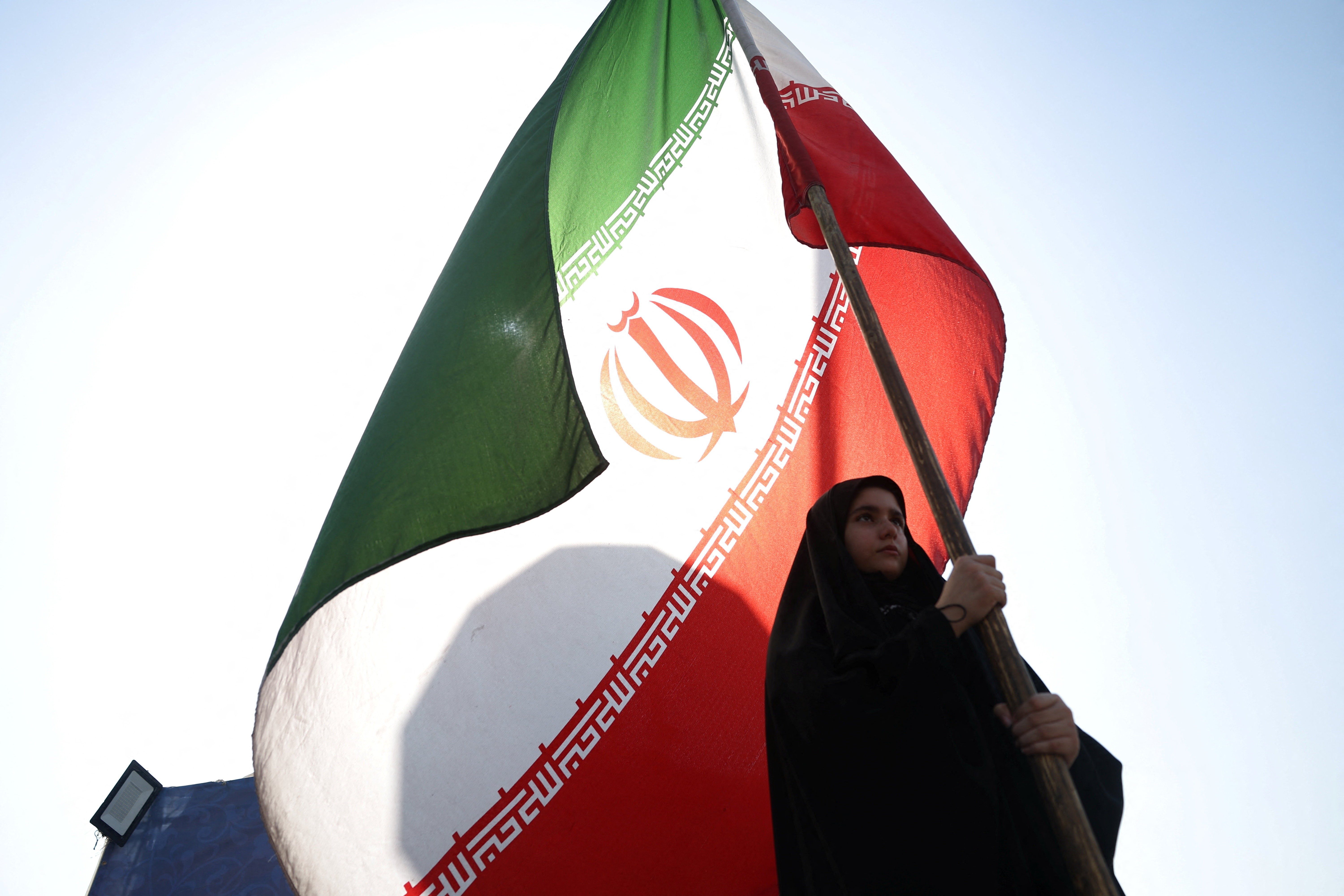
A woman holds an Iranian flag on a street in Tehran, Iran, on June 10, 2026
Majid Asgaripour/WANA (West Asia News Agency) via REUTERS
Iran's leadership is trying to present its memorandum of understanding in negotiations with the United States not as a retreat, but as an achievement achieved by resistance. It is not an easy narrative to sustain within the country.
Iran has just gone through a devastating war, the national economy is under severe pressure and part of the Islamic Republic of Iran's own support base has spent months condemning any rapprochement with the US.
There are also Iranians, inside and outside the country, who see the crisis not as an opportunity for diplomacy, but as a chance for regime change.
It is in this divided political scenario that Iran is now trying to "sell" internally the merits of the agreement.
High-ranking Iranian members present the agreement as a victory.
Mohammad Bagher Qalibaf, speaker of Parliament and Iran's main representative in negotiations with the US, said that Iran had taken "a long step towards final victory".
Iranian President Masoud Pezeshkian described the agreement reached with the US as potentially transformative and said that, if fully implemented, it could solve many of Iran's problems and create "a different world" in the country and in the East Medium.
What points still need to be clarified about the agreement between the US and Iran
Qalibaf's support for the agreement with the US has weight because he does not belong to Pezeshkian's moderate camp. Their public demonstration in favor of the agreement suggests support from the most influential sectors of the regime, including members of the Islamic Revolutionary Guard Corps.
The Iranian leadership also seeks to present the agreement as a victory because, in Tehran's assessment, the US and Israel did not achieve their main objectives.
They did not force Iran to surrender, they did not overthrow the Islamic Republic, they did not end the Iranian nuclear program through military action and they did not break the country's ties with Hezbollah (a group that operates in Lebanon).
Instead, Iran remains at the negotiating table, with Lebanon included in the structure of the agreement and sanctions relief under discussion.
But this official narrative is contested within Iran itself.
According to reports, a hard-line deputy who holds the vice-presidency of Parliament's National Security Committee classified the draft agreement as a document that would transform Iran into a US colony.
He also accused the negotiators of disregarding an instruction from Iran's supreme leader not to reopen the Strait of Hormuz to commercial maritime traffic.
The criticism has weight because it does not come from the opposition or groups outside the regime. It comes from within one of the institutions responsible for monitoring national security issues.
For months, voices from the hard-line wing in Parliament, government-aligned media outlets and participants in pro-regime rallies have repeated the argument that the US is not a reliable partner.
These groups point out that diplomatic efforts were still underway shortly before the start of the war and argue that the administration of American President Donald Trump used the negotiations as cover while Israel and the US prepared military action. For them, any deal with the US risks being seen as a policy of appeasement (in short, making concessions to avoid conflict).
Still, some of these Iranian voices appear to be quieter now. This may indicate that the decision to move forward was authorized by the highest levels of the State.
This does not mean, however, that there is consensus.
It may indicate that, at least for now, the center of power concluded that the cost of rejecting an agreement would be greater than the cost of facing the dissatisfaction of the hard-line wing.
Economic pressure is central to this calculation.
The Iranian leadership may present the agreement as a result of its capacity for military pressure, citing both threats related to the Strait of Hormuz and attacks against energy interests of the US and its allies in the region. But the economy also played a decisive role in forcing Iran to negotiate.
War, sanctions, restrictions on maritime navigation, reduced access to oil markets and hard currency reserves, in addition to high inflation, have put pressure on both the country and the population.
For many families, the question is not whether the agreement sounds like a victory, but whether it will be able to contain the rising cost of living and ward off the risk of a new war.
US Vice President J.D. Vance said that Iran will not receive money from American taxpayers, but could have access to billions of dollars if it meets its commitments and if sanctions are eased. This allows Iran to present the deal as a path to investment and reconstruction, rather than as a form of dependence on the US.
Still, the risks are evident. The details of the memorandum signed between the countries have not yet been fully disclosed, and a new round of negotiations is expected to begin in Switzerland this Friday (19).
The most difficult issues, the future of Iranian enriched uranium, the level of enrichment allowed, verification mechanisms, sanctions relief, the Strait of Hormuz and Lebanon, remain pending and should be discussed in the next negotiations.
There are also uncertainties regarding Israel. Israeli Prime Minister Benjamin Netanyahu rejected reports that Israel will leave southern Lebanon (where Hezbollah operates) and stated that Israeli forces will remain in Lebanese territory for as long as necessary.
Trump, in turn, publicly criticized Israel's actions in Lebanon, stating that the death toll was excessive. He also stated that he was dissatisfied with an Israeli attack on Beirut (the Lebanese capital) shortly before the conclusion of the agreement between Iran and the US, although he insisted that his relationship with Netanyahu remains excellent.
For the Iranian government, the differences exposed between the US and Israel are politically useful. The Iranian government may point to them as a sign that its pressure strategy has limited Israel's room for maneuver. At the same time, they make the agreement more vulnerable.
If Israel maintains its operations in Lebanon, Iran will face pressure to react. And if the US fails to contain Israel, Iran's claim that Lebanon is covered by the agreement could quickly be put to the test.
An Iranian said he feared a new Israeli attack, but that, even after the release of the agreement, he remained 'suspicious' and concerned about the government's ability to lead the country if the agreement were to hold
EPA via BBC
Reactions from the BBC News Persian audience suggest that the official narrative of victory has been unevenly received.
One of these Iranians said they remained "suspicious" and worried about the government's ability to lead the country under the new understanding.
Another Iranian, opposed to the regime and who initially supported a US military intervention, questioned what concrete results the American attack had produced, since it did not result in political changes in Iran. "Our hope was that the system in power would change. But, besides misery, inflation and more damage to the economy, what benefit did it bring to the people?"
Others were more receptive to the Iranian government's speech.
One of these people claimed that Iran won and said the war demonstrated that sanctions are not lifted through "pleading" but through a show of force.
Another welcomed the deal with more caution, saying it will allow people to resume work and daily life with greater ease. "I think it's temporary," he said. "But we needed a few months of breathing and calm."
Perhaps this is the most realistic interpretation. The Islamic Republic of Iran sells the agreement as a victory because it cannot easily present it as a necessity.
But for many Iranians, the success of the agreement will not be measured by slogans. It will be measured by the end of the war, the reduction in the cost of living, the effective easing of sanctions and the leadership's ability to go through the next phase without a new escalation of the conflict.
Source: G1