Why classifying PCC and CV as terrorists can strengthen factions, according to US expert
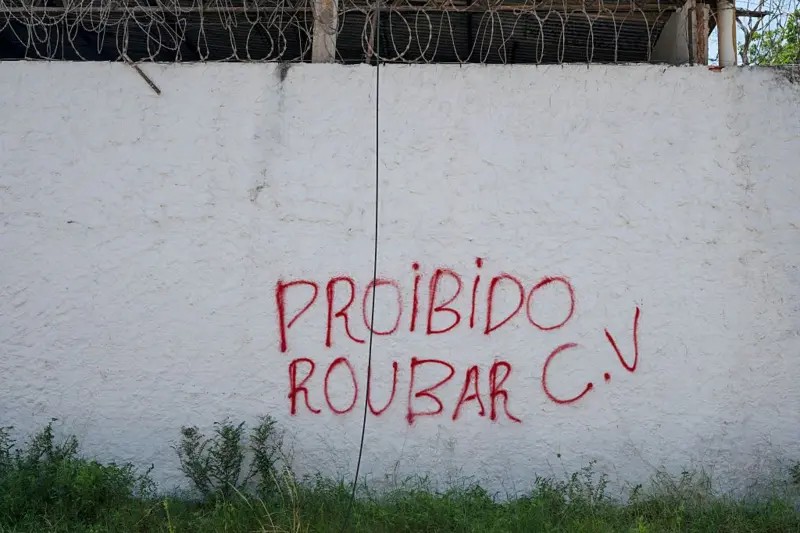
Inclusion of the factions on the American list of foreign terrorist organizations came into force on Friday (5/6)
AFP via Getty Images
The designation of the First Capital Command (PCC) and the Red Command (CV) as terrorist organizations by the United States has the potential to cause the opposite effect desired by Donald Trump and strengthen criminal factions in Brazil and the world.
This is the view shared by criminologist Nikos Passas, professor at Northeastern University, in the United States. The lawyer was one of the experts who collaborated in the implementation of the United Nations conventions against corruption and transnational organized crime and has been closely following the American strategy against narco-terrorism in Latin America.
"In the past, we have seen that the rigorous application of measures against these organizations sometimes serves as an incentive for them to become better organized, more sophisticated and, consequently, more powerful and resilient", he said in an interview with BBC News Brasil.
For Passas, the PCC and the CV were able to grow and expand its operations in recent decades despite the measures taken in Brazil and internationally to stop them, which demonstrates its ability to adapt and find new criminal solutions.
Now on g1
The inclusion of the factions in the American list of Foreign Terrorist Organizations (FTOs), which came into force this Friday (5/6), should initially mean a new challenge for their leaders, he says.
But without close collaboration between the American and Brazilian governments, the scenario can quickly turn in favor of criminals.
"If there is not the necessary international cooperation to combat criminal acts, an undesirable and unforeseen effect could be that these organizations become more powerful and difficult to detect", he explains.
Passas believes that factions have the resources to continue operating despite restrictions
Personal Archive
Factions will need, for example, to change the way they manage their finances so that they can continue to operate. And according to the criminologist, there is evidence that they are able to find sophisticated legal and financial advice to do this.
Similarly, criminal organizations tend to fragment their operations when authorities close in on their structure, says Nikos Passas. Sometimes, this ends up meaning expansion to different geographic regions and jurisdictions.
"History teaches us that this type of organization quickly resorts to sophisticated legal knowledge. They can buy the support of professionals who show them how to circumvent the law", says the criminologist.
Also according to the expert, close collaboration between countries is one of the best ways to combat the organizations and make the measures implemented successful.
In the case of the PCC and the CV, however, it is still not clear how authorities in Brazil and the United States will act from now on.
The designation of the organizations as terrorists was seen as a defeat for President Luiz Inácio Lula da Silva (PT). The Brazilian government was against the measure - the main argument was that it could put national sovereignty at risk by opening space for US military actions under the pretext of combating terrorism.
The government also claimed that the measure would go against Brazilian legislation that makes a distinction between the activities carried out by criminal factions and terrorism.
But the American State Department's decision was announced anyway, a day after senator and presidential candidate Flávio Bolsonaro (PL) having ended a trip to Washington, where he met with President Donald Trump, Vice President J.D. Vance and Secretary of State Marco Rubio.
For Nikos Passas, this scenario indicates an uncertain future in relation to cooperation between the two countries.
In addition, says the expert, the political and partisan tone of the decision can be explored and benefit the PCC and the CV.
"They may claim that they are acting against external parties who are trying to interfere in Brazilian affairs and obtain additional political support", he assesses.
Out of reach of the US?
One of the biggest consequences of the classification as a terrorist organization is the inclusion of the organizations on the list of the US Treasury Department's Office of Foreign Assets Control (Ofac), which administers and applies economic and trade sanctions. As a result, all assets of the factions and their appointed leaders are blocked in the US.
Inclusion also means that any company or individual that provides material support to members or institutions linked to the PCC and the CV may face penalties. This includes sending money, providing a service, consulting, providing transportation or any other direct or indirect economic assistance.
Nikos Passas explains that these barriers can change the rules of the game for criminal organizations.
In the past, other organizations that have been in Ofac's crosshairs have moved away from the US financial environment and the dollar, he says.
"This provides additional incentives for de-dollarization, aiming to avoid US jurisdiction, avoid banks that operate in US dollars or avoid the US dollar altogether", he states.
Marcos Willians Herbas Camacho, aka Marcola, is appointed head of the First Command of the Capital (PCC). He has been in prison since 1999
AFP via Getty Images
In the specific case of the PCC and the CV, which already has its international operations mainly in Europe and Africa, the sanctions should lead to an even greater distance from the United States, points out Passas.
The money that is already laundered, for example, in Portugal, could start to be reintroduced into the Brazilian economy in more sophisticated ways, he says.
And without cooperation established not only between authorities in Brazil and the USA, but between the American, European and African police, it may become more difficult for Donald Trump's government to monitor the movements of the factions.
"From the American point of view, the law has extraterritorial reach, but it will only be effective to the extent that there is agreement and cooperation with local national authorities", he says.
"In other words, you can even use your weapons on targets that are around you, but if they move to another place, they will be out of your reach", summarizes the lawyer.
Source: G1