Who was Catulo da Paixão Cearense, the guitarist who translated the popular for the elite
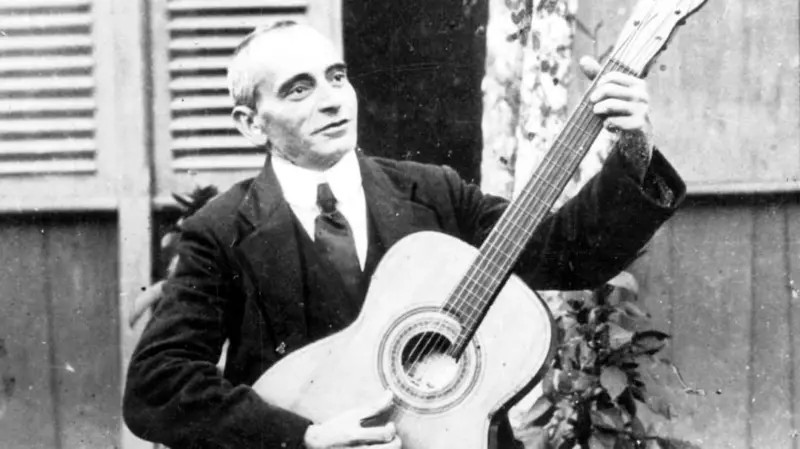
Despite having lost recognition among the general public, Catulo left an important legacy by recording in books and pamphlets part of the popular songbook from the beginning of the 20th century.
Luiz Americo Lisboa Junior/Personal collection
He became known as the poet of the sertão and the versions of the most famous song attributed to him allude to the longing for country life, rural areas, the sertanejo environment. Catulo da Paixão Cearense (1866-1946), from Maranhão, who died 80 years ago, is one of the most important names in popular music in Brazil. an Author?" contemporaneity, with its lyrical vision of an idealized world, of existential harmony", comments musician Alberto Tsuyoshi Ikeda, professor at the University of São Paulo and consultant for the Kaapora Chair: Cultural and Ethnic Diversity in Brazilian Society, at the Federal University of São Paulo. across a vast spectrum that goes from Caetano Veloso to Francisco Alves, passing through Vicente Celestino, Chitãozinho and Xororó, Elba Ramalho, Luiz Gonzaga and Milton Nascimento.
Author of Da Modinha ao Sertão, a book about the trajectory of Catulo, the historian and writer Luiz Americo Lisboa Junior, doctoral researcher at the University of Lisbon, classifies Luar do Sertão as "a Brazilian cultural heritage".
"Its importance is fundamental", says the historian.
One of the most re-recorded songs in the history of the Brazilian songbook, the composition is defined by the famous Cravo Albin Dictionary of Brazilian Popular Music as "a second National Anthem". The first black minister of the Federal Supreme Court, jurist Pedro Lessa (1859-1921) called the song the "country anthem of the country".
Country music has roots in cattle drives and sugarcane and coffee farms
There is a historical controversy over the authorship of the song, with attributions sometimes to Catulo, sometimes to the guitarist João Teixeira Guimarães (1883-1947), João Pernambuco. According to experts, the most correct option is to assign the lyrics to the former and the melody to the latter. But this issue also involves the fact that the notion of copyright for popular compositions was somewhat diffuse at the beginning of the 20th century.
Catullus - and this seems to have been his great merit - was skilled in rescuing popular songs that were circulating at the time and publishing them in books and booklets bearing his name. Gradually, he ended up being seen as the author.
Biography
Born in São Luís do Maranhão, Catulo da Paixão Cearense moved to Rio de Janeiro as a teenager, with his parents. He worked as a watchmaker and as a dockworker. But he quickly ended up getting involved with the city's bohemians, especially the so-called whiners.
"His generation constitutes the basis of what we today call Brazilian popular music", points out Ikeda, citing peers such as Francisca Neves Gonzaga (1847-1935), Chiquinha Gonzaga, Ernesto Nazareth (1863-1934) and Joaquim Callado (1848-1880), among others.
He became friends with a bookseller, Pedro da Silva Quaresma (1863-1921), and began to publish leaflets and booklets with compilations of fads that were circulating at the time.
"His modinhas books sold more than the literature of the time", compares Moraes.
"Coming from the northeastern interior, he conquered the national capital, mixing worlds that seemed condemned to live forever apart", comments Vianna.
"He was a dockworker in the port of Rio de Janeiro, but his musical talent, and astonishing curiosity, soon made him a mediating link between very different environments such as the presidential palace and the terreiros that would still invent samba", adds the anthropologist. "He made the connection between the intellectuals of the Brazilian Academy of Letters and those who created popular poetry on the streets of Rio. Also between the urban song, known as modinha, and the rural styles, or sertanejos, from all over the country. This was before radio or the recording industry."
The first recording of his most famous song, Luar do Sertão, was made in 1914, by the singer Eduardo das Neves (1874-1919). It came out on a 78 rpm record, from Casa Edison. There the credits appeared as "verses and music by Catulo Cearense".
"Luar do Sertão is something exceptional, one of the best-known songs in the entire history of popular music in Brazil", assesses Ikeda.
Quadrilhas Competition - Luar do Sertão
It was the moment when the idea of recording, in itself, was a recent novelty. Ikeda remembers that Catulo is an important character in this historical period in which there is a transition in the model of listening to music, as the first recordings allow such an experience to not necessarily be live and based on an interpersonal relationship. "A new artistic-economic segment was then created through records", explains the professor.
But Catulo was far from being a one-hit man. Songs such as Talento e Formosura, Invocation of a Star and Yesterday in the Moonlight were also very well known, especially in its time.
"It produced many hits that marked our imagination, including influencing carnival news", recalls Vianna.
Lisboa Junior brings an interesting curiosity. "The first time that the term 'sambando' appeared in a song was in the song A Viola Está Magoada [by Catulo], a type of alto party samba recorded in 1914 by the singers Bahiano [pseudonym of Manuel Pedro dos Santos (1870-1944)] and Júlia Martins", he says.
The recording, as recorded in the National Library archives, took place three years before Pelo Telephone was recorded by Donga, artistic name of Ernesto dos Santos (1890-1974) - considered by many to be the first recorded samba. "Another myth in the history of MPB that is undone by the facts", says the historian.
Catulo published several books, which were sold at popular prices and had circulations considered high. The most important are Meu Sertão, Sertão em Flor, Poemas Bravios and Mata Iluminada.
"He was the first great poet of the sertão", defines Lisboa Junior. "These books are fundamental for understanding the country language of the early 20th century."
For poet Sebastião Moreira Duarte, from the Academia Maranhense de Letras, if "Catulo's place in the popular songbook cannot even be doubted", his literature needs to be looked at with reservations. "He is a genius in metaphors, a telluric creator of beautiful poetic images and has the ability to rhyme that popular singers have", he comments. "His lyricism is, however, that of an early ultra-romantic."
Duarte also criticizes the idiolect commonly used by Catullus in his compositions. "A language that is simply fake," he says. "He did not know the native language and distorted words just to serve his need for rhyme", he points out.
Historian Moraes states that Catulo moved among many important people in the cultural world, such as the poets Manuel Bandeira (1886-1968) and Mário de Andrade (1893-1945). "This social capital was well used by him in his books.
Catulo sought a certain distinction based on literacy", he analyzes.
Catulo was a great friend of the Portuguese poet and diplomat Júlio Dantas (1876-1962). "He made a point of praising Catulo's literary quality by frequenting his house a lot", says Lisboa Junior. "When Julio Dantas was honored at the Brazilian Academy of Letters, he insisted on Catulo's presence and shared the honors received with him."
O "translator" of the popular for the elites
For experts, Catulo's greatest legacy was this work of rescuing and recording the songs that were circulating at the time.
"He circulated in the suburbs of Rio and took the songs from there to the homes of the city's elite in Rio de Janeiro at the time, at the turn of the 19th to the 20th century", explains Moraes.
But it was not a mere reproduction. According to the historian, Catulo adapted the songs so that they became popular. palatable to the tastes of that aristocracy accustomed to genres such as waltz, tango and mazurka. "He played with his own musical accompaniment so that the music was consumed by this elite", says Moraes. "appropriating" popular lyrics, publishing them under his name in compilations. "This is what happened with Luar do Sertão, which was already known in popular circles in Rio", he exemplifies. Another case of this type was the song Cabocla de Caxangá.
The historian explains that the recognition as an intellectual creator of the works was due to the relationship between authorship and written text, therefore. Moraes.
Interestingly, however, he adapted the lyrics. In his own words, he "corrected" the "crippled and barbaric" lyrics. "In his terms, he civilized the compositions", says Moraes. Moraes.
"The legacy was that he put it on paper. And the written object has more durability than the oral object", he defines. "Much of what we know about the songbook of that time has survived to this day because it was effectively compiled by Catullus."
The historian highlights, however, that the poet gave "an authorial tone to himself". distinct social groups, attending the elites and bringing popular production to these groups."
"He was the mediator and creator who brought together very different and distinct social and semantic worlds within the history of Brazilian culture and music", highlights Ikeda.
"Catulo was also an excellent guitarist and responsible for introducing the guitar, an instrument considered vagrant, into elite salons", states Lisboa Junior. The historian cites the event of July 5, 1908, when the artist he sang modinhas in a recital at the National Institute of Music, in Rio. "In the audience was the cultural, scientific and political cream of the country", he comments.
The country singer roots
According to historian Moraes, it was after the success of Luar do Sertão that Catulo began to be seen as a country poet. And he was already very successful."
As time went by, however, his personal fame ended up disappearing from the general public.
At least as a person, as a character.
"If on the one hand he doesn't seem to get much recognition nowadays, at least the work does," says Ikeda. "And it continues to be sung by many artists. Even the youngest country duos know Luar do Sertão."
Circuito Sertanejo values new talents in the genre
Source: G1