Who is the DR Congo fan who remains motionless during World Cup games to pay homage to one of Africa's greatest heroes?
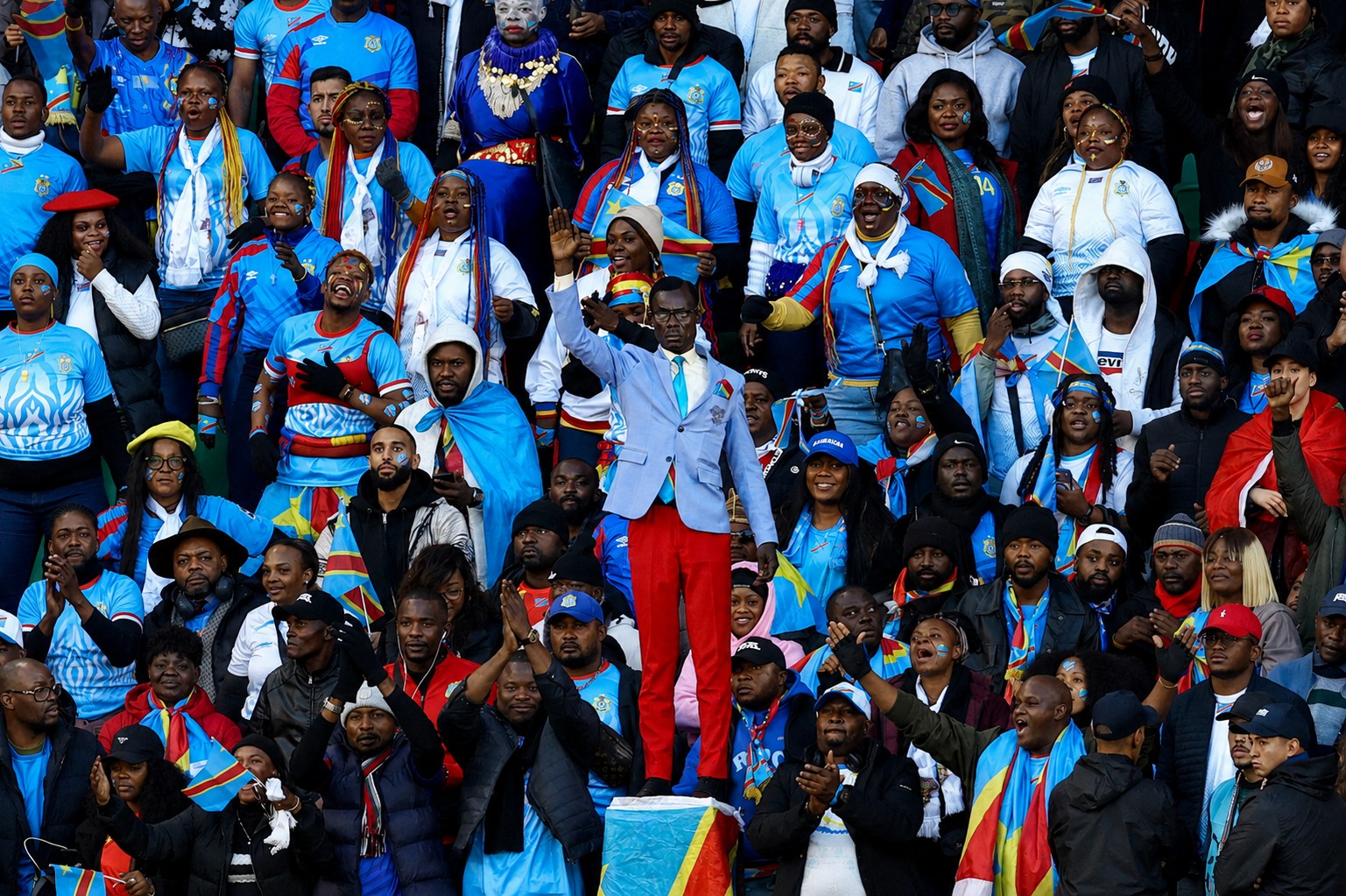
Who is the DR Congo fan who remains motionless during matches and pays homage to a hero
Anyone who follows the match between DR Congo and Portugal, this Wednesday (17), for the 2026 World Cup will come across Michel Kuka Mboladinga. Dressed in the colors of the country's flag, motionless throughout the match and with his arm raised, the fan became one of the main symbols of the Congolese team for honoring a national hero who died more than six decades ago.
Favorite g1 on Google and follow the main news of the day
The pose reproduces the image of Patrice Lumumba, leader of the independence of the Democratic Republic of Congo and considered one of the main symbols of the anti-colonial struggle in Africa.
Mboladinga He became famous during the 2025 African Cup of Nations, when he remained motionless for 90 minutes in the stands, replicating the posture of the statue erected in honor of the former prime minister in Kinshasa, the country's capital. Mboladinga poses as a statue of Patrice Lumumba, the country's independence hero.
REUTERS/Siphiwe Sibeko/File photo
Who was Patrice Lumumba?
Considered a national hero, Patrice Emery Lumumba was the main leader of the movement that led the Democratic Republic of Congo to independence from Belgium in 1960.
Before that, the territory experienced one of the longest colonial periods violent events in modern history. Initially controlled by King Leopold II of Belgium, the so-called Congo Free State was the scene of a regime marked by forced labor, mutilations, massacres and exploitation of the local population to extract natural resources.
Historians estimate that up to 10 million Congolese people died between the end of the 19th century and the beginning of the 20th century.
It was in this context that Lumumba emerged. Defender of national unity and self-determination of African peoples, he founded the Congolese National Movement (MNC) and became the main voice for the country's independence.
In June 1960, when Congo gained its independence, Lumumba assumed the role of prime minister. His government, however, only lasted a few months.
In the midst of the Cold War, the leader began to be viewed with suspicion by Western powers. He was deposed in a coup led by then-Colonel Joseph Mobutu, who would later rule the country as a dictator for more than three decades.
Patrice Lumumba, hero of the Democratic Republic of the Congo.
Reproduction
Arrested by his adversaries, Lumumba was executed on January 17, 1961. Investigations carried out decades later pointed to the involvement of Belgian authorities and the United States Central Intelligence Agency (CIA) in the conspiracy that led to his death.
After the murder, his body was dissolved in acid to prevent the tomb from becoming a place of political pilgrimage. Only a gold dental crown remained, returned to Lumumba's family by Belgium only in 2022, more than 60 years after his death.
The death transformed the former prime minister into a martyr for Congolese independence and a symbol of the fight against colonialism throughout Africa.
Now, in the 2026 World Cup, the leader's image reappears to accompany the DR Congo team in its second participation in history.
The Democratic Republic of Congo fan Michel Nkuka Mboladinga portrayed as Patrice Lumumba.
AP
Source: G1