WHO identifies Ebola treatments and vaccines for testing in clinical trials amid outbreak
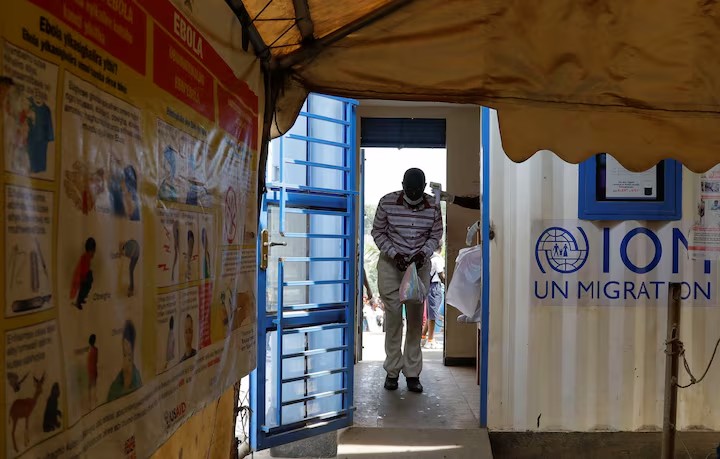
A man walks through a temperature checkpoint after Uganda closes its borders with the Democratic Republic of Congo, as authorities step up efforts to contain a new Ebola outbreak caused by the Bundibugyo strain of the virus, at the Mpondwe border post, Kasese district, Uganda, May 28, 2026.
REUTERS/Abubaker Lubowa.
The World Health Organization (WHO) has recommended prioritizing three experimental treatments against the Bundibugyo strain of Ebola: MBP134, from Mapp Biopharmaceutical; maftivimab, from Regeneron; and the antiviral remdesivir, from Gilead Sciences.
The agency stated on Thursday that these medicines, in addition to candidate vaccines, must be evaluated in clinical trials to generate data on safety and efficacy.
The measure comes as the outbreak continues in the Democratic Republic of Congo, with cases also reported in Uganda.
Ebola outbreak worries the world
According to the entity, there are still no vaccines or therapies approved specifically for the disease caused by the Bundibugyo strain of the Ebola virus.
In a statement, Regeneron reported that the supply of maftivimab is now available in the DRC, should the WHO decide to use it immediately in patients or incorporate it into clinical studies.
For prevention, the WHO highlighted the experimental oral antiviral drug obeldesivir, from Gilead, as a priority for post-exposure use in contacts of confirmed cases. The agency highlighted, however, that the effectiveness of the strategy depends on rigorous contact tracing.
Health professionals with protective equipment outside the General Reference Hospital during actions to combat the Ebola outbreak, on May 21, 2026, in Mongbwalu, in the Democratic Republic of Congo
Getty Images/BBC
Among the vaccines under development, the single-dose candidate rVSV Bundibugyo, developed by the International AIDS Vaccine Initiative, was considered the most promising. Still, the WHO assesses it as unlikely that the vaccine will be ready for testing in the next seven to nine months.
Another candidate, ChAdOx1 Bundibugyo, developed by the University of Oxford in partnership with the Serum Institute of India, could advance to testing in two to three months, although it still depends on additional data from animal studies.
The WHO also analyzed the potential use of Ervebo, from Merck & Co., currently the only licensed vaccine against Ebola. The agency, however, recommended that the vaccine not be used outside of research, as evidence of protection against the Bundibugyo variant is still considered limited and inconclusive.
WHO consultants also recommended evaluating combined therapies, combining monoclonal antibodies with remdesivir.
The agency also reported that it is working with authorities from the Democratic Republic of Congo and Uganda, as well as partners such as the Africa Centers for Disease Control and Prevention, to structure and implement clinical trials under strict ethical standards.
READ ALSO: Ebola scares Africa again amid war and poverty in Congo
Source: G1