Who are the two Brazilians targeted by Trump government sanctions on suspicion of links to the PCC
President Donald Trump speaks in the Oval Office of the White House during the signing of an executive order on quantum computing, on Monday, June 22, 2026, in Washington
REUTERS/Jonathan Ernst
The Trump administration announced this Wednesday (1st) sanctions against two Brazilians, Victor Henrique de Oliveira Shimada and Stella Stefanie Nunes Henrique de Oliveira, for alleged links with the criminal faction Primeiro Comando da Capital (PCC).
Favorite g1 on Google and follow the main news of the day
In addition to them, three companies based in Brazil and one Portuguese company were also targets of the American blockades. The sanctions were formalized by the US Treasury Department.
Who are the Brazilians sanctioned?
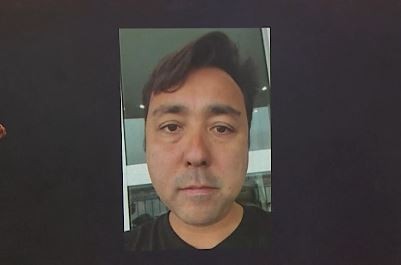
Victor Henrique de Oliveira Shimada
Victor Shimada, partner at Victory Trading Intermediacão De Negocios Cobrancas E Tecnologia Ltda, sanctioned by the US government on July 1, 2026.
Reproduction/GloboNews
Shimada is a partner at Victory Trading Intermediação de Negócios Cobranças e Tecnologia Ltda. He is also a partner in Avenidas Flutuantes Unipessoal Lda, based in Portugal, a company also sanctioned by the US this Wednesday.
The businessman was classified by the US as a "key link between members of the PCC in Florida and international drug traffickers". The Trump administration accuses him of:
laundering more than US$30 million (around R$156 million) in illicit resources generated in several US cities, using cryptocurrencies to transfer amounts back to Brazil on behalf of the PCC;
getting involved in other financial crimes in addition to money laundering from drug trafficking.
In Brazil, Shimada is investigated on suspicion of participating in money laundering operations related to the VaideBet case, which investigates embezzlement of resources of the sponsorship contract between Corinthians and the bookmaker. (Read more below).
When reporting the sanction, the US mentioned that Victory Trading, of which Shimada is a partner, was used to launder money diverted from a Brazilian football club, but did not mention the name of the black and white team in the statement.
Stella Stefanie Nunes Henrique de Oliveira
Stella, according to the US, is a relative of Shimada and acted as his secretary.
The North American government also claims that it acted as an intermediary in the collection of large amounts of money, providing essential logistical services for network laundering operations.
Investigation of the VaideBet case
In Brazil, Victor Shimada appears in investigations investigating the alleged diversion of resources from the contract signed between Corinthians and VaideBet.
According to a complaint presented by the Public Ministry and accepted by the Court, Victory Trading maintained intense financial transactions with the company Wave Intermediações e Tecnologias Ltda., identified by investigators as one of the companies used to move values from the investigated scheme.
The investigation identified a financial chain that includes companies through which the resources would have passed after leaving Corinthians' account. According to the records, part of the analyzed flow followed the path:
Corinthians → Social Media Design Network → Neoway → Wave → UJ Football Talent
In parallel, investigators pointed to transfers from Victory Trading to UJ Football Talent, a company mentioned in other police investigations.
The complaint states that Shimada had acted as a financial operator of a company used, at least partially, to hide and disguise the origin of resources. He was denounced by the Public Ministry for money laundering.
In January 2025, Shimada was briefly under house arrest in Brazil due to the use of his company in this scheme involving the football club.
The sanctions
According to the USA, Victor and Stella and the three companies mentioned were part of an international PCC money laundering network, which has been investigated in Florida.
Another six accused of being part of this money laundering network were arrested in January this year in the US state, according to the statement.
The sanctions were formalized by the US Treasury Department.
This is the first round of economic sanctions announced by the Trump administration against targets it believes to be related to the Brazilian faction after having classified the PCC and the CV as international terrorist groups in June.
Understand here what happens to people and companies economically sanctioned by the US government.
Now on g1
In the statement from the Treasury Department, the Trump administration once again called the CCP the "largest transnational criminal organization in the Western Hemisphere" and stated that the faction represents a "significant threat to US national security." Furthermore, it accused the PCC of using the North American financial system to launder money.
In June, the US State Department classified the PCC and Red Command (CV) as terrorist organizations, contrary to requests from the federal government. The determination opens space for harsher and unilateral actions by the United States, such as sanctioning Brazilian citizens and companies and, as a last resort, direct intervention in the national territory.
USA sanctions two people and three Brazilian companies for alleged links with the PCC on July 1, 2026.
Reproduction/US Treasury Department
The US Undersecretary for Terrorism and Financial Intelligence, Gene Lange, stated in the statement that the Trump administration is facing the "growing presence of illicit revenue generation from the First Capital Command within the US".
READ ALSO:
Trump government says that PCC uses American financial system to launder money
What happens to people and companies sanctioned by the US government? Understand
Classifying PCC and CV as terrorists is part of Trump's strategy for the region; understand
The Trump government's statement about PCC and CV that worries the Lula government: 'Threats to regional security'
Source: G1