What to expect from Kevin Warsh's debut at Fed? Market observes tone of new president
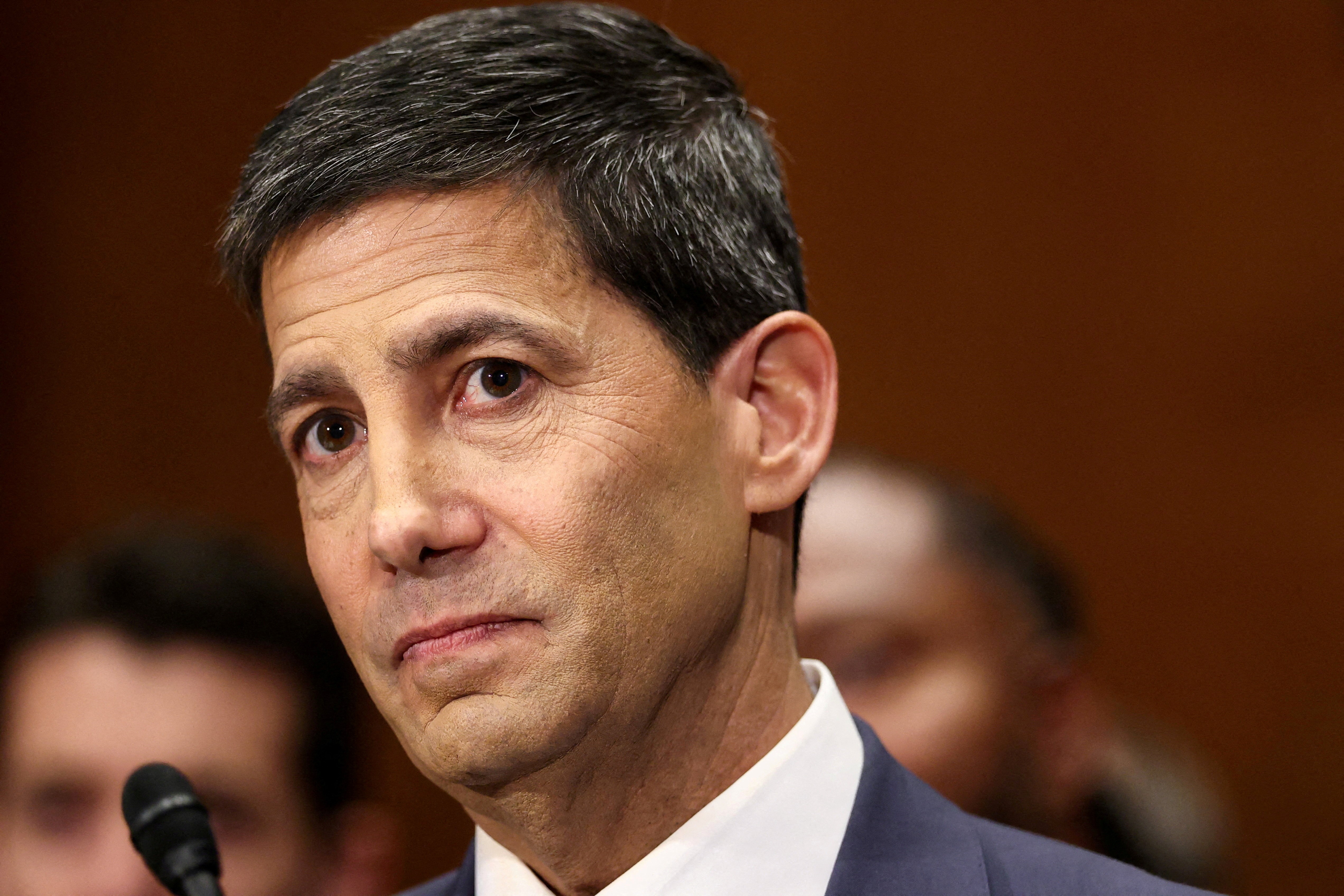
Trump nominates Kevin Warsh to head the Federal Reserve, the US central bank
The first meeting of the Federal Reserve (Fed, the central bank of the United States) under the command of Kevin Warsh ends this Wednesday (17) in a scenario that usually worries: resistant inflation, a heated job market and political pressure for lower interest rates.
The financial market expectation is that interest rates will be maintained between 3.5% and 3.75% per year. Still, the meeting is seen as the beginning of a new phase of the American Central Bank.
Do you have any suggestions for reporting? Send it to g1
More than this week's decision, investors are seeking to understand how Warsh intends to lead the institution in the coming years and to what extent he will be willing to maintain a firm stance in the fight against inflation.
Warsh's first press conference will be monitored in search of signs about how the new president intends to communicate, what his level of tolerance will be for inflation above the target and to what extent he will be willing to contradict the White House.
The change of command occurs amid questions about the independence of the Fed and pressure from President Donald Trump for lower interest rates.
"The turmoil at the end of Jerome Powell's term serves as a reminder that the independence of central banks is not something guaranteed. What is at stake goes beyond price stability and reaches the global financial architecture itself", says Anis Bensaidani, economist at BNP Paribas.
Kevin Warsh, appointed by Donald Trump to preside over the Federal Reserve, in a photo from April 21, 2026
Reuters/Kevin Lamarque
New command, old pressures
The change of command at the Fed comes after months of friction between Trump and the institution's then president, Jerome Powell. Since the beginning of his second term, the Republican has argued that high interest rates make credit more expensive and harm the economy.
Criticism intensified in July last year, when Trump even called Powell "stupid" and "empty-headed", accusing interest rate decisions of harming Americans.
In an interview with NBC News last week, however, Trump adopted a different tone when commenting on the new command of the central bank.
Donald Trump and former Fed president, Jerome Powell, in July 24, 2025.
REUTERS
The Republican stated that he wants Warsh to "do what he wants", but returned to defending lower interest rates and criticized the possibility of new increases. In the president's view, the American economy remains strong, and making credit more expensive would be a way of "punishing success".
For Bensaidani, from BNP Paribas, the change of command at the Fed, in itself, should not cause relevant changes in the conduct of interest rates. According to him, the main guarantee of the institution's independence continues to be the structure of the committee responsible for decisions.
"Warsh's vote has no more weight than that of any other director or regional president with the right to vote - and these members, in general, demonstrate concern about the high and growing level of inflation."
In the assessment of Luiza Paparounis and Francisco Lopes, analysts at BTG Pactual, the combination of strong economic activity, a solid job market and high inflation requires caution on the part of the Fed.
By At the same time, an "excessively patient" stance can be interpreted by the market as a sign of tolerance to inflation. Therefore, the committee's communication gains even more importance.
For analysts, Warsh should take to the Fed his critical view on the excess of signals regarding the next steps in interest rates.
"It is possible that he will try to reduce the importance of explicit signals about the trajectory of interest rates and emphasize that decisions will be taken meeting by meeting, based on the data", they say.
High interest rates for longer
Recent data from the American economy help explain why the Fed faces a more complex task and why the perception is growing that interest rates will have to remain high for longer.
Heated job market: the creation of 172 thousand jobs in May and the stable unemployment rate at 4.3% - still at historically low levels - show that the economy continues to generate jobs. At the same time, wages increase by around 3.4% per year, signaling that the demand for workers remains strong.
⛽ Pressure on prices: inflation has regained strength. The consumer price index (CPI), one of the main measures of the cost of living, accumulated an increase of 4.2% in 12 months, the highest level in three years. The movement was mainly driven by the increase in energy prices amid the conflict in the Middle East.
Inflation still far from target: even when excluding more volatile items, such as food and energy, the indicators remain above the 2% objective pursued by the Fed. The core CPI is at 2.9%, while the core PCE - the inflation index preferred by the American central bank as it better reflects families' consumption habits - remains around 3.3%.
More moderate growth: on the other hand, economic activity shows signs of losing steam. Gross Domestic Product (GDP) grew at an annualized rate of 1.6% in the last quarter, below the 2% previously projected and market expectations, indicating a slowdown in relation to previous periods.
Gustavo Sung, chief economist at Suno Research, expects the Fed to abandon any sign of interest rate cuts and reinforce a "wait and see" stance, keeping decisions conditioned on upcoming indicators and the geopolitical scenario.
"Although Warsh recently defended monetary easing before the conflict, he must adopt a technical stance. In his first stint at the Fed, between 2006 and 2011, he was considered more rigid", he says Sung.
For Axel D. Angermann, chief economist at the FERI Group, this week's meeting could have deeper implications than the simple decision on interest rates.
In his opinion, Warsh's debut could mark the beginning of a "fundamentally new direction" for the Fed, reflecting criticisms that the economist has made for years of the policies adopted by his predecessors, such as Powell, Ben Bernanke and Janet Yellen.
According to Angermann, Warsh sees it as skepticism about the expansion of the central bank's balance sheet and the Fed's more active role in supporting the economy. For him, this could represent a break with the strategy adopted in recent decades and open space for a less interventionist approach.
"US monetary policy could return to following a rules-based approach, as it last occurred in the 1990s under Alan Greenspan, avoiding active adjustments in the economy and the labor market."
For Angermann, more important than this week's decision will be to see whether Warsh will begin to put this philosophy into practice in the first months ahead of the Fed.
Headquarters of the Federal Reserve (Fed), US Central Bank.
REUTERS/Joshua Roberts
Source: G1