What points still need to be clarified in the agreement between the US and Iran
USA and Iran sign pre-agreement to end the war, says agency
The United States and Iran, who had been at war since the end of February, announced over the weekend that they had reached an agreement to end the conflict.
✅ Follow the g1 international news channel on WhatsApp
The announcement does not, however, mean the automatic end of the war. The agreement initially provides for a ceasefire - that is, a truce in the attacks, and not a definitive end to them.
This ceasefire would last while the two parties discuss the key point of the negotiations, which is still open: the future of the Iranian nuclear program. Other issues, such as navigation in the Strait of Hormuz and Iran's financial compensation, are not completely clarified at the moment.
The full agreement will be known on Friday (19), when there will be a ceremony to sign the document in Geneva, Switzerland.
See below the issues still open to the agreement:
Iran's nuclear program
This is the key point of the negotiations, which is still open. The agreement that will be signed on Friday provides, according to Tehran, that negotiators on both sides will reach a consensus within a period of up to 60 days.
The Trump administration wants Iran to completely end its nuclear program, which Washington says serves to create nuclear weapons - this was, in fact, Trump's main argument for attacking Iran on February 28, starting the war.
Trump said that his team of negotiators demanded that an independent team enter Iran and excavate all the nuclear material and send the uranium already enriched in Iranian territory out of the country, possibly to Russia, which has already offered to receive the material.
Tehran, however, denies this and says that the program is used exclusively for civilian purposes.
The issue is thorny, and Washington and Tehran are far from a consensus.
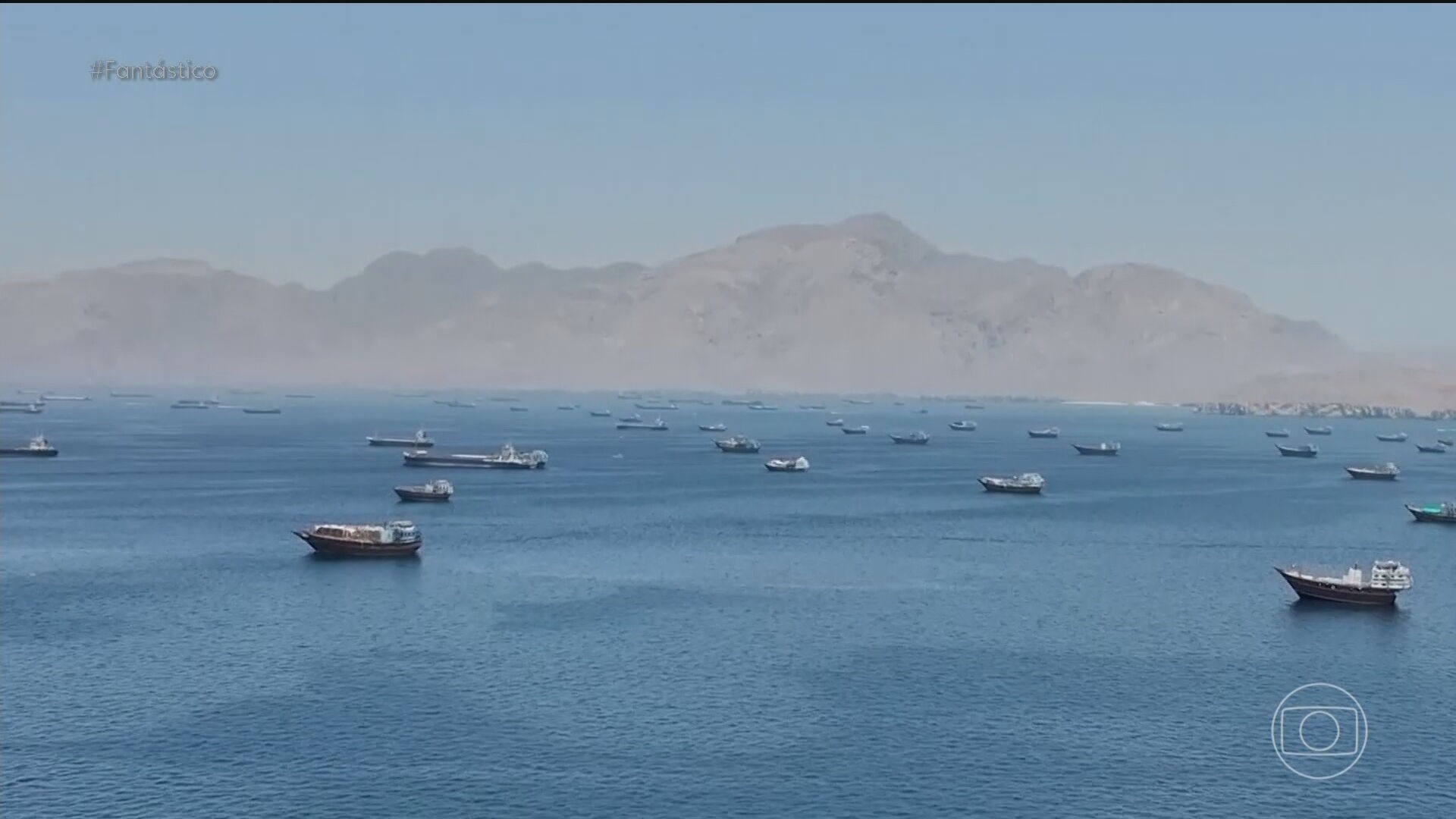
Strait of Hormuz
Europe celebrates agreement between the US and Iran, but warns about nuclear weapons
Reproduction/TV Globo
Both Washington and Tehran said that the Strait of Hormuz, which became the major point of tension in the war, will be reopened immediately.
Similarly, Donald Trump stated that he had already ordered the lifting of the naval blockade that US Navy ships do at the entrance to the strait, preventing the passage of ships that trade with Iranian ports in the region.
But the consensus ends there: on Monday (15), Trump even said that ship traffic in the canal had already started to move after the announcement. But Iran, which in practice controls the movement of ships in Hormuz, did not confirm.
Iran's Ministry of Defense also announced that it will start charging a "service fee" to ships crossing the strait, despite Donald Trump having stated that the agreement prohibits the introduction of a toll on local vessel traffic.
In addition, Iran placed naval mines in the strait as a way to control the passage - the location of the devices is unknown, however, even by Tehran.
A complete sweep to deactivate all explosives could take up to 50 days. Before that, due to the imposition of insurers and maritime cargo operators, navigation in the strait would still be unfeasible.
Sanctions on Iran and financial compensation
Among the demands published by Iran for the end of the conflict is the suspension of sanctions on the sale of oil, petrochemical products and derivatives, and full access by Iran to its financial resources that are frozen.
The USA agreed to relax and ease economic sanctions, but gradually and conditioned on compliance with the agreement.
Tehran's objective is to be able to reestablish oil exports to recover its economy severely damaged by more than three months of conflict.
Iran also wants the US and allies to present a reconstruction plan for the country worth at least US$300 billion, as compensation for the damage caused by the war. Washington made no comments in this regard.
Conflict and occupation in Lebanon
This is one of the points where there is least consensus, at least between Israel and the other parties.
The official announcement of the agreement by Pakistani Prime Minister Shehbaz Sharif highlighted that the permanent end of military operations includes the front in Lebanon.
The end of Israel's attacks on Lebanese territory is even a direct demand from Tehran to sign the agreement. This is because Iran is an ally and finances Hezbollah, the target of Israel's attacks in Lebanon. The terrorist group attacked Israeli territory days after the start of the conflict, as retaliation, when the US and Israel bombed Iran.
On Monday, Benjamin Netanyahu said that his troops will remain in "security zones", spaces occupied by Israel within Lebanese territory, "until necessary".
It is not known whether the agreement provides for any Israeli military concessions in relation to troops stationed in the neighboring country.
Source: G1