What is the Strait of Hormuz, essential for global oil; dispute over ticket leads to new attacks between US and Iran
The Strait of Hormuz returned to the spotlight after a new escalation in the conflict between the United States and Iran. This Wednesday (8), the US launched new attacks against Iranian targets in response to Tehran's offensives against commercial ships crossing the region.
LIVE: Follow the news about the war in Iran in REAL TIME
In reaction, Iran threatened to close the main maritime route for transporting oil in the world again, which raised tension in the Middle East and reignited fears of impacts on global oil supplies.
The Strait of Hormuz is an "artery" of the oil industry through which around 20% of all the world's oil passes. Its closure during a period of conflict had a strong impact on the global economy. The announcement of the peace agreement, in fact, brought down oil prices at the opening of Monday's trading session.
Favorite g1 on Google and follow the main news of the day
See other details about the strait below.
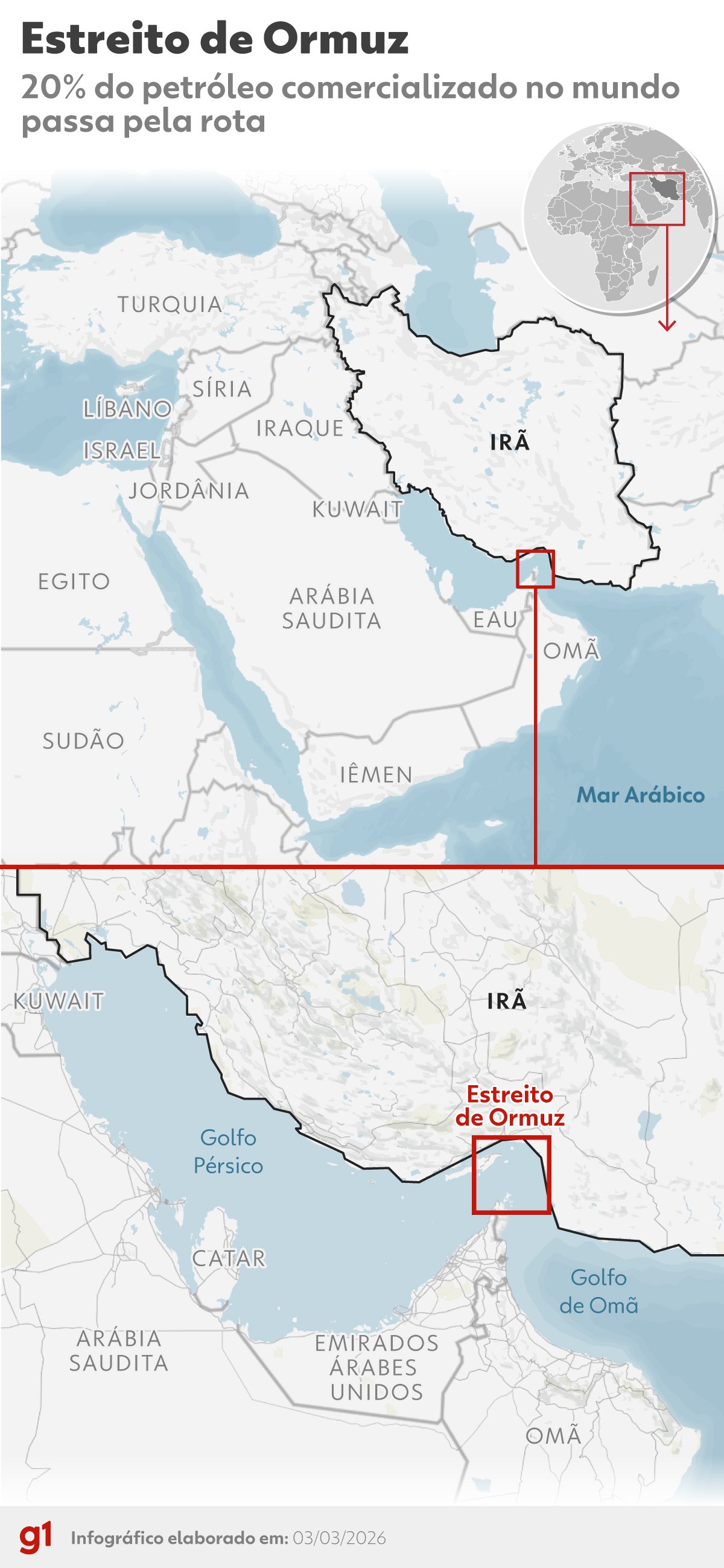
Infographic - Strait of Hormuz
Arte/g1
READ ALSO:
After a new threat from Trump, Iran's chancellor says the country will respond with actions firm
Trump says that attacks on Iran are retaliation and makes a new threat: 'If it happens again, it will be much worse'
UN agency condemns resumption of war and says that 6,000 sailors are trapped in the Persian Gulf
Trump says that attacks on Iran are retaliation and makes a new threat: 'If it happens again, it will be much worse'
'Arterty' of global oil transit
The Strait of Hormuz connects the Persian Gulf (to north) with the Gulf of Oman (to the south), and "flows" into the Arabian Sea. At its narrowest, the strait is 33 km wide, with navigation channels just 3 km in each direction.
About a fifth of all world oil consumption passes through the strait. Between early 2022 and May 2025, approximately 17.8 to 20.8 million barrels per day of crude oil, condensate or fuel flowed through the site daily, according to data from maritime monitoring platform Vortexa.
Conflict in the Middle East: the strategic role of the Strait of Hormuz
Members of the Organization of the Petroleum Exporting Countries (OPEC) such as Saudi Arabia, Iran, United Arab Emirates, Kuwait and Iraq export most of their oil through the strait, mainly to Asia.
The closure of the Strait of Hormuz has caused serious problems in the world's oil supply.
Getty Images via BBC
The United Arab Emirates and Saudi Arabia are looking for alternative routes to not depend on the strait.
Qatar, one of the world's largest exporters of liquefied natural gas, sends almost all of its production through the strait.
According to the US Energy Information Administration, there was about 2.6 million barrels per day of spare capacity in these countries' existing pipelines, which could be used to bypass Hormuz (data from June 2024).
Ship passes through Strait of Hormuz
REUTERS/Hamad I Mohammed/File Photo
Source: G1