What is known about the possible peace agreement between the US and Iran
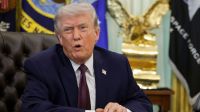
US President Donald Trump said this Thursday (11) that an agreement to end the conflict with Iran is close to being concluded and could be signed as early as this weekend.
According to the American president, the documents are practically finalized and have the support of Iranian leaders, although Tehran denies that there is a final decision.
The statements come after weeks of military escalation in the Middle East, including American strikes against Iranian targets and the announcement of the closure of the Strait of Hormuz by Tehran forces.
Trump's announcements
During the afternoon of this Thursday, in a publication on the Truth Social network, Trump stated that he had canceled attacks and bombings that were scheduled to take place during the night.
According to him, the decision was taken after negotiations with Iran reached "the highest level of Iranian leadership" and after approval of the "final points" of a possible agreement.
Later, during an event in the Oval Office, Trump once again defended that the parties are very close to an understanding.
"The documents are practically finalized, so let's see," he said.
The American president said he expected a signing ceremony in the coming days, possibly in Europe, with the presence of American vice-president JD Vance.
Trump also stated that the agreement provides for an Iranian commitment to abandon any pursuit of nuclear weapons and that, in exchange, the United States would immediately end the naval blockade imposed on Iran's ports.
In addition, the US president stated that he believes that Iranian Supreme Leader Mojtaba Khamenei approved the understanding.
Later, during a virtual rally in support of Georgia Lieutenant Governor Burt Jones, Trump claimed that the United States had "ended the war" with Iran.
"I don't know if you heard, but we ended the war with Iran today [...] They agreed never to have a nuclear weapon, something we insisted on; that was the main objective. That was 95% of the issue," said the American president.
Iranian response
Iran's Foreign Ministry spokesman Esmail Baghaei called news of a deal reached as "mere speculation." According to him, Tehran has not yet made a definitive decision.
"To date, Iran has not reached a final decision on any agreement," he told state news agency IRNA.
Baghaei also accused Washington of changing positions throughout the negotiations and declared that American military actions have hampered the diplomatic process.
"From the beginning, the status of the negotiations was clear to us, and much of the text had already been finalized. However, the Americans continued to change their positions," Baghaei said, according to IRNA.
Iran's hard-line parliamentarian, Ebrahim Rezaei, warned that Trump may be acting deceitfully by announcing a "grand agreement" to end the war, instead advocating that Iran maintain its attacks.
"The probability that Trump is deceiving is high," said Rezaei, spokesman for the Iranian Parliament's National Security and Foreign Policy Committee.
Who participates in the negotiations?
According to Trump, several countries participated in the discussions or supported the understanding. Among the nations the American president is a citizen of are Israel, Saudi Arabia, United Arab Emirates, Qatar, Turkey, Pakistan, Bahrain, Kuwait, Jordan and Egypt.
A Qatari delegation was in Tehran this week for discussions. American officials believe meetings between Iranian and Qatari representatives have helped resolve some of the latest friction points, according to a source familiar with the matter. These mediators "have made some progress," the source said.
Iran forwarded its latest version of the proposed deal through Qatari mediators earlier this week, according to a person familiar with the matter.
Trump returned a proposal with changes almost two weeks ago, seeking to tighten some points related to the nuclear issue.
Strait of Hormuz
One of the main points cited by Trump involves the reopening of the Strait of Hormuz, a strategic route for global oil transport.
"The strait will be officially opened as soon as we sign the agreement," said the American president.
Iran said it closed the passage this week and warned that any vessel trying to cross the region could be targeted by Iranian forces.
This Thursday, state media reported that an oil tanker was prevented from crossing the strait without prior authorization from Iranian authorities.
Israel's reaction
Trump's social media post suggesting an imminent deal surprised Israeli Prime Minister Benjamin Netanyahu, who was in the midst of a security discussion about Iran, according to an Israeli source.
Trump later claimed to have spoken with Netanyahu and other Gulf leaders.
(With information from CNN's Kevin Liptak, Mohammed Tawfeeq and Kit Maher, Reuters' Yomma Ehab and Ahmed Tolba)
Why is the Strait of Hormuz so important to the world economy?
Source: CNN