What is 'cooling poverty' that makes extreme heat more dangerous for millions of people
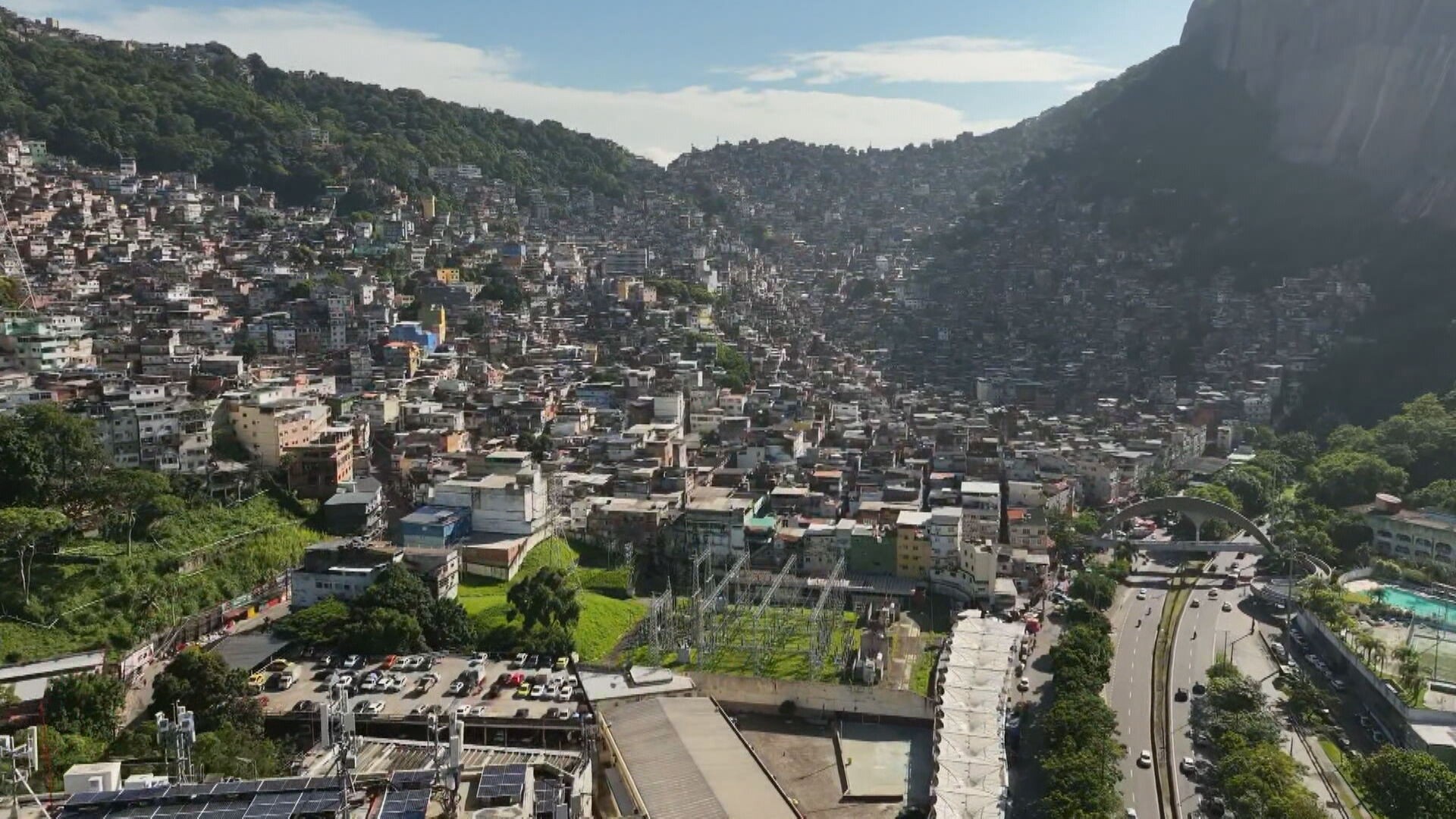
Favela da Rocinha
Reproduction/TV Globo
Imagine walking along Ipanema beach on a summer afternoon. The sand is golden, there is a refreshing breeze coming from the sea, the shade of an umbrella and a cold drink in your hand. Now look up.
Clinging to the hillside just a few hundred meters away is Vidigal, one of Rio de Janeiro's favelas. Here, thousands of people live on a heat island, with metal roofs, no parks, and no formal public transportation networks.
In the suburbs that stretch far and wide around Rio, families face the same sweltering nights, and concrete sidewalks radiate heat long after sunset. If there are no cool public spaces to retreat to, no drinking fountains or drinking water sources to provide relief, extreme heat is inevitable.
And the city of Rio de Janeiro is far from the only one facing this problem. Last summer, Europe suffered from the heat. Spain recorded highs of 46°C. Portugal reached 46.6°C. France had the second hottest June since 1900. In the US, more than 150 million people faced extreme heat warnings. In South Asia, West Africa and the rest of Latin America, extreme heat is not just seasonal.
Fifteen people die in Europe from heat wave-related causes
But the consequences of extreme heat are not evenly distributed. They vary between countries, regions and neighborhoods. Differences in demographics, infrastructure and adaptation capacity determine the degree of impact on people.
Our new study shows that this "systemic refrigeration poverty" is widespread but uneven across 28 countries - predominantly developing ones.
Among the 3 billion people represented by our sample, nearly 600 million face severe levels of systemic refrigeration poverty. People in South Asia and sub-Saharan Africa bear the heaviest burden.
Heat waves hit the center of São Paulo, Brazil
Nelson Antoine/Shutterstock
But countries facing similar extreme heat may experience different results. Indonesia and Bangladesh face exposure to dangerous humid heat that affects nearly their entire populations, but Indonesia's more robust physical infrastructure and health services translate into lower levels of systemic cooling poverty.
In cities, vulnerability is shaped by physical infrastructure (buildings, streets, pipes, and green spaces) and social infrastructure (services, institutions, and support networks), both of which are unevenly distributed. Residents of poorer areas generally have less access to air conditioning, tree-shaded streets and parks, and thermally insulated housing.
Cooling capacity is not just a matter of technology. Framing air conditioning as the answer to extreme heat is problematic. Access to air conditioning is extremely unequal between and within countries - the majority of the world's population simply does not have access to it.
Air conditioning also consumes a lot of energy. It increases households' annual electricity bills by more than a third on average. This puts a strain on power grids when demand for power spikes. The increase in demand for electricity accelerates climate change, feeding back into the heat crisis and raising external temperatures even further. The production and disposal of appliances comes with its own environmental cost, with the risk of releasing hazardous materials into the soil, water and air.
The main factors that determine whether heat becomes dangerous are the conditions in which people are born and live.
Where you live, how your neighborhood is built, whether there are trees or public drinking water nearby, how well ventilated your home is, whether your workplace offers protection, and whether utilities respond to rising temperatures - all of these influence survival.
The same goes for age, health, income, gender identity and discrimination, which can determine who's suffering is recognized and who remains hidden.
Responses to heat are shaped by the social and physical environments in which people live. In many places, air conditioning has replaced ancestral knowledge and intergenerational practices of living with heat, including ways of building, moving, eating and resting developed over centuries. The loss of these practices can leave people more exposed and less resilient.
Since 2020, as part of our project on cooling poverty, we have interviewed 80 people living in Rio's low-income suburbs and favelas. Nineteen of these residents have kept online diaries about the heat: writing logs, collecting photos, drawings, memes and voice notes of their daily encounters with extreme heat.
Caregivers have had to change their routines so that housework can be carried out in the cooler hours dawn and dusk. Street vendors changed locations or abandoned certain routes.
For a resident with mobility impairment, cold showers, the most immediate cooling strategy, are not possible: "I would love to take four cold showers a day, but I have some logistical difficulties related to my condition." As they depend on air conditioning, their electricity bills triple in the summer. For others, the beaches and waterfalls some people escape to are out of reach: "I'd love to go, but I can't because of accessibility issues."
For trans women, social discrimination closes down exactly the spaces (parks, squares, stores) where other people find shade or a moment of coolness. And because using public bathrooms means running the risk of harassment, many limit how much water they drink. Heat, for them, becomes a physical danger with no safe escape.
Systemic cooling poverty is not about whether a person can afford air conditioning, but rather how infrastructure, institutions, and surrounding design expose someone to harmful heat and then fail to protect them from the heat. This extends beyond the home to workplaces, schools and healthcare systems, where heat can have serious consequences for health, productivity and well-being. It further addresses the systemic causes that determine who suffers most: inequality, discrimination, patriarchy, ableism and racism.
Vulnerability to heat is not an accidental result. Urban planning decisions that eliminate green space, housing policies that allow poorly ventilated buildings, labor laws that leave outdoor workers unprotected, and public health systems that fail those most exposed - all contribute to the problem.
Thermal justice
Reframing cooling poverty changes how researchers think about solutions. Thermal fairness doesn't just mean reducing heat exposure. It also means doing so fairly and holding accountable the people and institutions whose policies and planning decisions have made some neighborhoods hotter and some families less able to stay cool.
By asking "who designed these conditions?" we can understand who has the power to change them.
Effective responses require coordinated action between urban planning, public health, housing and labor regulations: expanding access to clean water, renovating buildings and planting trees, and reducing discrimination.
But the people most affected need help design solutions. Their experiences reveal how heat really feels, day after day. By understanding and assessing systemic thermal poverty, we can identify how best to achieve thermal justice for those most at risk from extreme heat.
Source: G1