What are the sensitive points of the agreement between the US and Iran
USA and Iran officially sign the truce agreement
After the signing of an initial agreement by the presidents of the USA and Iran, last Wednesday (17), the two parties have a period of 60 days to discuss the issues still open to definitively end the war.
The task is not simple, however. The two parties seem inflexible on some of the issues whose resolution has been postponed, such as the nuclear agreement and the solution to the front in Lebanon, militarily occupied by Israel.
➡The document has 14 points and was released by the USA. The "memorandum of understanding" includes guarantees that Tehran will never have nuclear weapons, the suspension of US sanctions against the country and financial compensation to the Iranian government. The text establishes a 60-day ceasefire period for discussing the details of the final agreement - if the parties do not reach an agreement, the period will be extended for another 60 days.
See the most delicate points still under discussion:
Lebanon
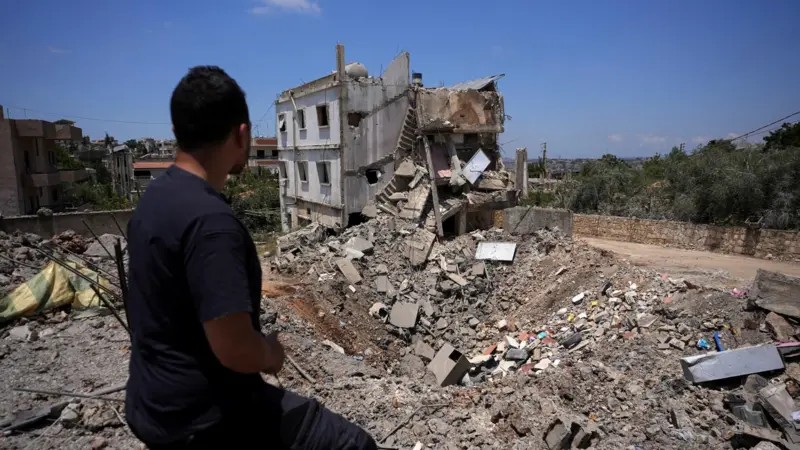
It is estimated that 50,000 homes were damaged or destroyed in Lebanon during the war
REUTERS
One of the conditions that Iran set for signing the initial agreement was that of a full ceasefire, which also included Lebanon. Forces from Israel, a US ally, have been attacking Lebanon since March, under the justification of fighting Hezbollah, an extremist group allied with the Tehran regime.
In its campaign, however, Israel is accused of targeting civilians, including journalists and paramedics, protected by international law in conflict zones, in addition to intentionally destroying civilian infrastructure, such as water reservoirs and bridges. More than 1 million Lebanese have left their homes, causing an internal displacement crisis in the country.
Israel has not signed the peace agreement and said it will keep its troops stationed indefinitely in a zone about 10 km south of the neighboring country's territory.
On Thursday (18), the vice president of the United States, J.D. Vance, criticized what he called Israel's "strange panic" and "tantrum" regarding the agreement reached between Washington and Tehran.
The exchange of barbs indicates a strained relationship between the governments of the two countries, traditionally allies. It is not known whether the US will be able to stop Israel's momentum in attacking Lebanese targets, including in the capital, Beirut, nor how Iran will react if the situation deteriorates.
Strait of Hormuz
One of the few consensuses already reached between the US and Iran is the opening of the Strait of Hormuz for the passage of ships. The site is an important oil and gas outlet for international trade, and its closure for a prolonged period could have a cascading effect on products around the world.
This opening becomes immediately valid for the signing of the document, with Tehran committing to fully reestablish traffic within 30 days. This is because the place is still full of naval mines placed during the conflict.
This week's agreement also guarantees free passage for commercial ships through the strait, but only for 60 days.
Throughout the war, Iran, which manages the passage together with Oman, said it would start charging a toll on all oil tankers crossing the strait to rebuild its infrastructure due to the damage caused by attacks by the US and Israel.
The US, in turn, defends keeping flow through Hormuz free.
The issue will be treated as an arm wrestling match at the negotiating table.
Iran's nuclear program
Perhaps the most delicate issue still open, Iran only accepts giving up its nuclear program - which Tehran claims has peaceful purposes - with solid security guarantees and the end of trade sanctions that have punished its economy for decades.
In the next 60 days, negotiators should discuss the level of uranium enrichment to which the country will be entitled and how the withdrawal of uranium will be achieved. nuclear material that Iran already has in stock.
Currently, it is estimated that Iran's uranium reserves are in the region of 11 tons, of which 441 kg are enriched to 60% (more than what is needed for energy or research purposes, but less than what is needed to make a bomb).
In the memo, Iran reaffirms that it will not acquire or develop nuclear weapons, while the US agrees to resolve the issue of the stockpile of enriched uranium Iranian through a mechanism to be defined by mutual agreement.
US negotiators will try to reach a stricter agreement than the one signed by Iran with the Obama administration in 2015, criticized by Trump and from which the Republican unilaterally withdrew a few years later.
The task is not easy, however, as analysts point out that the Iranians emerge from the war with more bargaining power by showing that the ayatollahs' regime is more resilient than previously thought and that Tehran is capable of maintaining its Strait of Hormuz closed despite intense military pressure.
Source: G1