'We had sex in a Chinese hotel and later discovered we were recorded and seen by thousands of people'
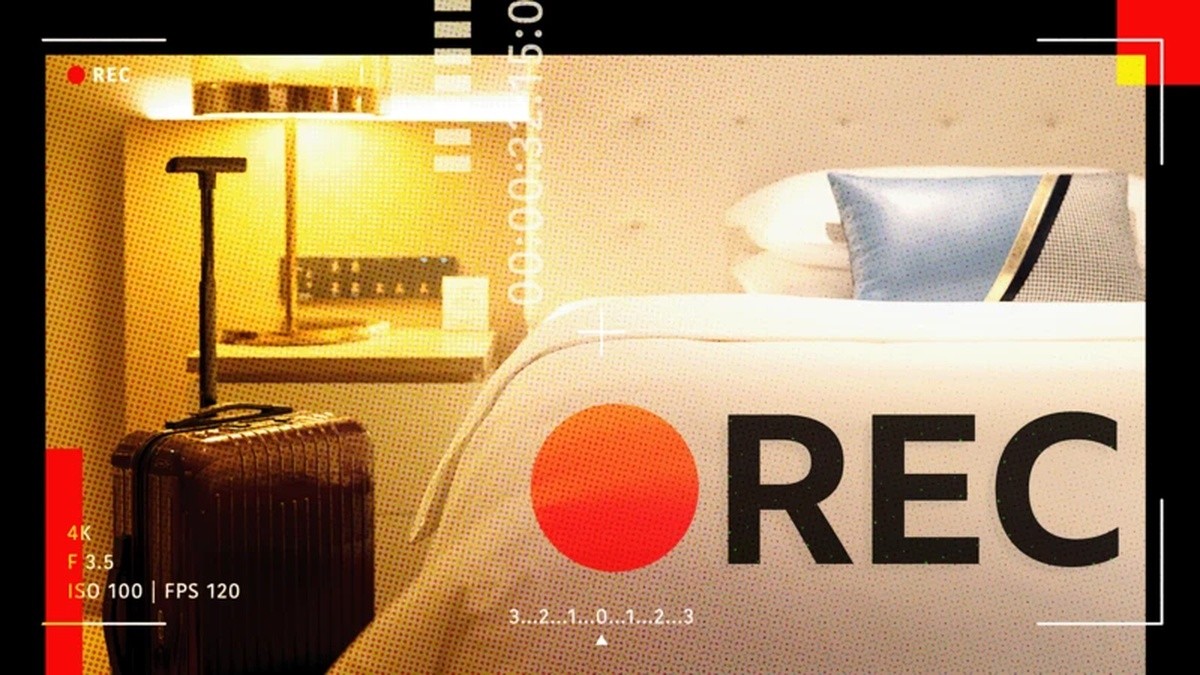
Hidden camera: see how to identify
One night in 2023, Eric (not his real name) was browsing a social media channel that he used to access to consume pornography when, a few seconds after starting a video, he froze.
Eric realized that the couple he was observing - entering the room, leaving their bags and, later, having sex - was himself and his girlfriend, Emily (also a fictitious name). Three weeks earlier, they had spent the night in a hotel in Shenzhen, in southern China, without knowing that they were not alone.
The couple's most intimate moments had been captured by a hidden camera in the hotel room, and the images were made available to thousands of strangers who accessed the same channel that Eric used to watch pornography.
Eric stopped being just a consumer of the Chinese hidden camera pornography industry and became a victim.
Cellphones can be an ally in discovering cameras hidden in rooms; see how to protect yourself
BBC
BBC
The so-called "hidden camera pornography" has existed in China for at least a decade, despite the production and distribution of pornography being illegal in the country.
In Brazil, the law makes it a crime to offer, exchange, transmit, sell, distribute, publish or disseminate, by any means - including the internet -, photographs, videos or other audiovisual recordings containing pornography or nudity without the victim's consent. Anyone who receives, for example, a nude photo on WhatsApp and shares it - even without being the first to expose the image - is also considered an offender.
Even with the bans in China, in recent years, the topic of "hidden camera" has started to appear frequently on social networks, with people - especially women - exchanging tips on how to identify cameras the size of a pencil eraser. Some have even set up tents inside hotel rooms to avoid being filmed.
Last April, the Chinese government implemented new rules to try to curb the problem, requiring hotel owners to regularly check for hidden cameras.
Still, the risk of being secretly filmed in the privacy of a hotel room persists. The BBC World Service found, on several internet sites, thousands of recent videos recorded with hidden cameras in hotel rooms and sold as pornography.
Much of this material is published on the messaging and social media app Telegram. Over the course of 18 months, the BBC discovered six different websites and apps promoted on the platform. Together, they claimed to operate more than 180 hidden cameras in hotel rooms, which not only recorded but live-streamed guests' activities.
I monitored one of these sites regularly for seven months and found content captured by 54 different cameras, about half of them in operation at any given time.
This means that thousands of guests may have been filmed during that period, according to BBC estimates based on average occupancy rates. The vast majority probably don't know they were recorded on camera.
Eric, from Hong Kong, started watching secretly recorded videos as a teenager, attracted by the "raw" nature of the images.
"What attracts me is the fact that people don't know they are being filmed," says Eric, now in his 30s. "I think traditional pornography seems very staged, very fake."
But he experienced the other side of that chain when he found a video of himself and his girlfriend, Emily, and he says he no longer likes that type of content.
When he told Emily that the couple's stay at the hotel had been filmed, edited into an hour-long video and published on Telegram, she thought it was a joke. But when she saw the images, she was devastated.
Emily feared that the video had been seen by co-workers and family.
The couple spent weeks without speaking.
So how does this industry that exploits intimate sexual acts of unsuspecting couples for paying customers interested in voyeurism work, and who is behind it?
One of the most active hidden camera porn dealers I encountered was an agent known as "AKA."
Pretending to be a consumer, I paid to access one of the live streaming sites he promoted, for a monthly fee of 450 yuan (about R$ 330).
After logging in, it was possible to choose between five different broadcasts, each showing various hotel rooms, visible once the guest activated the electricity by inserting the key card. It was also possible to rewind the broadcast from the beginning and download the archived videos.
Live broadcasts made with hidden cameras clearly show the beds in hotel rooms
Reproduction
On Telegram, an application banned in China but widely used for illicit activities, AKA published these live broadcasts. One of the channels on Telegram had up to 10 thousand members throughout our investigation.
Libraries with edited videos of the broadcasts are also available on Telegram for a one-time payment. It was possible to view more than 6,000 videos in the collection, with records dating back to 2017.
AKA subscribers make comments through the Telegram channels feature while they watch hotel guests who are unaware of being filmed, judge their appearance, comment on conversations and evaluate their sexual performance.
They celebrate when a couple starts having sex and complain when the lights are turned off, plunging the scene into darkness. Women are often described as "sluts", "sluts" and "bitches".
The team was able to trace one of the hidden cameras to a hotel room in Zhengzhou, central China, by gathering evidence provided by subscribers, social media users and the investigation itself.
Researchers at the scene were able to access the room and found the camera - with the lens pointed towards the bed - hidden in the wall ventilation unit and connected to the building's electrical network.
A camera detector hidden camera, widely sold on the internet as a "must-have" item for hotel guests, did not issue any warning that they were being spied on.
The team deactivated the secret camera, and the news spread quickly on Telegram.
"Zhonghua [camera name] was taken down!" wrote a subscriber on the main channel managed by AKA.
"It's a shame; that room had the best sound quality!" AKA replied in the chat.
The complaints then gave way to the celebration when, just hours later, AKA announced that a replacement camera, at another hotel, had been activated.
"That's the speed of... [our live streaming platform]," he told subscribers. "Impressive, isn't it?"
Over the course of the 18-month investigation, the BBC identified around a dozen agents as AKA.
The exchanges these agents had with subscribers made it clear that they worked for people higher up the supply chain, whom they referred to as "camera owners." These individuals, the agents' comments suggested, were responsible for installing the hidden cameras and managing the live streaming platforms.
During a direct message exchange with AKA, he accidentally shared a screenshot of a message sent by someone claiming to be a "camera owner" with the profile name Brother Chun.
AKA quickly deleted the message and declined to comment on the matter, but we were able to contact Brother Chun directly. Despite evidence that he supplied the live streaming site to AKA, Brother Chun claimed to be just another sales agent, although he hinted that the supply chain extended beyond people like him.
What is clear is that there are significant sums of money at stake.
Based on the number of channel members and subscription fees, the BBC estimates that AKA alone has raised at least 163,200 yuan (about R$110,000) since last April. By comparison, the average annual income in China last year was 43,377 yuan (approximately R$31,000), according to the country's official statistics body.
Eric and Emily have taken to wearing hats whenever they leave the house, for fear of being recognized
BBC
There are strict rules in China for the sale and use of hidden cameras, but we found it was relatively easy to buy one in the country's largest electronics market, in Huaqiangbei, Guangdong province.
Accurate data on how many people have been taken to court for hidden camera pornography is more difficult to obtain. Chinese authorities have released far fewer details of legal proceedings in recent years, but the cases found by the report are spread across the country - from Jilin province in the north to Guangdong in the far south.
Blue Li, from a Hong Kong-based NGO called RainLily - which helps victims remove explicit images recorded without consent from the internet - says that demand for the group's services is growing, but that the work has become more difficult.
According to her, Telegram never responds to RainLily's removal requests, which forces the organization to contact group administrators - precisely the people who sell or share hidden camera porn - who have little incentive to respond. - shared hidden camera pornography on the platform, but there was no response or any action.
Contacted again ten days later with the full findings of the investigation, Telegram stated that "sharing pornography without consent is explicitly prohibited by the terms of service" and that the platform "proactively moderates and accepts reports to remove millions of harmful content every day."
The BBC formally presented Brother Chun and AKA with findings that they profited from the exploitation of hotel guests who They were unaware they were being filmed. They did not respond, but a few hours later, the Telegram accounts used to spread the content appeared to have been deleted. The website to which AKA sold access to the report, however, continues to broadcast live hotel guests.
Eric and Emily remain traumatized by the experience. They wear hats in public for fear of being recognized and try to avoid hotels. Eric says he no longer uses these Telegram channels to watch pornography, but still checks them occasionally for fear of the video circulating again.
Additional reporting by Cate Brown, Bridget Wing and Mengyu Dong
Source: G1