Visa does not guarantee entry and drinking on the street may be prohibited: what Brazilians need to know before going to the World Cup
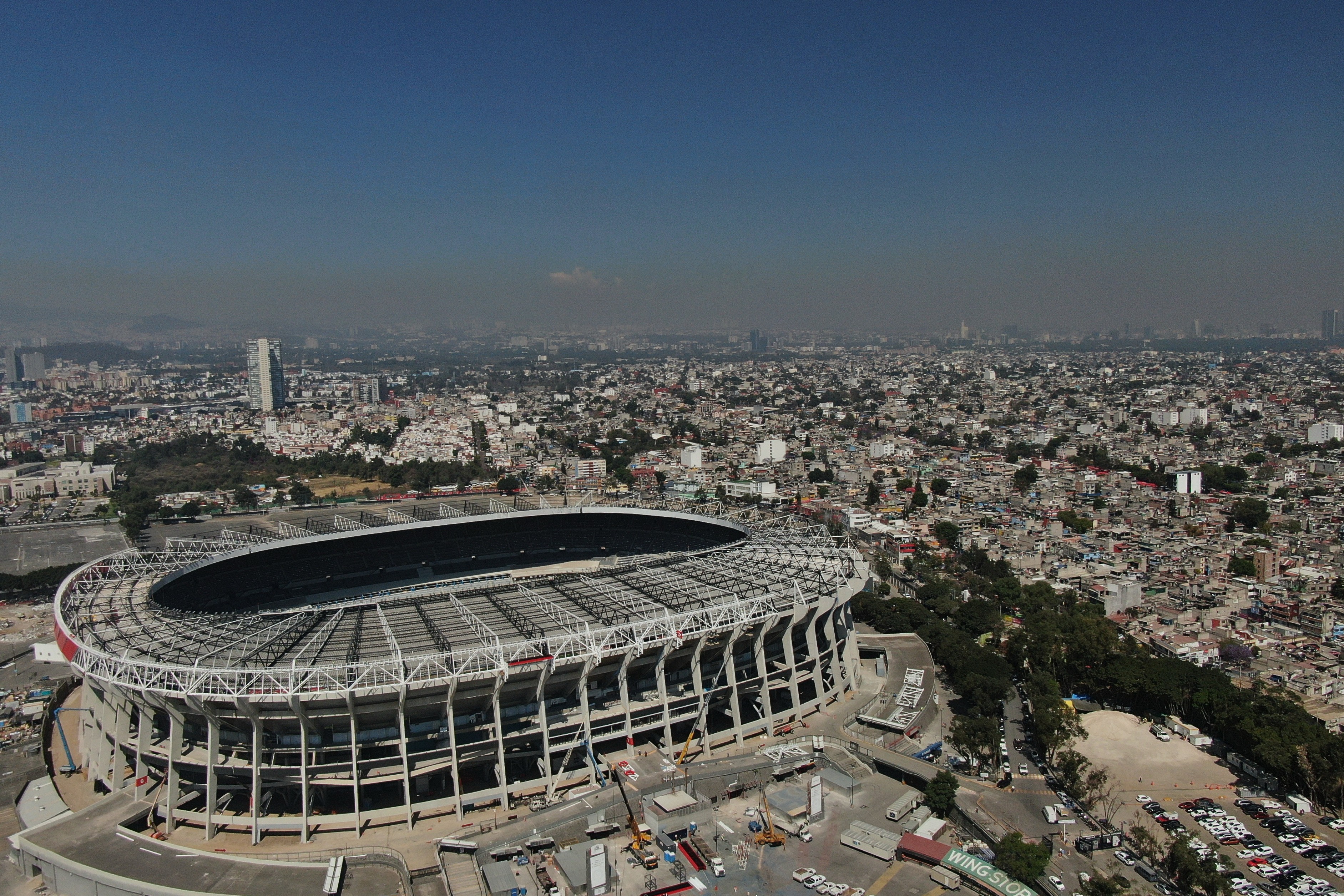
Aerial image of the Azteca stadium, where the opening ceremony of the 2026 World Cup will take place.
AP/Fernando Llano/File
The World Cup begins this Thursday (11), and Brazilians who will follow the 40 days of games in the United States, Mexico and Canada must pay attention to entry, health, safety and behavior rules in the host countries.
Favorite g1 on Google and follow the main news of the day
The Ministry of Foreign Affairs published a guide with recommendations for Brazilian fans. Among the main guidelines are traveling with a valid passport and visa or entry authorization, taking out health insurance and taking medication for continuous use with a prescription.
❗In the United States, Itamaraty reminds us that Brazilians need a valid visa. Even so, the document does not automatically guarantee entry into the country. The final decision is up to the immigration authorities upon arrival.
The guide also recommends that travelers do not book the trip before receiving the passport with the visa, as the United States consular authorities in Brazil do not guarantee deadlines or issuance of the document.
Rules about drinking in public
In Mexico, Brazilians also need a visa, which can be electronic. Itamaraty also warns that it is prohibited to consume alcoholic beverages outdoors in the country. According to the guide, it is not yet clear whether the rule will be relaxed during the World Cup. Therefore, the recommendation is to avoid drinking in public places.
In the United States, there are also restrictions on alcohol consumption in streets, parks, beaches and other public areas. The consumption of alcoholic beverages by minors under the age of 21 is prohibited, and providing alcohol to minors of that age can lead to imprisonment.
❗In New York, for example, local law prohibits consuming alcoholic beverages or circulating with an open container in public places, such as streets, sidewalks, parks, beaches, parking lots and playgrounds. Violation can result in a fine of up to US$25, around R$130 at the current rate.
In Canada, Brazilians need a valid visitor visa or an electronic travel authorization, the eTA. According to the guide, there will be no special visa for the World Cup. To apply for an eTA, you must have a Brazilian passport, a valid North American visa and travel to Canada by air. Anyone entering the country by car, bus, train or boat must apply for a visitor visa.
Infographic - What Brazilians need to know when traveling to the World Cup countries.
Art/g1
See also in this report:
What to do if you get sick during the trip?
Copies of documents and safety precautions
In case of need, how can the consulate help?
Consular contacts in the United States, Mexico and the Canada
Now on g1
Without SUS abroad, medical care can be expensive
Itamaraty recommends taking out health insurance with coverage for all countries visited.
Medicines for continuous use, such as medicines for blood pressure, cholesterol or thyroid, must be taken in hand luggage, in sufficient quantity for the entire period of the trip and with a few extra days.
The recommendation is that the medicines be accompanied by a medical prescription. If possible, the prescription should be translated into the local language.
In the United States, the healthcare system is private. The Brazilian government does not bear medical, hospital or air ICU transportation expenses for Brazilians abroad.
For less complex cases, such as fever, minor infections and minor injuries, Itamaraty cites "Urgent Care" units as an alternative that is generally faster and cheaper than hospitals.
In emergencies, the number is 911 in the United States and Mexico.
In Canada, the guide mentions 911 among the useful contacts in Toronto.
Documents and security
Itamaraty also recommends that fans keep digital copies of important documents, such as passport and travel insurance.
The guide also recommends using official public transport, transport applications or authorized services, in addition to keeping the hotel's address and telephone number.
In what cases can the consulate help?
According to Itamaraty, consulates Brazilians can provide assistance in emergencies, such as hospitalizations, arrests, disappearances, deaths and situations of deprivation.
They can also issue passports and other travel documents and guide victims of discrimination, such as racism, LGBTphobia and ableism.
Consulates, however, do not make flight or hotel reservations, do not resolve car rental, ticket or luggage problems, do not reverse denial of entry into another country and cannot prevent arrest or guarantee the release of Brazilians accused of crime or infraction.
Consular contacts
The telephone numbers below are indicated by Itamaraty only for emergencies involving Brazilians.
United States
Atlanta: cg.atlanta@itamaraty.gov.br | +1 (404) 561-8354
Boston: contato.boston@itamaraty.gov.br | +1 (617) 816-6315
Houston: assistencia.houston@itamaraty.gov.br | +1 (281) 384-4966
Los Angeles: sab.losangeles@itamaraty.gov.br | +1 (213) 453-1084
Miami: assistencia.miami@itamaraty.gov.br | +1 (305) 342-6727
New York: assistencia.novayork@itamaraty.gov.br | +1 (646) 403-2676
Orlando: assistencia.orlando@itamaraty.gov.br | +1 (321) 387-9716
San Francisco: consular4.sf@itamaraty.gov.br | +1 (415) 596-6926
Mexico
Mexico City: consular.mexico@itamaraty.gov.br | +52 (55) 3455-3991
Canada
Toronto: cg.toronto@itamaraty.gov.br | +1 647 986-1109
Vancouver: consular.vancouver@itamaraty.gov.br | +1 604 314-2287
Find out where 'JN's' home will be at the World Cup
Source: G1