Viih Tube reality show that would give R$20,000 to an employee becomes a target of the MPT; see workers' rights
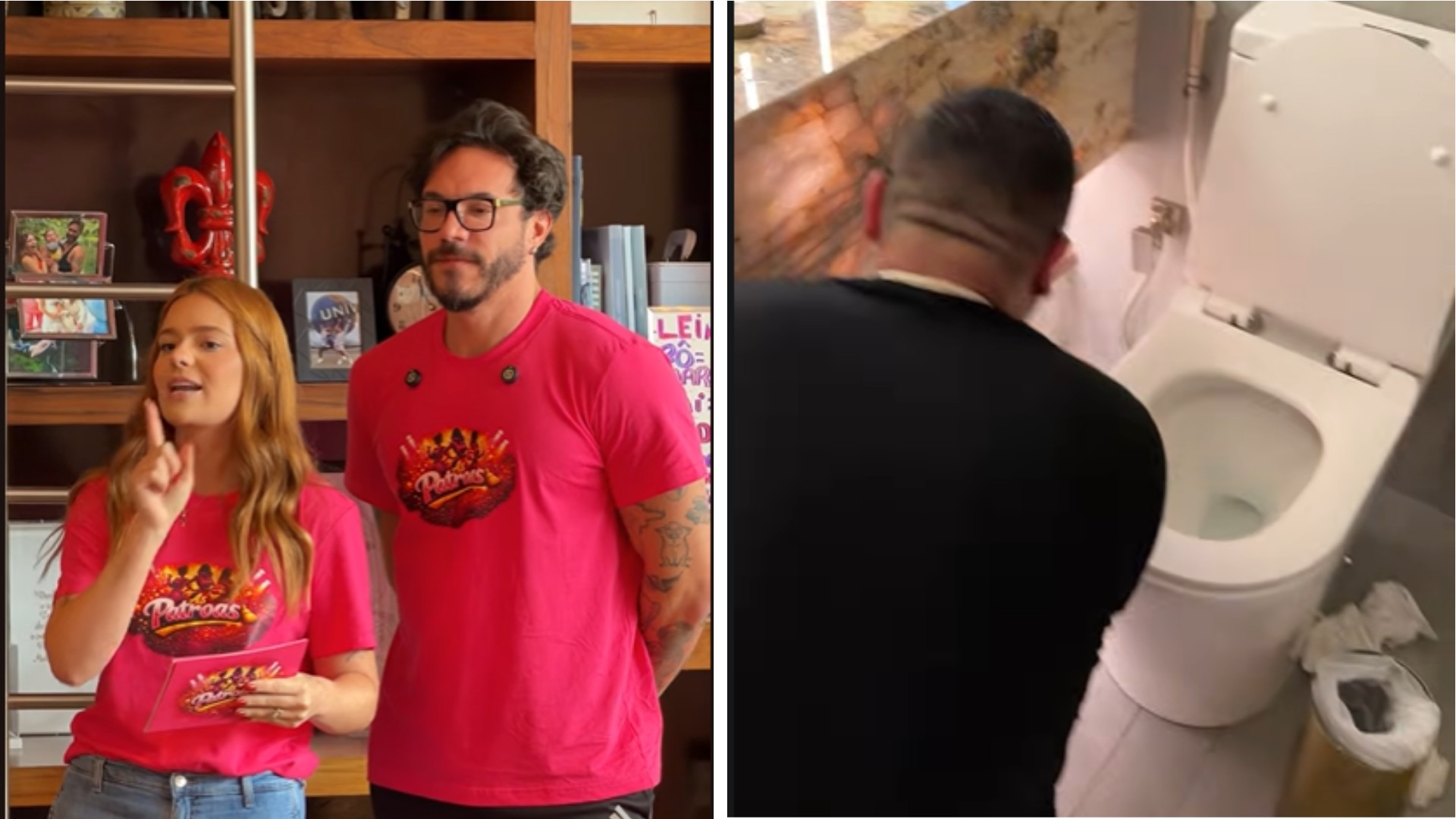
Reality by Viih Tube and Eliezer will have a prize of more than R$ 20 thousand
Reproduction/YouTube
"This is the reality show, literally, from our house." This is how Viih Tube announced, on social media, the reality show "As Patroas", a program in which 11 employees of the influencer and former BBB and her husband, Eliezer, would compete for a prize of R$ 20 thousand.
The first episode was published on Tuesday (30) on the influencer's YouTube channel and on the couple's social networks. Less than 24 hours later, the content was taken down after a series of criticisms related to the exposure of the relationship between employers and employees.
Do you have any suggestions for a report? Send it to g1
The repercussion led the Public Ministry of Labor (MPT) in São Paulo to open a procedure to investigate the case. In a note sent to g1, the organization reported that it "became aware of the activity announced by the influencer through the press and opened proceedings to investigate the facts".
The case also led to a statement from the Superior Labor Court (TST). Without directly citing the influencers, the court published on social media that exposing male and female workers to humiliating or embarrassing situations could constitute moral harassment.
"The Federal Constitution protects the dignity of the human person, and the Labor Court recognizes liability for abusive conduct. Humiliation is not entertainment. In the workplace, including at home, respect is a duty", stated the TST.
Initial plugin text
In a note sent to g1, the Secretariat of Labor Inspection (SIT) reported that the Labor Tax Audit launched an investigation to investigate the working conditions related to the reality show "As Patroas".
According to the body, a notification has already been issued for the employer to present clarifications and documents about the dynamics of the program. The inspection also analyzes videos posted on social media and, depending on the elements gathered, may expand the investigation, including in-person inspection.
The SIT highlighted that, at this moment, the investigation is ongoing and there are no anticipated conclusions regarding possible non-compliance with labor legislation.
G1 contacted Viih Tube and Eliezer to ask for a position on the case, but had not received a response until the publication of this report.
The report also contacted the Ministry of Labor and Employment (MTE) to find out if the body had received any complaints related to the program or if it intended to analyze the case from the perspective of labor legislation. There was no response.
The Superior Labor Court (TST) was also contacted. g1 asked whether the Labor Court has already analyzed actions involving similar situations, in which the employment relationship is transformed into entertainment content, and what the court's understanding is regarding this type of initiative. Until the publication of this report, there was no response.
Undue exposure
The repercussion of the reality show raised a discussion about the legal limits when the work relationship turns into entertainment.
After all, how far can an employer expose its employees? Is it possible to require participation? Is an image terms of use sufficient? What if the worker gives up on the recordings?
For labor lawyer Paula Borges, a specialist in Labor Law at Ferraz dos Passos Advocacia e Consultoria, the case involves two distinct relationships: the employment contract and participation in an entertainment product.
According to her, the employment relationship, in itself, does not authorize the commercial exploitation of the worker's image.
The service provision contract does not extend to the exploitation of the image unrelated to the function for which he was hired.
As there is direct economic benefit for the employer, specific contractual treatment is necessary, remunerated and separate from the employment relationship.
Image agreement is not enough
According to the expert, a simple authorization agreement for image use is not sufficient to make this type of initiative viable.
According to her, a specific contract would be necessary, separate from the employment relationship, providing for participation in the reality show, remuneration for the use of the image, free and informed consent from the worker and compliance with the rules of the General Data Protection Law (LGPD).
In addition, participation must be effectively voluntary. "The activity is not part of the functions for which the worker was hired. Therefore, refusal cannot lead to punishment, loss of benefits or even dismissal. Any negative consequence in the employment relationship is illegal", he states.
In the lawyer's opinion, this is precisely one of the most delicate points of the case. "In the work relationship, the employee may feel that they need to accept the invitation for fear of displeasing the employer or suffering some consequence, even if no one makes a direct threat. Therefore, the decision to participate needs to be truly free and without any type of pressure", he adds.
Employee can withdraw
Paula Borges states that the worker can withdraw from participation at any time, as the right to image is a personality right and authorization can be revoked. She adds that, if the content exposes the employee to humiliating or embarrassing situations, the employer may respond in court.
"The Labor Court already has a consolidated understanding that forcing employees to participate in videos, games or potentially vexatious situations goes beyond the limits of the employer's directive power and can generate compensation for moral damages", it states.
The lawyer also draws attention to the time dedicated to recordings. If participation occurs outside the working day and there is control by the employer or mandatory attendance, this period may be considered time at the company's disposal and must be remunerated.
According to her, the employer may also be held responsible for the impacts resulting from the public exposure of workers, such as attacks on social media.
"By exposing the employee to a wide audience for commercial purposes, the employer assumes a foreseeable risk. If this exposure causes damage to the image or dignity of the worker, there may be civil liability", he explains.
Before agreeing to participate in a reality show promoted by their own employer, the expert recommends that the worker knows that they can refuse the invitation without suffering any harm to the employment relationship, require a specific contract for the exploitation of their image, receive remuneration for participation and withdraw at any time.
The expert also emphasizes that signing a term of use of image does not prevent a possible claim for compensation if the exposure is considered abusive or vexatious.
The number of lawsuits and complaints for moral harassment at work is increasing
Source: G1