VIDEO shows family protecting themselves and panicking during earthquake in Venezuela
Family takes shelter during earthquake in Venezuela
NEWSFLARE via REUTERS
Striking new images of the moment an earthquake hit Venezuela on Wednesday night (24) were released by the news agency Reuters this Monday (29).
LIVE: See the latest updates on the earthquake
✅ Follow the g1 international news channel on WhatsApp
In the video, taken by an apartment's surveillance camera, a family is in panic when noticing the first tremors. They try to leave the place, but end up being unable to do so and, screaming, choose to protect each other.
A woman who was playing with a baby picks him up and uses a wall to balance herself and avoid falling. A young woman uses her own body to help prevent the child from getting hurt.
The death toll since Wednesday is already 1,450, according to the president of the Venezuelan National Assembly, the brother of the interim president, Delcy Rodríguez.
In addition to Wednesday's double earthquake, several aftershocks have already shaken Venezuela. This Monday, five days after the first impact, one of magnitude 4.6, with the epicenter in Caraballeda, on the north coast of the country, about 30 km from the capital, Caracas, was felt at 7 am local time - 8 am in Brasília.
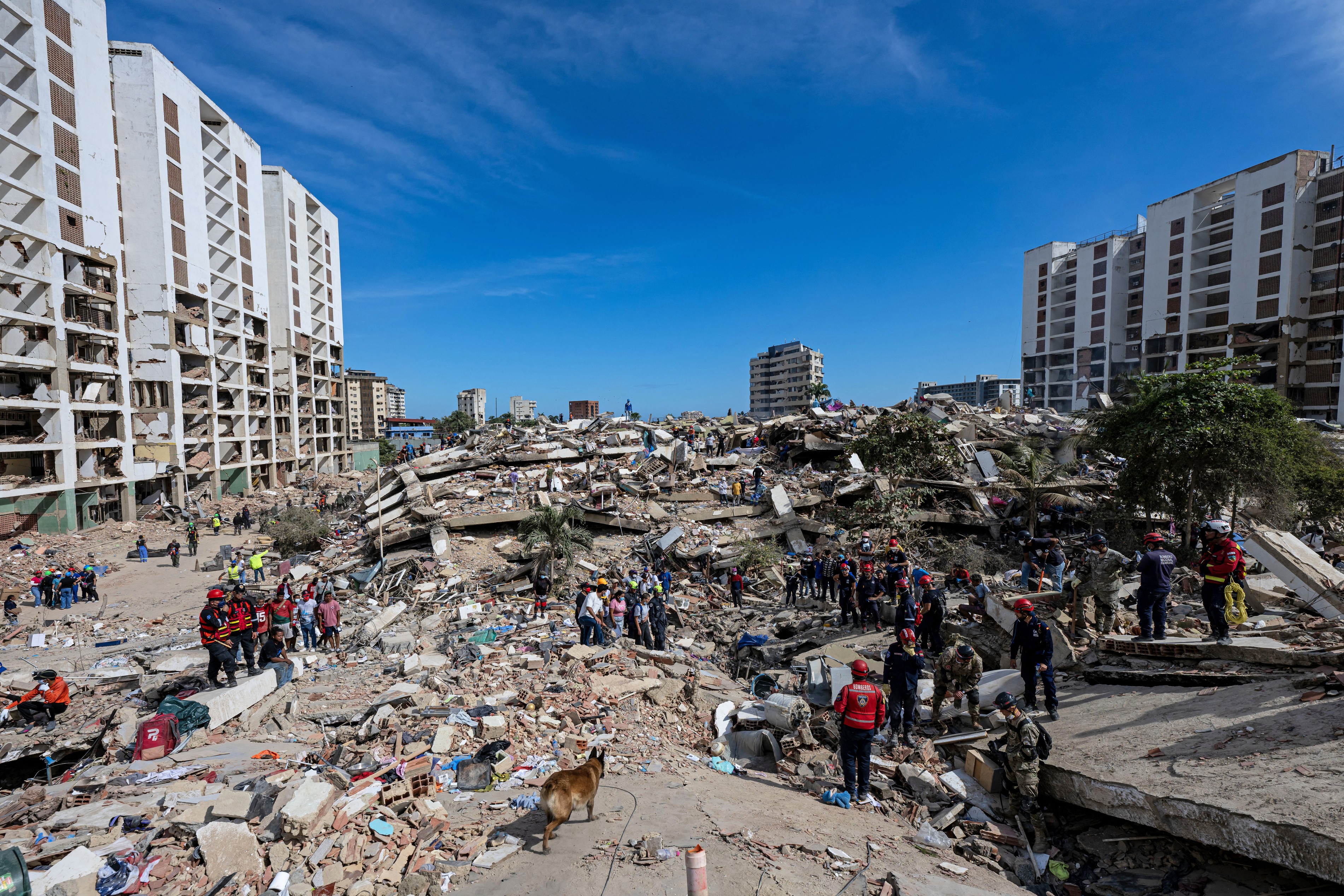
The new tremor occurs as local and international rescue teams race against time to extract survivors from the rubble in Venezuela. According to a UN estimate, there are still around 50,000 people missing in the country.
Even with the decreasing chances of finding survivors every hour, rescue teams can still find people alive in mountains of rubble, offering distressed families a brief breath of hope.
The first 48 to 72 hours after a natural disaster are crucial to rescue efforts, and experts believe that, after the deadline, the task basically turns into recovering bodies. Even so, rescuers saved 33 survivors on Sunday, according to the government.
The operations are complex and require manual work and have been made difficult by the heat, according to reports from rescuers. Those closely following the rescue efforts say that the smell of decomposing bodies is increasingly intense.
Rescue teams search for survivors amid the rubble of buildings in La Guaira, Venezuela, on June 28, 2026.
Miguel Medina/Pool/AFP
Even though the chances of finding survivors were slim this Monday and amid growing frustration among the population with the government's response, volunteers continued to incessant work amid the rubble.
"Everyone says there is no one left, but we are still here. Let's see if we can still get someone else out," Eduardo Cardozo, a rural worker who traveled to help as a volunteer in rescue work in Tucacas, on the coast, almost 200 km east of Caracas, told AFP news agency.
In La Guaira, a state neighboring the capital Caracas and the hardest hit area, international rescue missions arrived en masse on Sunday. In previous days, residents had expressed frustration and outrage at the inefficiency of the country's responses to the disaster, which ended up being led by civilians.
Interim President Delcy Rodríguez called for the continuation of operations and announced plans to assist people who lost their homes due to the numerous collapses. More than 770 buildings collapsed partially or completely, including residential and commercial buildings and dozens of hospitals.
The first earthquakes affected up to 6.8 million of Venezuela's almost 30 million inhabitants, estimates the UN. The risk of further damage remains as aftershocks continue to hit the country.
READ ALSO:
'Lower your weapon': pressure from residents leads soldiers to help with rescues in Venezuela
Frustration grows with delay in rescues in Venezuela: 'There are buildings where not even a single stone has been removed'
Anatel technicians look for cell phone signals when rescuing earthquake victims in Venezuela
Source: G1