Video: Brazil tests rocket engine and launch gets closer
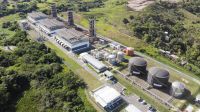
Space startup BIZU Space successfully tested the first flight model of the ARION liquid rocket engine, considered an important advance for Brazilian space propulsion.
The test was part of the mission "Deitado em Berço Esplendido" (DeBE), a campaign aimed at horizontal validation of the ablative version of the engine. The engine was developed and manufactured entirely by the company itself and uses hydrogen peroxide as an oxidizer and aviation kerosene as fuel.
Watch video:
https://admin.cnnbrasil.com.br/wp-content/uploads/sites/12/2026/05/WhatsApp-Video-2026-05-28-at-23.17.52.mp4
The test took place on the T8 test bench, the company's own infrastructure located on the campus of the University of Vale do Paraíba, in São José dos Campos (SP).
The engine is part of the development of the liquid propulsion system for the third stage of the Brazilian Microlauncher, a national project aimed at creating a small space vehicle.
Despite the reduced burn time during the test, the tested model already corresponds to a flight configuration designed to be embarked on a sounding vehicle.
The campaign aimed to validate technologies considered critical to the Brazilian space program, including tank systems, valves, control and integration of the propulsion set.
Spacex launches the world's most powerful rocket | NOW CNN
New attempt to launch an orbital rocket
Brazil can achieve a previously distant goal in 2026: for the first time, launch an orbital rocket from a national launch center. Furthermore, with Brazilian equipment.
The small rocket is being built by five companies, and intends to take satellites into Earth orbit. The project is an unprecedented attempt to build the MLBR (Brazilian Microlauncher) led by the company CENIC.
During the process of manufacturing space equipment, there are numerous difficulties, one of the main ones is thinking about all the details for a successful launch. A simulation video shows what the launch should look like:
https://admin.cnnbrasil.com.br/wp-content/uploads/sites/12/2026/03/WhatsApp-Video-2026-03-28-at-20.16.01.mp4
"The vehicle will have twelve tons on the [launch] ramp to carry, into orbit, a payload weighing just 40 kilos. With these small satellites you can do a lot of things nowadays. This is a billion-dollar market. Brazil is privileged in terms of launch, with a magnificent geographic base", says Ralph Corrêa, director of Cenic Engenharia, in an interview with CNN Brasil.
The project is sponsored by FINEP (Financier of Studies and Projects), linked to MCTI (Ministry of Science, Technology and Innovation), in partnership with AEB (Brazilian Space Agency). At a cost of R$189 million, the MLBR rocket should be launched into space in 2026. Other companies are part of the rocket's design: Concert, Etsys, Delsis and Plasmahub.
Source: CNN