USA or Iran: who will win the resistance game in the Strait of Hormuz?
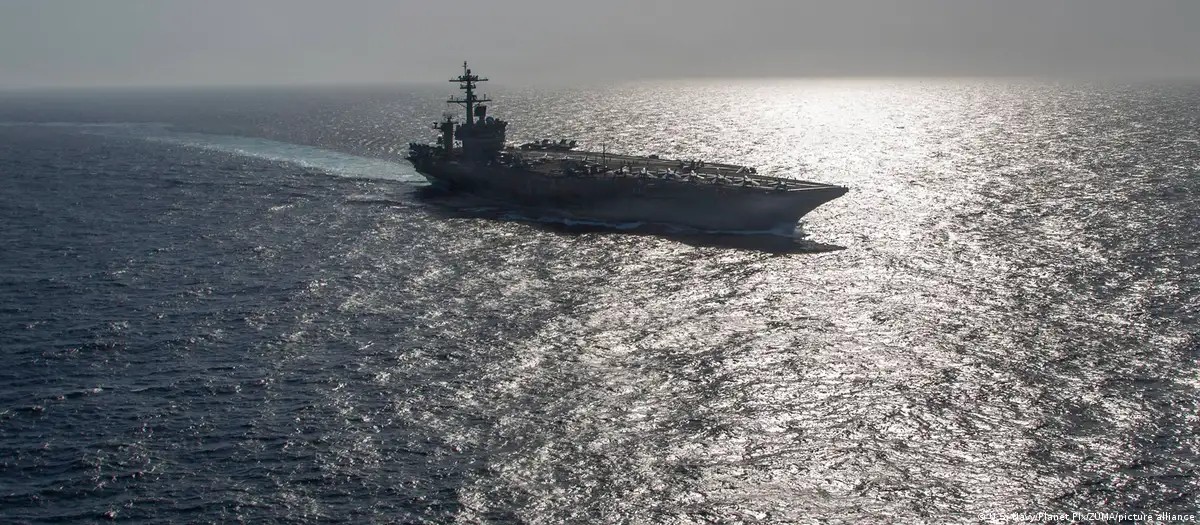
The US naval blockade of the Strait of Hormuz has lasted more than a month.
Photo: U.S. Navy/Planet Pix/ZUMA/picture alliance
In an impasse, dysfunctional and dangerous. This is how the dispute in the Strait of Hormuz is increasingly being described.
Nearing its fourth month, the crisis off the coast of Iran is marked by mutual blockades. Tehran has been charging ships up to two million dollars for safe passage through the strait, while the United States has imposed a naval blockade, turning back vessels carrying Iranian oil exports.
These competing blockades have failed to produce decisive results. Some Iranian ships continue to make it through, while some Asian shipping companies agree to pay tolls despite such fees violating international maritime law.
The fragile U.S.-Iran negotiations to reopen the Strait of Hormuz have in turn stumbled repeatedly, raising the risk of an escalation into a broader regional conflict.
Who will give in first?
Despite Pakistan-led mediation efforts and a proposed one-page memo to end hostilities and reopen the Strait of Hormuz, neither side appears willing to back down first.
Dania Thafer, executive director of the Washington-based think tank Gulf International Forum (GIF), believes that intermittent military threats from US President Donald and Trump - aimed at increasing their influence over Iran - may have had the opposite effect.
"The Iranian response suggests otherwise," Thafer told DW. "They interpret this as a lack of US willingness to escalate the war."
Trump faces growing pressure at home and abroad to avoid further military action, with Gulf allies such as Saudi Arabia, the United Arab Emirates and Qatar urging restraint. Rising oil prices and rising domestic inflation are intensifying political pressure ahead of the U.S. midterm legislative elections in November.
Iran's oil revenues dwindle rapidly
Meanwhile, Iran is losing about $435 million a day in trade, nearly two-thirds of it coming from exports, mainly crude oil, Miad Maleki, a senior researcher at the Foundation for Defense of Democracies (FDD), estimated in April.
That means that, with the US blockade reaching 40 days this Saturday (23/05), Iranian public finances have already suffered an estimated loss of 17 billion dollars. According to Maleki, this adds up to around $144 billion in economic damage caused by US and Israeli attacks in the first weeks of the war.
Burcu Ozcelik, a senior fellow at the London-based Royal United Services Institute (RUSI), believes Iran may have gained a "disproportionate advantage" with its missile attacks on ships and Gulf neighbors, but is now being "hit hard" by the disruption of its own oil exports.
"Despite Tehran's rhetoric about the regime's resilience, its economy is not blockade-proof," Ozcelik told DW.
Gulf states caught in the crossfire
Experts describe the standoff as a dangerous waiting game. Both the US and Iran believe they have time on their side. However, the Gulf States are much more risk-averse and economically exposed.
Frustration with the impasse has turned into coordinated pressure for a diplomatic solution. The Gulf countries urged Trump to suspend plans for further attacks and give more time to negotiations. Privately, they warned that a frozen conflict would jeopardize plans to transition their economies away from fossil fuels.
The Gulf states are investing hundreds of billions of dollars in ambitious industrial and tourism projects.
They strongly support Pakistan-brokered negotiations and a joint US-UN initiative to reopen the Strait without Iranian tolls or claims of control.
Hundreds of tankers and cargo ships await the full reopening of the Strait of Hormuz
Photo: Majid Asgaripour/WANA/REUTERS
Iran seeks hegemony of regional security
As a power that sees itself reshaping the Middle East, Iran is also using war to pursue long-term gains. GIF's Thafer believes Iranian ambitions go far beyond winning the war and seek to "turn the regional order in their favor" in the long term.
"They want the Gulf states to expel the US and place the region under an Iranian security framework," she told DW, adding that such an approach is not in the Gulf countries' interests despite their frustrations with Washington.
While remaining cautiously optimistic about a breakthrough in negotiations, Washington insists on reopening of the Strait, an end to all Iranian nuclear enrichment activity and no sanctions relief without major concessions from Iran. US Secretary of State Marco Rubio warned that military action remains an option if Iran does not relent on some points.
"The challenge is that there is no magic target that the US can hit that will immediately lead to the surrender of the regime," Ozcelik told DW. "If civilian infrastructure is hit, it could lead Tehran to carry out more severe retaliation against the Gulf States."
Among Iranians, Suffering Mounts
Tehran maintains it will remain steadfast despite the growing hardships facing the Iranian population, which are unlikely to abate anytime soon.
"Tehran's various proposals to charge transit fees through the Strait of Hormuz or submarine cables indicate that some pragmatic voices realize that the Iranian economy and Its population will face a prolonged period of hardship even if sanctions relief is somehow agreed upon," Ozcelik said.
Annual inflation in Iran has already exceeded 54%, with prices of some foods more than doubling. A nationwide internet blackout has lasted more than 80 days, further isolating citizens and disrupting everyday life.
"While Trump sees this [winning the war] as part of his presidential legacy, Iranians see it as a matter of the survival of the regime and the future of their country," concluded Thafer.
Source: G1