USA needs "leaner" beef and Brazil can benefit
The beef market in the United States is undergoing a profound transformation that redefines the strategies of producers around the world, including in Brazil.
Data were presented by Luis Burciaga during Feicorte 2026, held in Presidente Prudente (SP). The veterinarian is a consultant for Telus Agriculture, a Canadian company that operates in several sectors and which, since the 1980s, has also invested in livestock production in North America, with farms and feedlots in Mexico, the USA and Canada.
When the United States cattle herd reached its historic peak in the 1970s, the country had around 45 million females for reproduction. In January 2026, this number fell to 27.6 million heads, the lowest level in decades according to data from the US Department of Agriculture, the USDA. But total American beef production hasn't fallen by the same amount.
With genetic improvement and selection, today's animals are much more productive and provide much more meat than they did 50 years ago.
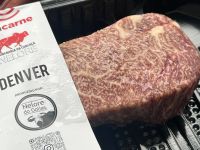
The production of meat classified as Prime (the highest on the USDA marbling scale and which serves the high-quality gourmet market) continues to increase in the country. Even with the reduction in slaughter, the number of animals destined for this market represents more than 14% of the total. Result of investments made in quality. In January 2026, 6,500 more heads were slaughtered for the prime market, an increase of 3%.
There is a lack of "common cattle" that provide lean meat
However, for the first time in history, the price differential between Choice meat (intermediate quality, still with good marbling and suitable for domestic consumers) and Select meat (with less marbling, leaner, offering more economical cuts) has been reversed. Precisely because of the smaller supply of this type of "cheaper and more common" product. A gap that Brazil can fill.
According to data from Oklahoma State University presented by Burciaga, ground beef represents almost 48% of the total beef consumed by North Americans.
While per capita meat consumption fell slightly, ground beef consumption remained relatively stable and growing. And this can have a direct impact on Brazil: the country exports mainly lean meat to the USA, used to balance recipes since American ground beef tends to be "fattier".
"North Americans mix the leanest meat from Brazil with their fatty meat to make the hamburger. This is the logic of interdependence", explained Burciaga. The use of weight-loss pens has also increased the search for "leaner" beef cuts with less fat. Trends that influence pricing in the production chain.
For Brazil, there are many opportunities and also risks
The country is a relevant supplier of lean meat for the North American market. Global competition intensifies and Luis cites, as examples, the commercial relationship between Mexico and the USA and Mongolia with China. Both countries invest in more efficient production systems.
Mexico historically exported calves and lean cattle to the US to be finished in feedlots in Texas. Now, it builds its own slaughter capacity and exports meat, the final product, to neighbors. "Mexicans started to add value since before they only sold live animals. With each passing day, treatment in US feedlots becomes more expensive, including high prices for replacement animals. Mexico understood that it had the chance to change the dynamics... and it is changing", says the consultant and speaker.
Mongolia, a country that Luis Burciaga frequently visits because of the expansion of Telus, has a cattle herd estimated at 71 million heads. Located in East Asia, between Russia and China, Luis describes Mongolia's extensive production system based on natural pastures, free grazing, with low land costs, in addition to the logistical advantage in relation to the main purchasing market in the world.
"Mongolia is just a few kilometers from China. Brazil is on the other side of the world. If China wants cheap and logistically accessible meat, in the recent future, it will be difficult to beat Mongolia", warned the consultant.
Source: CNN