US tariffs may take immediate effect despite negotiation deadline, says former Brazilian Foreign Trade Secretary
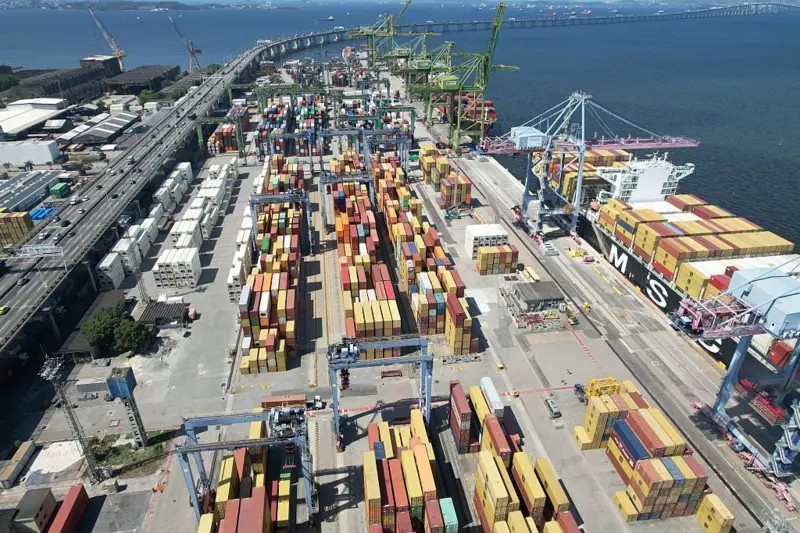
US tariffs could have immediate effect despite negotiation deadline
Anadolu via Getty Images
The publication of the results of the trade investigation conducted by the United States and the threat of implementing an additional 25% retaliatory tariff on certain products could have an immediate effect among Brazilian exporters, says Welber Barral, former Brazilian Secretary of Foreign Trade and partner at the BMJ consultancy.
🗒️ Do you have any suggestions for a report? Send it to g1
According to the foreign trade expert, the recommendation published by the office of the United States Trade Representative (USTR) on Monday (1/6) is not yet a definitive action and must be subjected to a period of public consultation and negotiations.
Still, the simple threat of applying new tariffs already affects the export market.
This is because Brazilian producers may prefer to wait for a definition to avoid losses when the tariffs come into force.
Now on g1
"Several exporters fear that they will get there with the highest tariff and will restrict it until a definition is reached," Barral said to BBC News Brasil.
In its report, the USTR recommends the application of 25% tariffs on some Brazilian products, but lists a series of exceptions.
Still, points out Welber Barral, if the taxation is eventually adopted, some goods exported by Brazil could face a 35% tariff, making them much more expensive than those of other competitors.
The president of the United States, Donald Trump, and the president of Brazil, Luiz Inácio Lula da Silva, in a meeting at the White House, in Washington
RICARDO STUCKERT/DISCLOSURE
The view about a possible impeding impact of the announcement was reinforced by economist Guilherme Klein Martins, professor at the University of Leeds, in the United Kingdom, in an interview with BBC Brasil.
According to Martins, the fact of The publication of the conclusions of the commercial investigation coincides with the United States' decision to classify the Brazilian criminal factions Primeiro Comando da Capital (PCC) and Comando Vermelho (CV) as terrorist organizations. called Section 301 of the Trade Act of 1974, a legal instrument that allows Washington to investigate foreign practices considered unfair or discriminatory against American companies and products.
In the document published by the USTR, the American government said that certain practices of the Brazilian government are "unreasonable" and "encumber or restrict US trade" and, therefore, retaliatory tariffs of 25% should be imposed against Brazilian products.
One of the targets of the American investigation is the system of Pix payments.
"Brazil has unfairly harmed American companies that operate in competing electronic payment services, including through policies that favor its national champion, Pix", states the report.
According to Welber Barral, the American investigation paid limited attention to Brazilian arguments, presented after the opening of the investigation.
The expert mentions, in particular, the points highlighted by the American government on deforestation, the fight against corruption and the application of preferential tariffs to countries such as Mexico and India.
"The conclusions are very superficial and do not take into account, for example, that not only has deforestation fallen significantly in Brazil, but there is no product exported to the United States that is subject to deforestation in general", points out the former Secretary of Foreign Trade of the Brazilian government between 2007 and 2011.
"In the same way, when we talk about the agreements that Brazil has with India or Mexico, these agreements are sanctioned and approved by the WTO, precisely because of the so-called enabling clause."
Also according to the former secretary, the importance of Brazil as a supplier of strategic inputs for the North American industry was not considered or the potential negative impacts of the proposed measures on consumers, production chains and companies in the United States itself were mentioned.
For Barral, this asymmetry in the assessment of the elements of the process could be explored both during the public consultation phase and in possible diplomatic discussions and future litigation.
Reciprocity Brazil?
If there is no negotiation in the next 30 days, there is a risk that Brazil will apply the Reciprocity Law against companies, intellectual property and exports from the USA, assesses the former Secretary of Foreign Trade.
"Brazil has already opened a process for the reciprocity law that is in Camex [Chamber of Foreign Trade]. taxation on big techs, for example", says Barral.
The Brazilian government activated Camex with a view to applying the Reciprocity Law in August last year, after Donald Trump announced the application of tariffs of up to 50% for Brazilian products.
The application of the law - approved by the National Congress and sanctioned in April 2025 by President Luiz Inácio Lula da Silva (PT) - allows Brazil to respond to possible unilateral measures adopted by other countries against Brazilian products.
Source: G1