US suspects power struggle between hardline and pragmatic leaders in Iran
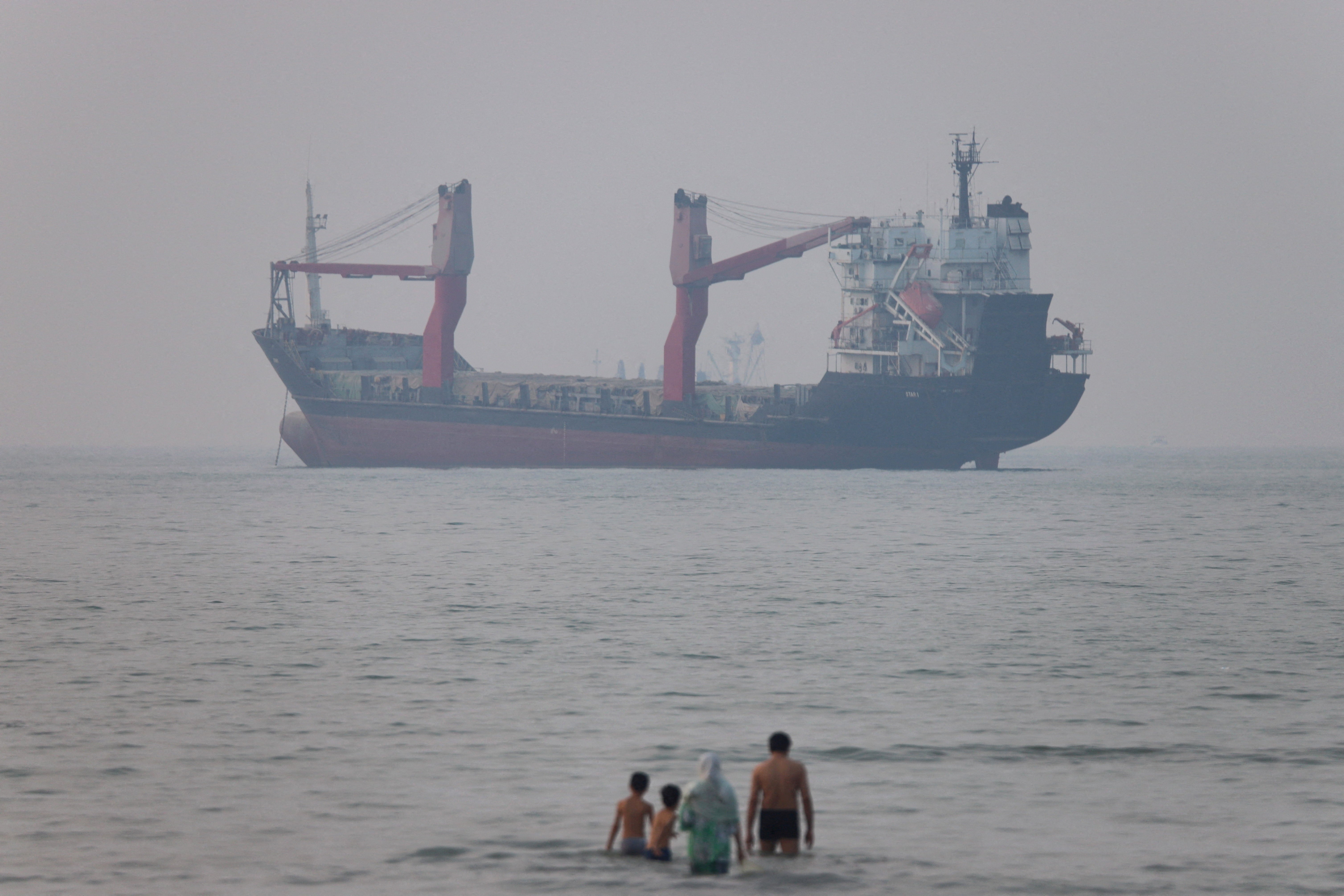
A vessel in the Strait of Hormuz, near Bandar Abbas beach, Iran, June 30, 2026
Amirhosein Khorgooi/ISNA/via WANA (West Asia News Agency) via REUTERS
The United States believes there is a power struggle unfolding in real time in Iran between hard-line leaders and pragmatists, U.S. officials said on Friday (10).
That's because Iran has informed Washington that recent attacks on shipping in the Strait were caused by "a disoriented part of its system," a senior official told a small group of reporters during a conference call.
The United States is demanding that Iran publicly declare that it will cease attacks on ships in the Strait of Hormuz and that all lanes of the strait be open to navigation without charging tolls.
"What we are demanding is that the Iranians issue a public statement acknowledging that all lanes of the Strait of Hormuz are open and that they are no longer shooting at ships. Either they give us that statement, or we will not have a favorable outcome for them," said one of the US officials.
Three ships were attacked this week, prompting US President Donald Trump to respond with US strikes against Iranian targets. He declared that the ceasefire signed by the two parties in June is over.
Iran opens Ali Khamenei's tomb for visits and Iranians fill the space
What is the reason for the dispute in the Strait of Hormuz?
The most recent exchange of attacks between the US and Iran takes place in a dispute that goes beyond the bombings: who exercises, in practice, control over the Strait of Hormuz. The maritime route is one of the most important in the world for the transport of oil and gas.
The Strait of Hormuz is a maritime corridor about 50 kilometers wide that connects the Persian Gulf with the Gulf of Oman and the Indian Ocean. Before the war, around 20% of all oil and gas traded in the world passed through the area.
Although Iran does not own the sea route, it controls the northern coast of the strait, as well as several islands and military positions. This allows the country to monitor practically all vessel traffic in the region.
In recent years, Iran has transformed this geographical position into an instrument of political and military pressure. After the start of the war, the country closed the strait to gain an advantage at the negotiating table.
Currently, the Iranian government advocates that the world recognize the country's sovereignty over the sea route.
No sign of Mojtaba Khamenei
The absence of Iran's supreme leader, Mojtaba Khamenei, from his father Ali Khamenei's funeral ceremonies raised questions about his health and fears of assassination, as well as indicating that he may play a very different role compared to his all-powerful father.
Among those present were the speaker of parliament and main negotiator in talks with the United States, Mohammad Bagher Ghalibaf, the powerful head of the judiciary, Gholamhossein Mohseni Ejei, and Ali Khamenei's eldest son, Mostafa Khamenei.
But there has been no sign of Mojtaba Khamenei, who was appointed supreme leader shortly after his father's assassination and has since communicated only through written statements without any public appearances.
Disfigured face
Rescued to power with the support of the powerful Revolutionary Guard, Mojtaba suffered facial disfigurement and other injuries in the attack, according to high-ranking Iranian government sources interviewed by Reuters. They claim that he has been making decisions but has not yet recovered enough health to appear in public.
The security risks are also substantial, given the assassination of his father in the initial US and Israeli attack on Iran.
While the Revolutionary Guard appears to be keeping a firm grip on the country for now, it is unclear how long the leader of a theocratic state can remain out of sight.
"How do you make a charismatic succession when the successor is not present? That will be a problem for them, even if they manage to get around the situation for now.
It is not sustainable in the long term," said Ali Ansari, professor of modern history at the University of St Andrews, Scotland, in an interview with the Reuters news agency.
A man passes by a billboard showing photos of former Iranian leader Ali Khamenei and the current supreme leader, Ayatollah Mojtaba Khamenei, with the Arabic words 'Thank you, Iran', in Dahiyeh, south of Beirut, capital of Lebanon, on June 15, 2026
Hussein Malla/AP
Source: G1