US Supreme Court partially allows marijuana users to carry weapons
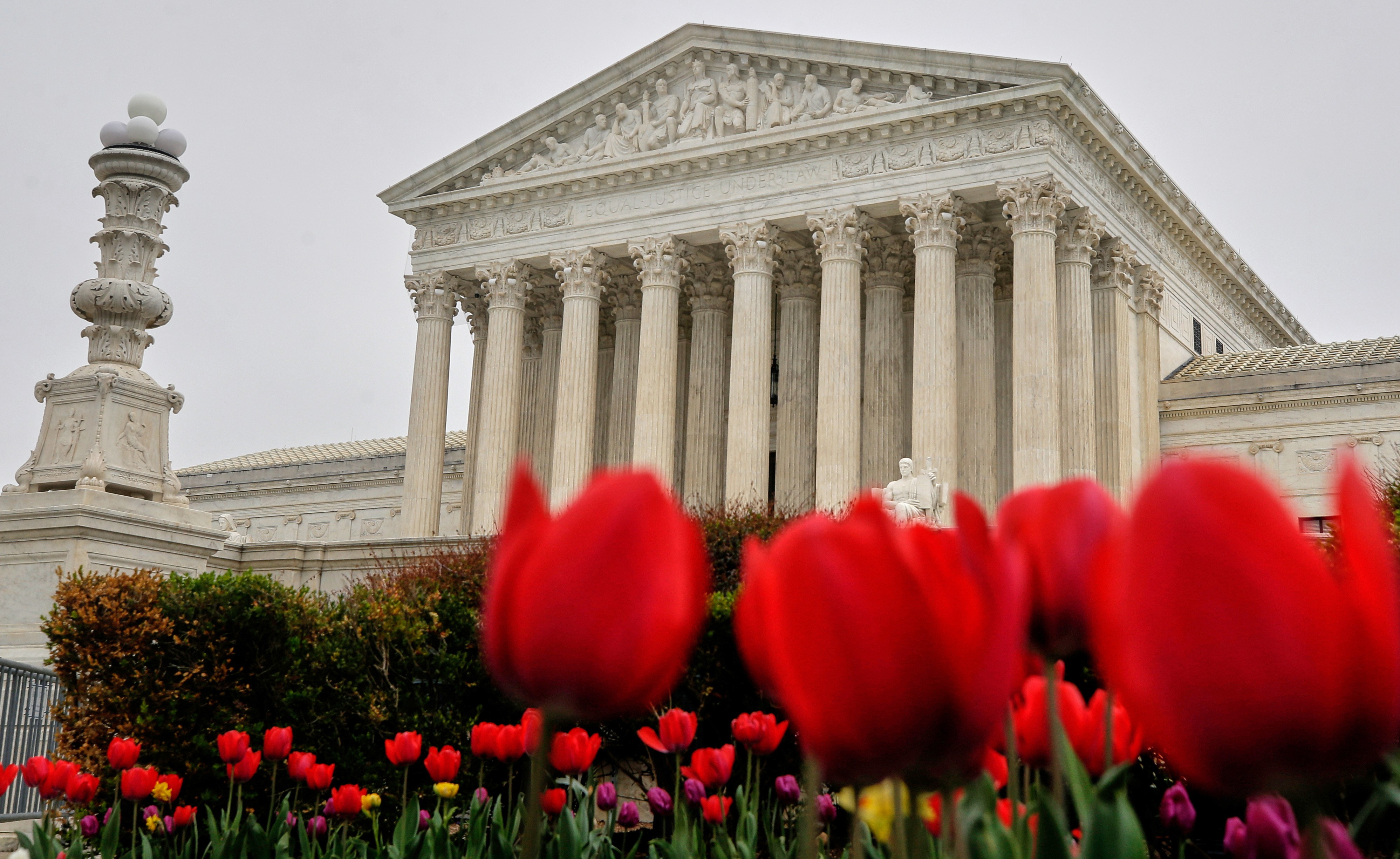
US Supreme Court
AP Photo/Rahmat Gul
The Supreme Court of the United States partially allowed this Thursday (18) the possession of firearms by marijuana users in the country. The decision limits a law currently in force in the United States that prohibits any user of illicit drugs from owning a weapon.
✅ Follow the g1 international news channel on WhatsApp
Unanimously, the judges understood that the current law violates the Second Amendment to the United States Constitution, which determines that all citizens of the country have the right to self-defense and mixes users of more dangerous drugs with those who make recreational and occasional use of marijuana.
The decision did not make it clear, however, what type of users will now be able to own weapons.
➡ The nine judges who make up the US Supreme Court - the highest instance of North American justice - reached the sentence when giving their opinion on the appeal of Ali Hemani, an American-Pakistani citizen residing in Texas. Hemani had gone to court after being indicted by the local police for illegal possession of weapons for declaring himself a marijuana user.
A Texas court ruled against the indictment of Ali Hemani. The case then went to the Supreme Court, which agreed with the lower court 9 votes to 0.
A 1968 federal law, known as the Gun Control Act, makes it illegal for anyone who "is an unlawful user of or addicted to any controlled substance" to possess firearms. Biden. Prosecutors accused the president's son of lying about his narcotics use in 2018, when he purchased a Colt Cobra pistol.
Hemani was indicted in 2023 following an FBI raid on the home he shared with his parents in Denton County, where agents found a Glock 9mm pistol, marijuana and cocaine. Hemani said he used marijuana almost every day, although authorities did not accuse him of being under the influence of the drug at the time of the search.
The Justice Department said in court documents that Hemani's actions caught the attention of the FBI, citing his trip to Iran and his brother's attendance at an Iranian university. However, the indictment against Hemani contained only the charge of violating the Firearms Control Act.
Illicit drugs are grouped into categories, known as "schedules," under another law called the U.S. Controlled Substances Act.
Marijuana had long been classified as a Schedule I substance, along with heroin, ecstasy and peyote, implying a high potential for abuse and no medicinal value. But after Trump signed an executive order on marijuana, the Justice Department in April loosened restrictions on some marijuana products and reclassified the drug as less dangerous.
Justice Department lawyers argued before the Supreme Court that Hemani's marijuana should be treated as a Schedule I controlled substance, as it was at the time of his illegal weapons offense.
They suggested, however, that the court could create an exception to the gun restriction for marijuana products approved by the Food and Drug Administration (FDA) or covered by a state medical marijuana license.
Hemani requested the lawsuit be dismissed, alleging a violation of his Second Amendment rights.
He also cited the rigorous test established by the Supreme Court in a 2022 ruling, which requires gun laws to be "consistent with the national historical tradition of regulating firearms" to conform to the Second Amendment. while carrying a gun.
On appeal, Trump's Justice Department urged the Supreme Court to adopt a rule that would allow illegal gun charges to be brought against "habitual users" of illicit drugs. The government asserted that the restriction was historically similar to 19th-century laws that allowed authorities to temporarily disarm "habitual drunks."
Hemani's attorneys, who are supported by the ACLU, argued that regular marijuana users are not comparable to the "habitual drunks" referred to in those laws.
In a nation deeply divided over how to deal with persistent gun violence, including frequent mass shootings, the Supreme Court has often taken a broad view of Second Amendment protections, including in important court rulings. 2008, 2010 and 2022.
The Court, which has a 6-3 conservative majority, heard arguments in another important Second Amendment case in January. The Court's conservative justices expressed skepticism toward a Hawaii law that restricts the carrying of firearms on private property open to the public, such as most commercial establishments, without the owner's permission. A decision is expected by the end of June.
Source: G1