US Supreme Court decides this Tuesday whether to end automatic citizenship for those born in the country, as Trump wants
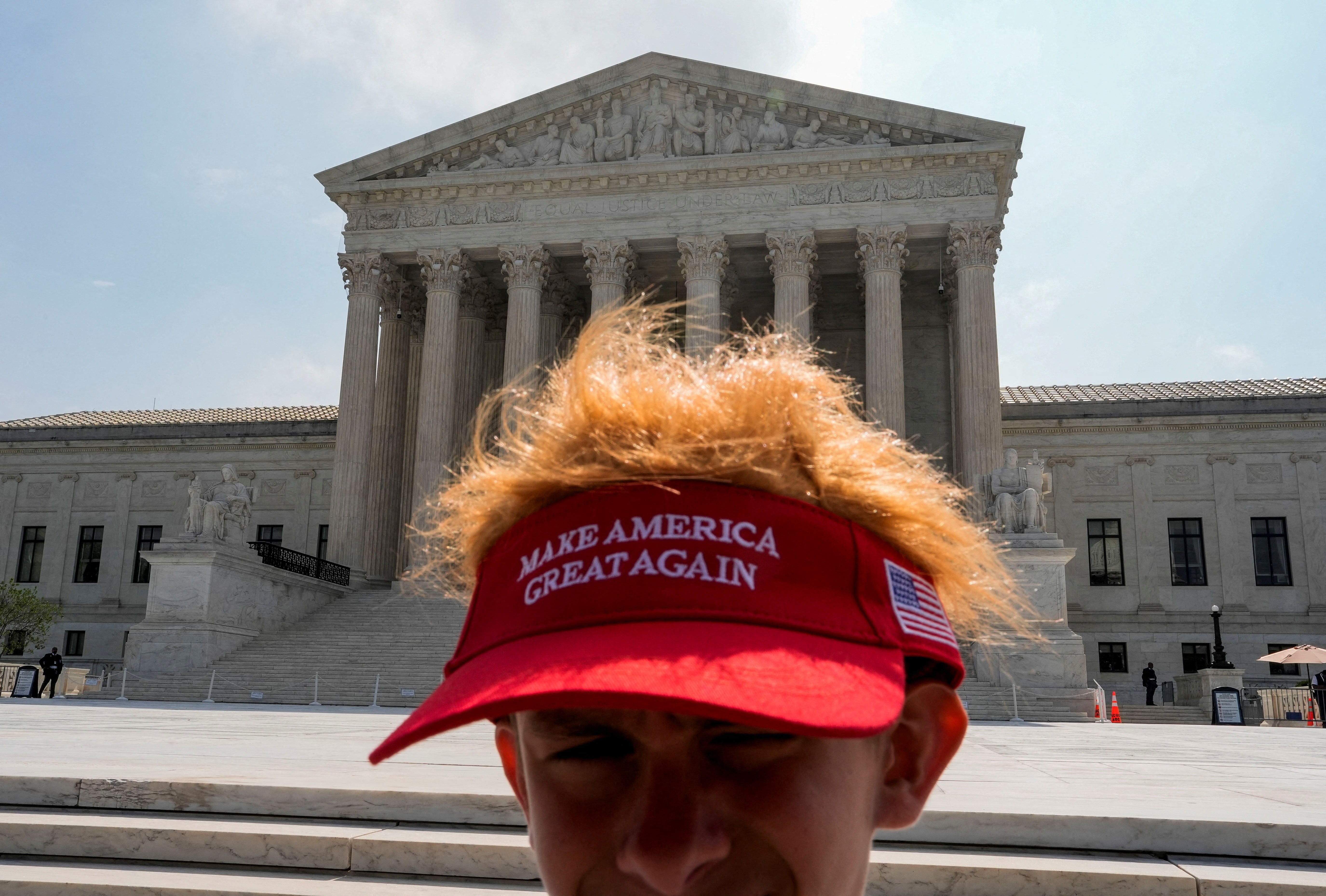
Trump supporter in front of the US Supreme Court, in Washington, DC
Cheney Orr/Reuters
The US Supreme Court is expected to deliver, this Tuesday (30), the final decisions in several cases, the main one being President Donald Trump's attempt to end automatic citizenship for all those born in the country.
On Monday (29), in the final decisions of other cases, the country's highest court imposed three defeats on Trump and granted him one victory (read more below).
✅ Follow g1's international news channel on WhatsApp
Historically, the United States grants citizenship based on the principle of "jus soli", or right to soil: everyone born in American territory is American citizens, including children of tourists or immigrants. Exceptions are few and specific, such as children of diplomats from other countries serving in the US.
Supreme Court announces rulings on scope of Donald Trump's power
So-called birthright citizenship is provided for in the 14th Amendment to the US Constitution, which states that "all persons born" in the United States "are citizens of the United States".
On the first day of his second term as president, however, Donald Trump signed an executive order limiting this right, although without clear details about the granting of citizenship. The measure is part of a broader package to combat immigration, which could bar the granting of citizenship to children born in the US to immigrants or tourists.
The case reached the Supreme Court through a process initiated in New Hampshire called "Trump versus Barbara".
It began when a Honduran immigrant named Barbara, resident of the state of New Hampshire, sued the Trump administration for considering a measure restricting American citizenship unconstitutional.
Barbara and her husband are non-immigrants. documented and she has three children, all born in Honduras. She decided to sue the government after discovering that she was pregnant with her fourth child, who would be born in the USA, but would not be entitled to American citizenship.
Barbara's last name was not publicly released for fear that she would be the target of reprisals from the president's supporters.
In early April, Trump personally attended a Supreme Court hearing that would hear arguments from the parties on the case. It was the first time in the history of the United States that a president of the country went to the Supreme Court to attend a trial.
The appearance was seen by the country's press as a way for Trump to put pressure on the court to judge the case in his favor.
If the Supreme Court rules in favor of Trump, it will change an understanding of the 14th Amendment that has been consolidated since 1898, when it ruled in favor of granting citizenship to Wong Kim Ark, the son of Chinese parents born in the USA.
The Trump administration claims that citizenship automatic encourages irregular immigration and so-called "birth tourism", when foreigners travel to the country to have children and guarantee American citizenship for them.
Three defeats and a victory
In other final decisions, the Supreme Court granted a victory to Trump in one case, while imposing defeats in three other cases of interest to the White House. See below:
The victory:
Permission for the president to fire heads of independent regulatory agencies: the court gave permission for President Donald Trump to fire a commissioner of the Federal Trade Commission (FTC), the independent federal agency that regulates competition in the country. The decision expands presidential powers over the government and reverses the Court's own 1935 understanding, which had recognized Congress's authority to protect leaders of certain regulatory agencies from presidential removals. Last year, Trump dismissed Rebecca Slaughter from the FTC due to political differences.
The defeats:
Prohibition of the dismissal of the director of the Fed (equivalent to the US Central Bank), Lisa Cook: the Republican had announced the dismissal of the director last year, increasing pressure on the institution, which acts independently from the government.
The court, however, reversed its decision. If he had succeeded, he would be the first president to remove a member of the Fed since its creation in 1913.
Allowing the counting of mail-in votes after Election Day: Trump had promised last year to end the use of mail-in votes across the country before the November legislative elections, in which his Republican colleagues seek to maintain control of Congress. By 5 votes to 4, however, the Supreme Court reversed the decision of a lower court and ruled that states that so wish will be able to count votes posted in the mail until Election Day and received in the following days.
Rejection of a request to overturn the decision on Trump's conviction for sexual abuse: The president wanted to overturn the decision of a jury that, in 2023, concluded that he sexually abused the writer E. Jean Carroll and later defamed her. The Republican was ordered to pay compensation of US$5 million to the victim.
Source: G1