US Supreme Court bars Trump from firing Fed director
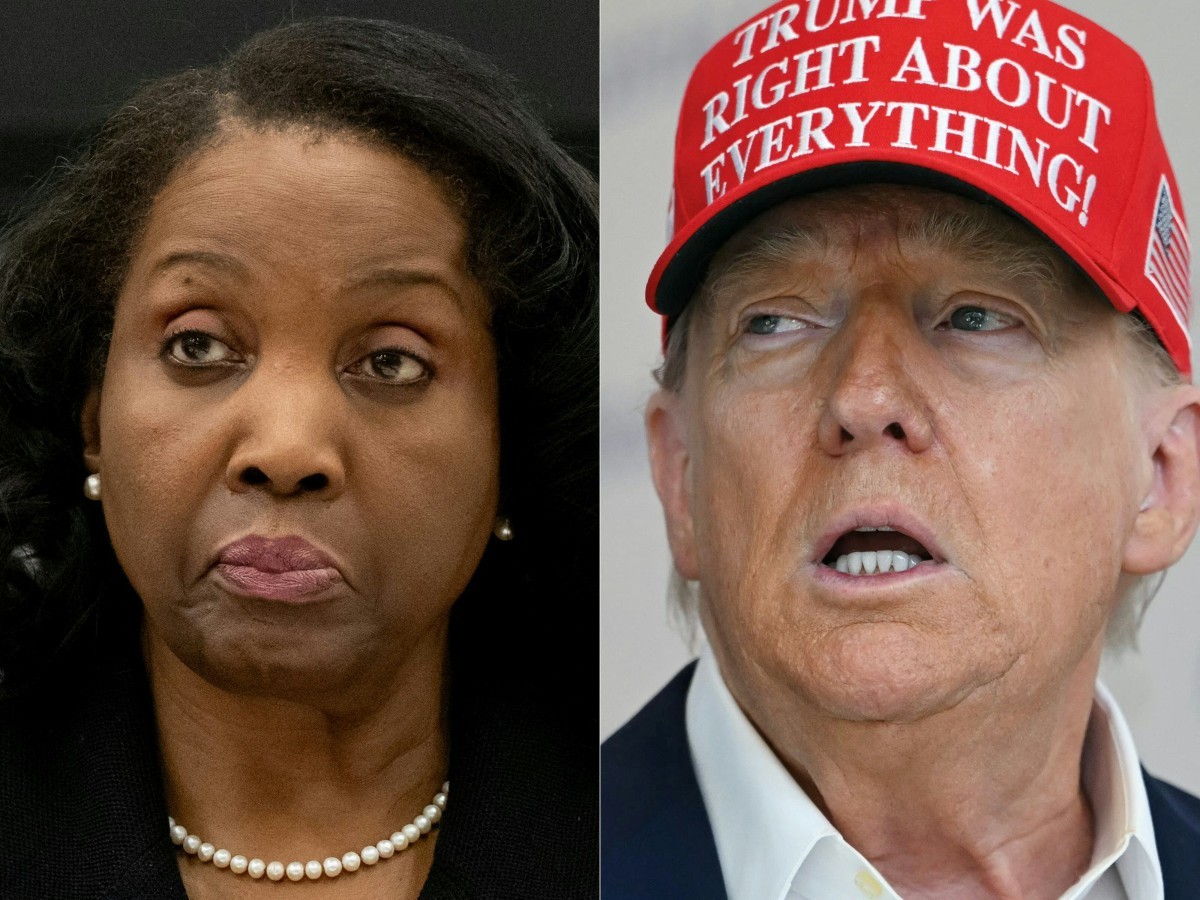
Montage shows Lisa Cook and Donald Trump
SAUL LOEB and ANDREW CABALLERO-REYNOLDS / AFP
The United States Supreme Court prohibited American President Donald Trump from firing the director of the Federal Reserve (Fed, the American central bank), Lisa Cook.
The Republican had announced the director's resignation last year, increasing pressure on the American BC. If he had succeeded, Trump would be the first president to dismiss a Fed official since its creation in 1913.
Although Trump announced the director's dismissal in August 2025, the courts blocked the measure. The White House appealed to the Supreme Court, which reinforced the court's decision this Monday (29).
The court decision, however, was fierce: there were 5 votes to prohibit the director's dismissal against 4 votes in favor.
Now on g1
The president of the Supreme Court, conservative John Roberts, and fellow conservative Brett Kavanaugh formed the majority, along with the court's three liberal judges. Conservative justices Clarence Thomas, Samuel Alito, Neil Gorsuch and Amy Coney Barrett filed dissenting opinions.
The ruling follows the justices' Feb. 20 ruling in another case with major economic ramifications that struck down most of Trump's sweeping global tariffs, a decision that drew virulent condemnation of the court from the president.
Roberts, who wrote the ruling, said Trump "failed to grant Cook the procedural protections to which she was entitled by law. Without these protections, she could not adequately challenge the charges the president has leveled against her."
Members of the Federal Reserve Board of Governors "do not serve at the mere largesse of the president; instead, they serve staggered 14-year terms and can only be removed 'for cause,'" Roberts added.
Last August, Trump cited unproven allegations of mortgage fraud in trying to remove Cook, the first black woman to serve as Fed governor, while she considered it a misdemeanor. pretext to remove her for disagreements over monetary policy.
The judges denied a request from Trump's Justice Department to revoke the court order preventing him from immediately firing Cook while her lawsuit against her firing remains ongoing. Cook denied Trump's allegations.
The Fed is the world's most important central bank, an institution that determines the cost of credit in the United States and other countries and has been in Trump's crosshairs since his return to the presidency in January 2025.
Cook's term in office was supposed to last until 2038. She was appointed by former Democratic President Joe Biden in 2022.
Trump's pursuit of Cook and a separate criminal investigation, launched by his administration in January, but later filed against then-Fed Chairman Jerome Powell, together represented the greatest challenge to the central bank's independence since its founding.
May 15 marked the end of Powell's eight years as Fed chairman, although he remains a member of the Board of Governors. The U.S. Senate voted on May 13 to confirm the nomination of Trump nominee Kevin Warsh as Powell's successor, and he was sworn in on May 22.
When the justices agreed in October to review the case involving Cook, they kept her in the role for now.
The Supreme Court heard arguments in the case in January, with Cook and Powell in attendance.
Federal Reserve Act
When creating the Fed in 1913, Congress passed a law called the Federal Reserve Act, which included provisions to protect the central bank from political interference by requiring that board members be removed by the president only "for cause," although the law does not define the term or establish procedures for removal.
Trump attempted to fire Cook on August 25 August 2025, posting a resignation letter on social media citing allegations made public by Bill Pulte, director of the Federal Housing Finance Agency and Trump appointee, involving properties she owns in Ann Arbor, Michigan, and Atlanta.
Pulte wrote on social media on Monday: "As I have said repeatedly, I believe Lisa Cook will be indicted for mortgage fraud."
In September, U.S. District Judge Jia Cobb ruled that Trump's attempt to fire Cook without notice or a hearing likely violated his right to due process, guaranteed by the Fifth Amendment of the U.S. Constitution. The judge also said the allegations made against Cook likely did not constitute legally sufficient grounds for her dismissal under the Federal Reserve Act because they related to conduct that occurred before she took office.
The U.S. Court of Appeals for the District of Columbia Circuit rejected Trump's request to suspend Cobb's order.
Political desires
Trump pressured the central bank to cut interest rates more quickly and sharply of what he was willing to do to combat persistent inflation, and he repeatedly criticized Powell for not complying with his wishes.
The Cook case has implications for the Fed's ability to set interest rates without regard to the wishes of politicians, something widely considered crucial to any central bank's ability to perform tasks such as keeping inflation under control.
As a member of the Fed's Board of Governors, Cook helps set U.S. monetary policy along with the other members of the central bank's seven-member board and the presidents of the Fed's 12 regional banks.
In previous cases, the Supreme Court has undermined the independence of several federal agencies from presidential control and may soon overturn a key precedent that has protected the heads of independent agencies from removal since 1935.
But the court signaled last year that it may consider the central bank an exception, noting in a May 2025 ruling that allowed Trump to remove two Democratic members of federal labor boards that the Fed has a structure and tradition unique historical events.
Presidential power
Both the Cook case and the tariff dispute have involved the legal consequences of Trump's aggressive stance in pushing the limits of presidential power since returning to office in January 2025
Trump has also used executive power to rapidly transform policies on immigration, military service, federal employment and other areas.
To date, the Supreme Court has allowed most of these policies to proceed despite court challenges on a preliminary basis, although the tariff ruling was a major exception.
In the tariff ruling, the court repudiated a central element of Trump's economic agenda by invalidating tariffs imposed on nearly all of America's trading partners based on a 1977 law intended for use in national emergencies - something no other president had done.
Trump reacted furiously to the decision, saying he was "absolutely ashamed" of some of the justices and called the Republican Supreme Court nominees - including two of his own choosing - who voted against him "fools" and "lackeys" of the Democrats
As in other legal disputes, the administration argued for a broad view of Trump's power in Cook's case, asserting that as long as the president identifies a cause for dismissal, it is within his "irrevocable discretion." Cook's lawyers argued that granting him this power would destroy the Fed's independence, disrupt markets and create a roadmap for future presidents to direct monetary policy.
The Powell investigation
Like Cook, Powell cast the administration's action against him - an investigation involving budget overruns in a renovation project of two historic buildings at the Fed's headquarters in Washington - as a pretext to gain influence over monetary policy. On March 13, a judge blocked subpoenas issued in the Powell investigation by a Trump-appointed prosecutor, agreeing with Powell that the investigation was an improper attempt to intimidate the central bank into lowering interest rates. The prosecutor dropped the investigation on April 24.
Trump publicly called Powell an "imbecile," a "big loser" and "very incompetent."
In January, Trump nominated Warsh, who had previously served on the Fed's Board of Governors and whose father-in-law is Ron Lauder, a wealthy Trump supporter. Supreme Court Justice Clarence Thomas administered Warsh's oath of office during the ceremony, and fellow conservative Justice Brett Kavanaugh was present.
The Justice Department shelved the Powell investigation after Republican Senator Thom Tillis called the inquiry a frivolous attack on the Fed's independence and vowed to block Warsh's confirmation until it was closed.
In a process called a criminal complaint, Pulte asked the Justice Department last year to open a criminal investigation into Cook and others for alleged mortgage fraud. There has been no indication that this criminal investigation has progressed.
As Pulte pursued the allegations, Reuters discovered that his father and stepmother declared the same status as Cook in two homes in two different states. These "residence exemptions" aim to provide a tax break to owners of properties they use as their primary residence. The Ann Arbor real estate tax authority told Reuters that Cook had not broken rules to obtain tax breaks on his home, despite Pulte's claims.
*This story is being updated.
Source: G1