US shoots down new wave of Iranian drones, says Central Command
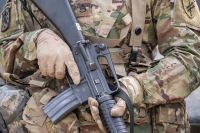
CENTCOM (United States Central Command) stated that its air defenses successfully shot down multiple waves of Iranian drones that were targeting American military assets in Kuwait.
"A new wave of Iranian drones attempting to attack US forces in Kuwait failed to reach their intended targets this evening," CENTCOM said in a post on the social network X on Tuesday night (2).
An additional wave of Iranian drones attempting to attack U.S. forces in Kuwait failed to impact intended targets tonight. U.S. Central Command air defenses successfully downed multiple drones and ensured no American personnel or assets were harmed.
- U.S. Central Command (@CENTCOM) June 3, 2026
"No US military personnel or equipment were hit," he added.
Earlier, as shown by CNN, CENTCOM had already rejected allegations that Iran struck the US Fifth Fleet headquarters in Bahrain and an American air base in the region, stating that "all Iranian attacks against American forces have failed."
The US claimed that missiles were also fired at Bahrain - sirens were heard in the country, and the Defense Minister asked the population to remain in shelters.
"Two Iranian missiles fired at Kuwait failed to reach their targets or fragmented en route, and three missiles fired at Bahrain were immediately intercepted by US and Bahraini air defense forces," the statement added.
Remember how the war in Iran began
On February 28, United States President Donald Trump announced a "large-scale" attack on Iran, stating that the country's main objective was to "defend the American people by eliminating imminent threats from the Iranian regime."
These threats, he said, included Tehran's nuclear program - a recurring point of friction that has also hampered more recent negotiations to end the fighting.
The joint attacks by the US and Israel against Iran - which resulted in the death of the then supreme leader, Ayatollah Ali Khamenei - caused thousands of deaths across the country and damage to dozens of museums, historic buildings and cultural sites, according to Iranian media outlets and authorities.
In response, Iran launched a series of retaliatory attacks across the Middle East and effectively closed the Strait of Hormuz, a strategic waterway through which about 20% of the world's oil passes.
Weeks before the start of the war, the Trump administration carried out the largest military buildup in the Middle East since the 2003 invasion of Iraq, triggering warnings about escalating regional violence if a conflict erupted.
At the same time, US envoys held regular talks with Iran about a possible new nuclear deal. But those negotiations were unable to avert military action, with Trump accusing Iran at the time of rejecting "all opportunities to renounce its nuclear ambitions."
The outbreak of war in February also followed mass anti-regime protests in Iran the previous month, fueled by economic discontent amid skyrocketing costs.
Survey: 6 in 10 Americans see war with Iran as a mistake
Source: CNN