US Senate Republicans face political dilemma over Trump's 'anti-gun' fund
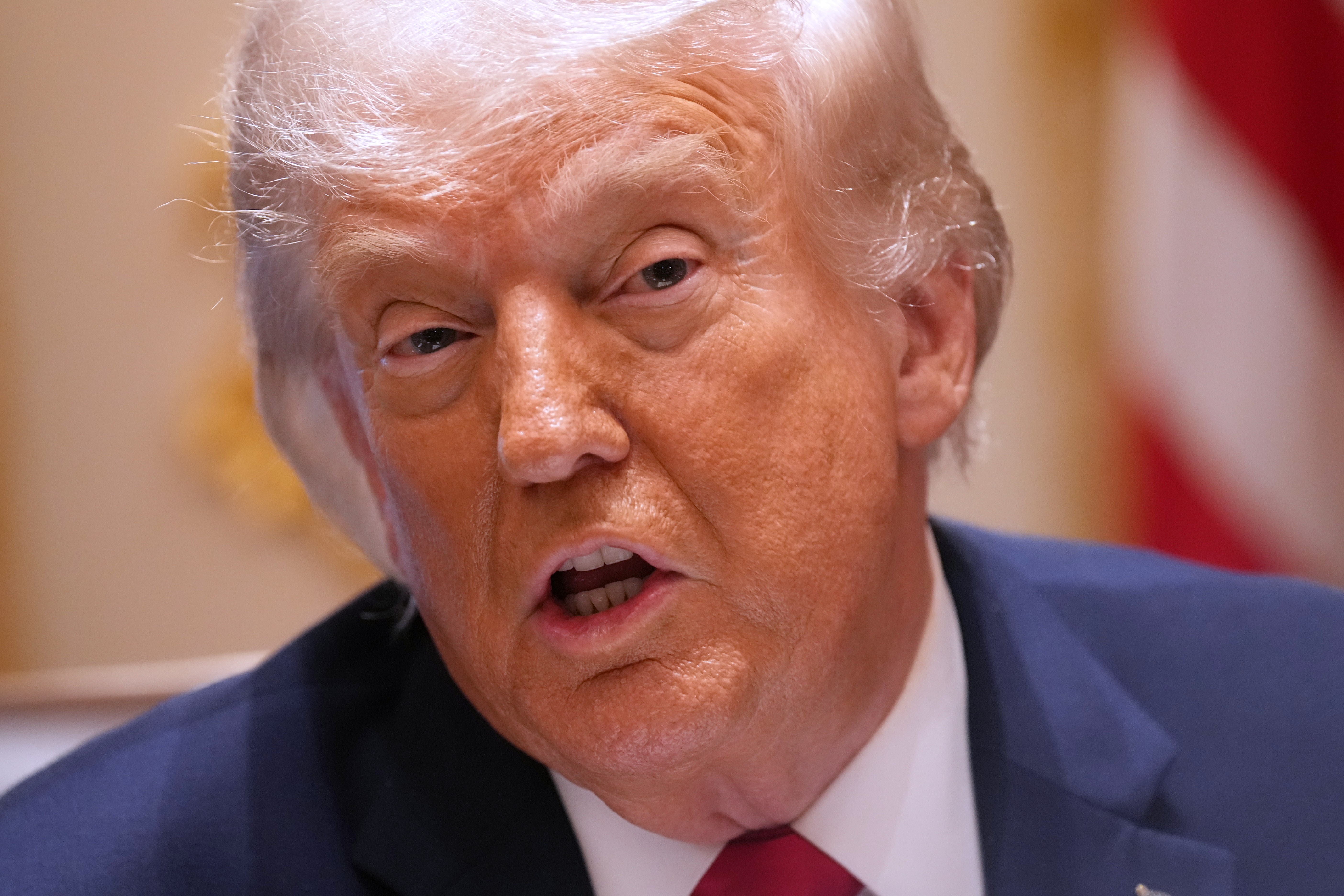
Trump speaks during White House cabinet meeting
AP Photo/Jacquelyn Martin
Senate Republicans face a difficult choice when they return from recess next week: support Donald Trump's controversial $1.8 billion fund to benefit his political allies or challenge a commander in chief who recently ended the careers of two Republican senators.
Nearly half of the 53-member Republican majority in the Senate showed resistance to the issue during a heated two-hour meeting with the Acting Attorney General Todd Blanche before the Memorial Day holiday, prompting the leadership to suspend plans to pass a $72 billion party bill to fund Trump's immigration crackdown through the end of his presidential term.
With Republican leaders now set to vote on the measure to fund U.S. Immigration and Customs Enforcement (ICE) and the Border Patrol, the party is pressing Trump's Justice Department to agree to safeguards that could counteract the US's plans. Democrats to force repeated votes on amendments to derail the fund and embarrass the president.
"I hope Senate leadership is working with the administration and the Justice Department to come up with something that works," said Senator Ron Johnson, a Wisconsin conservative who says he fully supports the fund. "My suggestion was: create a definitive amendment that makes all their amendments irrelevant."
The fund, which would compensate victims of political "instrumentalization" with taxpayer money, emerged from a legal settlement between Trump's Justice Department and the Internal Revenue Service (IRS) to resolve an unprecedented lawsuit in which the president sought $10 billion over the alleged misuse of his tax returns.
Now on g1
No one believes this is a winning ad
The ad set off a wave of criticism, with lawmakers expressing concern about possible favors by Trump and the possibility of payments to violent Trump supporters who stormed the US Capitol and assaulted police officers on January 6, 2021. On Friday, a federal judge temporarily blocked the government from proceeding with the fund.
According to people present at the meeting, Blanche told lawmakers, behind closed doors, that the fund would not pay money to members of the Trump family or anyone convicted of violent crimes. But lawmakers want those guarantees in writing, as well as eligibility criteria, greater congressional control over choosing the fund's commissioners and some kind of judicial oversight.
Senate Majority Leader John Thune called on the Justice Department and White House to provide more clarity to members about what safeguards they would accept. Aides say so far there has been nothing but silence.
"The administration appreciated the conversation and feedback last week," a White House official said Friday. "We look forward to further discussions as necessary." The Justice Department did not respond to Reuters' requests for comment.
Even with restrictions, Republican strategists say the fund could become a political liability heading into November's midterm elections, where the party is already struggling due to rising consumer goods prices, an unpopular war with Iran and Trump's falling approval ratings - even among Republicans.
"Nobody thinks this is a winning agenda, not even those in safe Republican districts and seats in the House and the Senate, which normally does not need to worry about elections.
Even these people don't want to get involved in this," said a Republican strategist who requested anonymity because he is involved in key congressional races.
Bitterness in the Senate
Lawmakers also showed little willingness to take up the issue after Trump oversaw the primary defeats of Republican Senators John Cornyn and Bill Cassidy.
Johnson blamed the Justice Department for making a public announcement about the fund, and for doing so just as the Senate was preparing to consider the bill. of ICE funding.
"For me, all of this was completely ruined by the announcement. These things are best done using the authority that Congress has granted," Johnson said. "The timing was terrible."
"For me, this whole thing was ruined by announcing it publicly. These things work best when they are done using the authority that Congress has already granted," Johnson said. "The timing was terrible."
The controversy has already reignited hard feelings related to the 2020 presidential election.
James Troupis, a former Trump campaign lawyer who faces criminal charges for his alleged role in a fake election delegate scheme in Wisconsin, this week requested $3.2 million in compensation, saying he lost his reputation and faced $1.7 million in costs after representing Trump.
Vice President J.D. Vance has suggested that Tina Peters, a former Colorado election official convicted of illegally tampering with voting machines in a quest to support false claims of fraud in the 2020 election, could be a strong candidate for compensation.
Oversight Demands
Some Republicans in the Senate and House of Representatives have called for congressional oversight, echoing comments made by Senate Judiciary Committee Chairman Chuck Grassley.
"Congress needs to have an oversight role in this before I can approve or support it," Republican Rep. Mike Flood told voters during a public meeting in Norfolk, Nebraska.
"I have concerns about the weapons fund," Rep. Mariannette Miller-Meeks, one of the House's most vulnerable Republicans, told the *Des Moines Register*.
"We need more information. We need supervision. We need to know who decides this and where the money goes," said the Iowa Republican. "Right now, I have more questions than answers."
Source: G1