US military drones and jets observed near Cuba amid rising tensions between the two countries
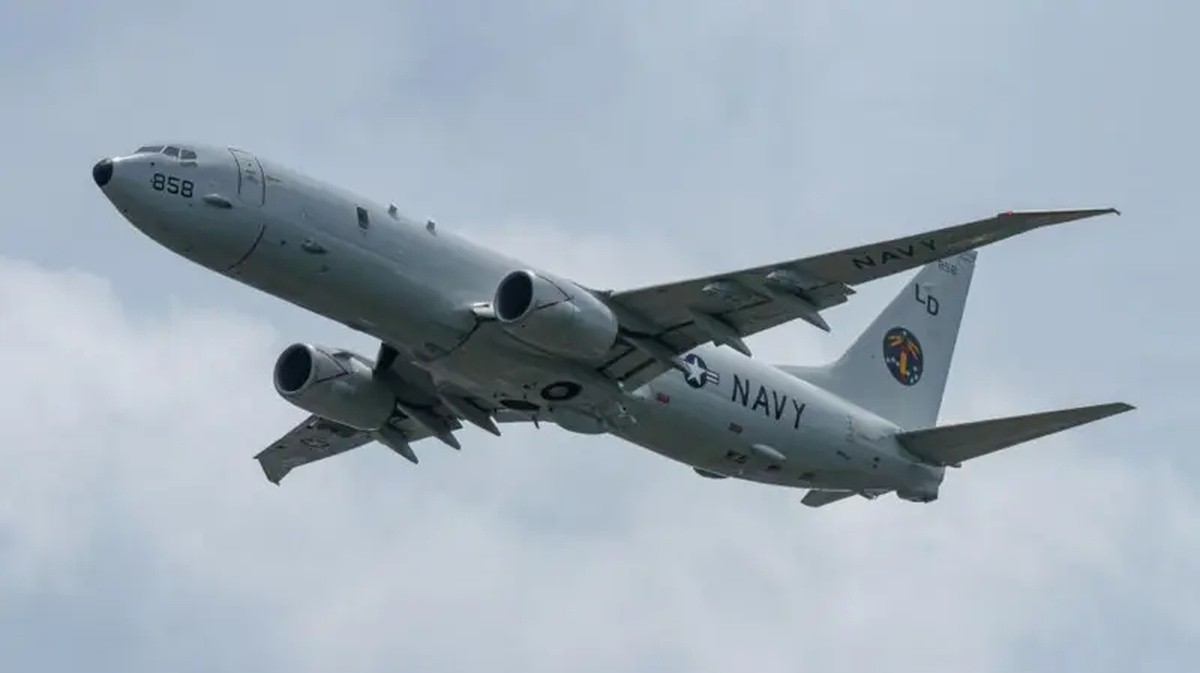
US drones and military jets observed near Cuba
CREDIT, SOPA IMAGES/LIGHTROCKET VIA GETTY IMAGES
The United States military has been openly broadcasting the location of military surveillance flights near Cuba on plane tracking websites, amid increasing pressure from Washington on the island's communist leadership.
The keeping of flight transponders turned on "is probably deliberate", according to the British expert on drones Steve Wright. For him, the United States was trying to send "a clear message that it keeps its eyes on the sky to sustain pressure" on the island.
Russia and China condemn US criminal charges against Raúl Castro
China denounces 'abuse of judicial means' after Raúl Castro's indictment in the United States
Based on data from the flight tracking website Flightrar24, BBC Verify (the BBC's data and image verification department) found at least five surveillance planes US Navy P-8A Poseidon and three MQ-4C Triton surveillance drones operating in the Caribbean Sea, near Cuba, since May 11.
Some aircraft flew up to 80 km away from the island.
SEE ALSO
China and Russia express support for Cuba after US accusations against Raúl Castro
Flight tracking data does not offer a complete picture of American activity in the vicinity of Cuba, as military aircraft do not always transmit their positions. But they disclose their location on parts of the route.
The displacement of the aircraft comes after the significant increase in tensions between the two countries seen in recent months, since Washington imposed a blockade on oil shipments destined for the Caribbean nation.
The news website Axios also reported that Cuba acquired drones capable of attacking the continental United States. The Cuban Foreign Minister responded by stating that his country "does not threaten or desire war" and accused Washington of preparing a "fraudulent case" to justify military intervention.
These accusations were followed by the offer of a "new relationship" with the Cuban people by the American Secretary of State, Marco Rubio, on Wednesday (19/5).
Speaking in Spanish in a speech addressed to the island's population, on the anniversary of Cuban independence from the United States, Rubio blamed the leaders communists (not the American fuel blockade) for the "unimaginable difficulties" faced by the country.
Also on Wednesday, the United States government announced the indictment of former Cuban president Raúl Castro and five other people. The case concerns the Cuban Air Force's downing of two civilian aircraft 30 years ago.
Experts explained to BBC Verify that the public nature of these surveillance flights indicates that the United States seeks to execute the blockade and put pressure on the Cuban government, as well as dissuade Cuba's allies, such as Venezuela, from trying to bring fuel to the island. "make a deal", threatening the communist regime with a possible American intervention, as occurred at the beginning of the year in Venezuela, with the capture of then president Nicolás Maduro.
What the data shows
BBC Verify tracked several flights of the US Navy's P-8 Poseidon surveillance jets.
One of the flights took place on May 11. The aircraft arrived 80 km away from the south of Cuba, according to data from Flightradar24.
The P-8 returned to operation the following day, when it was observed flying to the Cuban capital, Havana, in the north of the country, and then returned to its base in Jacksonville, in the US state of Florida.
The aircraft arrived 80 km away from the south of Cuba, according to data from Flightradar24.
FlightRadar/Via BBC
On the day May 15, two American MQ-4C Triton surveillance drones also operated near the coast of southern Cuba.
Tracking shows them operating along a similar route to a previous Poseidon flight.
On May 15, two American MQ-4C Triton surveillance drones also operated near the coast of southern Cuba.
FlightRadar/Via BBC
Retired Colonel Mark Cancian of the United States Marine Corps and senior advisor to the Center for Strategic and International Studies (CSIS), explained told BBC Verify that the recurring flights of surveillance aircraft "indicate the intention to identify the arrival of ships from the south, firstly, and, secondarily, from the north". "limited."
BBC Verify also examined US military aircraft activity near Cuba between February 1 and 7, when there was just one P-8 flight near the island, with no comparable MQ-4C Triton activity in the region.
But a US Air Force RC-135V Rivet Joint reconnaissance aircraft passed close to Cuba twice in the same period.
For drone expert Steve Wright, surveillance flights with Drones "are most likely part of an American agenda to inhibit Venezuela's attempts to break the oil blockade and send fuel to Cuba."
Analysts at the defense intelligence firm Janes offered a similar assessment. They added that there has been a "general increase in US intelligence, surveillance and reconnaissance missions" since February.
"The fact that these flights are visible in public tracking tools suggests that they are intended to inhibit attempts to break the oil blockade and pressure the Cuban government," according to the company.
SEE ALSO
US court criminally charges former Cuban president Raul Castro with murder
Source: G1