US-Iran deal expected to simplify Warsh's debut at Fed
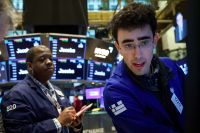
Kevin Warsh's dream of becoming chairman of the Federal Reserve was almost ruined by the specter of having to face simultaneous and conflicting challenges arising in the American economy.
In January, when President Donald Trump nominated Warsh for the top job, the job market had just wrapped up one of its worst years in decades. Unemployment was rising and the American economy was losing jobs.
And then, weeks later, the inflationary side of the Fed's mandate reared its darkest face. The war with Iran has caused the prices of oil, diesel, jet fuel and gasoline to soar.
That raised the risk that Warsh would have to lead the Fed in a feared two-front battle, with officials forced to decide whether to rescue the labor market by cutting interest rates or put out the fire of inflation by raising them.
But now, the immediate challenge Warsh faces seems a little less daunting.
Not only is the job market heating up quickly this spring, but energy prices are plummeting.
The agreement between the US and Iran to end the 15-week war and reopen the Strait of Hormuz has eased fears of a lasting inflation spike, reducing the urgency for Warsh to consider an interest rate hike in the near future.
"This takes some of the pressure off Warsh. It means the worst-case scenario for increases is more out of the question than present," said Benson Durham, a former Fed official and founder of DASM LLC, an independent research firm.
"Inflationary wave smaller than feared"
To be clear, Warsh would never raise interest rates at his first meeting this week. The chances of an increase on Wednesday (17) are almost zero.
He probably wouldn't cut rates either, even though he faced strong pressure from Trump, who joked that he would "sue" Warsh if he didn't reduce borrowing costs.
But a growing number of Fed officials have warned that interest rate hikes may eventually be necessary to reduce inflation.
While details on the US-Iran deal are still scarce and many challenges remain, oil futures plunged to three-month lows on Monday.
Gas prices, which play a key role in shaping consumer psychology regarding inflation, have now fallen for 25 consecutive days, hitting two-month lows.
"The downward trajectory for oil means a smaller inflation wave than the feared less prolonged supply chain disruptions and, importantly, a much lower risk of a spike to new highs that would shock inflation expectations," wrote Krishna Guha, vice president and head of economics and central banking strategy at Evercore ISI, in a note to clients on Monday.
The U.S.-Iran deal and the slump in the oil market are "increasing the likelihood that the Fed will be able to overcome the situation without raising interest rates," Guha said.
Eric Rosengren, former president of the Boston Fed, told CNN that the US-Iran deal is "clearly positive news."
By Lucinda Pinto: Market prices BC decision and monitors statement | MARKET CLOSURE
"It's a first step, but it's positive for the economy and for the Fed," he said.
However, Rosengren noted that the formal signing of the agreement is not expected until Friday, after the Fed meeting.
"I don't think they'll put much trust in a memorandum of understanding that hasn't yet had its details worked out. All it takes is a bomb in Beirut or an attack on a ship to completely change the scenario," he said.
Less pressure to raise interest rates
Indeed, oil market analysts warn that the US-Iran deal will not immediately return traffic in the Strait of Hormuz to pre-war levels.
And the market is also not signaling a quick return to pre-war prices. The futures market does not expect Brent to return to US$75 per barrel before 2028.
Still, Fed analysts say the existence of a U.S.-Iran agreement will allow Fed officials to avoid overreacting to another high inflation report in June.
The agreement reinforces the cautious approach advocated by more moderate Fed members, who are generally more willing to keep interest rates low.
"The Fed is in a stronger position and has a little more certainty about its next steps. Now, the Fed is less likely to react strongly to short-term inflationary pressures," said Durham, a former Fed official who now teaches at Columbia University and New York University.
Of course, Warsh still faces many challenges, including gaining the trust of the new colleagues he once criticized.
"Kevin is very good at one-on-one conversations. He's smart and very sociable," said Rosengren, who worked with Warsh at the Fed during the 2008 financial crisis.
Defender or moderate of inflation? At that time, Warsh was deeply concerned about inflation.
Even in April 2009, in the middle of the Great Recession, when unemployment was soaring, Warsh said he was "more concerned about the risks of rising inflation than the risks of falling", according to the minutes of the Fed meeting released later. (At the time, the Consumer Price Index was -0.4%, compared to 4.2% last May).
More recently, when Warsh was being tipped to replace Jerome Powell, he expressed a willingness to lower interest rates, in part due to expectations that the boom in artificial intelligence would increase productivity and reduce inflation.
"During the financial crisis, he was very concerned about inflation, including energy prices," Rosengren said. "I hope that now that he's no longer running for office, he'll start worrying about inflation like he used to."
Fall in oil should help global inflation, says economist | MONEY NEWS
Source: CNN