US and Iran do not want to use their forces on a large scale, says expert
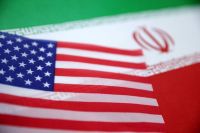
The United States informed Iran that the ceasefire is "over", but signaled its willingness to continue negotiations towards an end to the conflict in the Middle East. The scenario was analyzed by Sandro Teixeira Moita, professor of Military Sciences at Eceme (Army Command and General Staff School), who highlighted the main points of the impasse between the two powers to WW.
According to Moita, countries such as Oman, Qatar and Pakistan have played a fundamental role as intermediaries, transmitting messages between Iran and the United States with unprecedented speed in the negotiation process.
"These countries have played this role of passing messages between Iran and the United States, even with a speed that we have not seen at other times in this negotiation process", he stated.
Attacks in the Strait of Hormuz and lack of internal control
One of the pieces of information that would have had a profound impact on the negotiations is the alleged Iranian confession that part of the attacks carried out against five ships in the Strait of Hormuz were carried out by low-level commanders of the Revolutionary Guard.
According to Moita, these officers from the naval component would not be under full control of the organization, due to the losses suffered by the leadership during the so-called "40-day war".
In addition, the United States reportedly gave Iran a deadline of Saturday (11) night for the country to issue a public statement guaranteeing that the Strait of Hormuz would remain open to navigation. Iran, in turn, sees the Strait as a strategic asset capable of generating rapid financial resources to support its struggling economy.
Strategic impasse with no clear way out
For Moita, neither side has an objective clear enough to justify the use of force on a large scale. "Both sides do not want to use force on a large scale, but they will not give up using it to signal in this direction", declared the expert.
According to him, the theory of strategy requires a very clear vision of what is intended to be achieved with the use of force - and this clarity would be absent at the current time.
In this context, Moita assessed that the United States is seeking a "graceful" exit from the conflict in the Middle East. "Trump wants to create a way out of this quagmire he has found himself in," said the analyst, noting that the impasse remains intense while negotiations continue through indirect diplomatic channels.
The texts generated by artificial intelligence on CNN Brasil are made based on video cuts from the newspapers in its programming. All information is investigated and checked by journalists. The final text is also reviewed by the CNN journalism team. Click here to find out more.
Source: CNN