Understand what the New World screwworm is
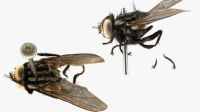
The United States Department of Agriculture has confirmed the fifth case of New World screwworm, in three calves, a goat and a dog, in south Texas.
Despite the word New, it is not a new disease or threat, but rather a problem from the past that has returned to torment and worry North American livestock farmers.
The name is a reference to the Americas, the name given by European colonizers, and where the fly Cochliomyia hominivorax is endemic and present mainly in tropical regions.
In Brazil, the New World screwworm is popularly known as "bicheira", quite common on Brazilian farms, as veterinarian Hyberville Neto explains: "the fly is present throughout the national territory, which means that Brazilian producers live with the risk on a daily basis", adds Neto.
Bicheira x Berne
Despite being caused by ectoparasites, screwworm and botfly have different characteristics, starting with the fly.
Hyberville explains that botfly is caused by the larvae of the blowfly dermatobia hominis. They penetrate the skin and take a few days to develop.
The screwworm is caused by the fly Cochliomyia hominivorax, which is attracted to cuts in the skin and wounds. The fly lays its eggs in small wounds or wounds, such as the navel of newborn calves. The larvae hatch and begin to feed on the animal's living tissue, causing inflammation, pain and a bad smell that attracts other flies to lay eggs.
The process is very fast, as explained by the veterinarian and columnist for CNN Agro, Lygia Pimentel, "the larvae are born 24 hours after the eggs are laid, they multiply very quickly and this makes the fight difficult."
The damage is economic, as the animals lose weight and need to be treated when affected.
"The screwworm can infest any mammal, including humans, which tends to happen in unhealthy regions with difficult access to treatments", reinforces Lygia.
The disease had been eradicated in North American territory since the 1960s
The United States Department of Agriculture will use the same technique adopted in the 1950s and 1960s, that of the "sterile insect". Male flies, sterilized in the laboratory, are released into the wild. When they mate with female Cochliomyia hominivorax flies, they generate infertile eggs.
The fly crossed the border. In Mexico, cases continue to grow and more than 28 thousand cases have already been recorded. The import of standing cattle has been suspended for over a year, precisely to try to contain the spread of the disease.
After trip to China, government tries to make meat quota more flexible | CNN AGRO NEWS
Source: CNN