Understand what 'bomb agendas' are, which put pressure on the government's budget in an election year
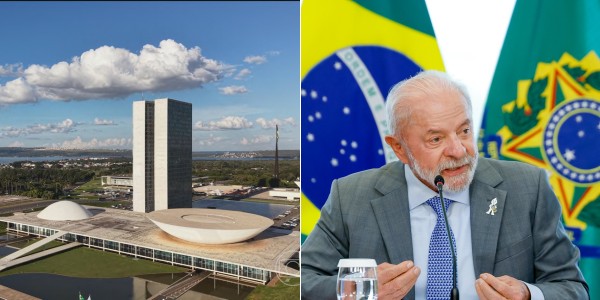
The term "bomb agenda" used in the political-economic context, mainly in the midst of votes in the National Congress, has appeared more frequently in recent days in the news due to the consecutive approvals of proposals in both Houses.
➡In practice, a bomb agenda refers to a bill or a Legislative matter that creates high-value expenses, putting pressure on public coffers, or reducing revenue.
In this context, these measures have a strong negative impact on public accounts and can violate the Fiscal Responsibility Law, which, in an election year, can damage the image of the government of President Luiz Inácio Lula da Silva (PT), who is seeking re-election.
In recent days, both the Chamber and the Senate have approved agendas with these characteristics, but they have not yet definitively gone through all the procedures in the Legislature (understand below).
CCJ of the Senate approves PEC on retirement for health agents and endemic diseases
There is still a background to this scenario: the frayed relationship between government and Congress, mainly, with the Senate.
Lula and the president of the Senate, Davi Alcolumbre (União Brasil-AP) have distanced themselves since the senator helped to articulate the rejection of the attorney general of the Union, Jorge Messias, for a vacancy on the Federal Supreme Court (STF).
The Minister of Finance, Dario Durigan, has even spoken publicly about the matter and has taken up a fight against the agenda bombs, as he tried to negotiate the proposals with Congress.
Now, the minister is already talking about vetoing or calling the Supreme Court in cases such as the creation of a special rural credit line aimed at renegotiating producers' debts.
National Congress Building and President Lula.
Jornal Nacional/ Reproduction / Wallison Breno/PR
Trillion-dollar effect
Calculations by the Ministry of Finance point to a trillion-dollar effect of the eventual approval of the so-called "bomb agendas" being analyzed by the National Congress.
According to interlocutors from the ministry, the four main explosive proposals being analyzed by the Legislature could generate an increase in spending, or loss of revenue, in excess of R$2 trillion over the next 10 years (see details below).
To give you an idea, the effect is more than twice the savings of R$ 855 billion in 10 years estimated by the Social Security reform, approved in 2019 - the result of years of mobilization in the National Congress and broad debate with society.
Rural Debts (PL 5122/23): R$ 1.4 trillion in ten years;
PEC of the Churches (PEC 5/23): loss of R$ 100 billion in ten years, increasing the tax that everyone pays in the same proportion;
Retirement of Community Health Agents (PEC 14/21): around R$500 billion for the Union in ten years, apart from the effect on municipalities;
Piso of Doctors and Dentists (PL 1365/22): around R$500 billion for the federal government in ten years, in addition to an additional impact on city halls.
See the impact estimated by the economic area
With the exception of the PEC for churches, which does not generate a loss of revenue, as both individuals and companies would have to bear this loss, the other proposals imply an increase in expenses and, consequently, in Brazilian public debt - which is already at a high level for emerging countries.
The former president of the Central Bank, Roberto Campos Neto, explained, in the past, that the interest rate is high in Brazil due to the current level of debt - considered high for the standards of emerging countries. "Interest is high because the debt is high', and not the other way around", he said at the time.
Because of this, analysts are asking for the opposite, for the government and the National Congress to approve proposals to reduce public spending and, therefore, allow for a containment of Brazilian debt.
The objective is to curb inflation and allow a sustainable fall in the Brazilian interest rate, benefiting the whole of society.
The Minister of Finance, Dario Durigan, said this Wednesday (10) that the proposals under analysis must be evaluated "in light of the Fiscal Responsibility Law, which is not only valid for the government, it is also valid for Congress".
"It is necessary for us, all of us, be it the government or Congress, to have fiscal responsibility", stated Durigan.
The Minister of Finance, according to the blog of journalist Valdo Cruz, from g1 and GloboNews, won the support of minister Gilmar Mendes in his fight.
In recent days, the Dean of the Supreme Court published messages criticizing the bomb agendas, highlighting that parliamentarians cannot create expenses for the Union, States and municipalities without determining the sources of funds to cover holes in public coffers.
Minister of Finance, Dario Durigan
Cadu Gomes/VPR
Source: G1