Understand the ups and downs of the relationship between the United States and Cuba since 1959
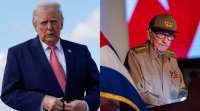
At the center of Latin America's recent history has been, at least since 1959, the tense David-and-Goliath relationship between Cuba and the United States: a bond that has kept the continent in suspense and which has now monopolized attention again, as threats to the island from the White House increase following the fall of Maduro in Venezuela.
Washington and Havana, in fact, share a much longer history of colonialism, independence and revolution.
But it is especially since the Castros' rise to power that ideological enmity and geopolitical friction seem to have set the tone for all of America.
Figures like Fidel Castro and Raúl Castro - who was recently indicted by the US -, Ernesto "Che" Guevara and Fulgencio Batista crossed paths with John F. Kennedy and Nikita Khrushchev in the past, paving the way for figures like Miguel Díaz-Canel and Donald Trump in the present day.
In this context, events such as the "Mariel exodus", the missile crisis and the Helms-Burton Act became part of the popular vocabulary.
The United States and Cuban Independence
The first time Washington turned its attention to Cuba, the island was still part of the Spanish Empire and had been involved in a war of independence since 1895 to end colonial rule.
The United States, which was beginning to expand beyond its borders, went to war with Spain in 1898, in support of the revolutionaries.
After winning the conflict, he occupied the island until several years after the proclamation of the Republic of Cuba in 1902, although he later maintained a strong presence in the country, manifested most clearly in the construction of a naval base in Guantánamo Bay in 1903, which he still maintains.
Former President of Cuba Raúl Castro May 1, 2025 REUTERS/Norlys Perez - REUTERS
The Cuban Revolution
The US maintained its military presence and investments on the island during the following decades, marked by political instability and frequent coups d'état.
But the balance changed when revolutionaries led by Fidel Castro overthrew, in 1959, General Fulgencio Batista - himself in power after a coup d'état in 1952 - and imposed, over time, a communist regime in what the United States considers its "backyard" and most obvious zone of influence and security.
The imposition of broad sanctions and a trade embargo on Cuba from 1960 onwards, and the failed invasion of Cuban insurgents supported by the United States at the Bay of Pigs in 1961, did nothing more than worsen the relationship and make it clear that everything would get worse from then on.
A US P2V Neptune patrol plane flies over a Soviet freighter during the Cuban missile crisis, in this photograph from 1962. - Getty Images
The missile crisis and the Cold War
The first major crisis between Washington and Castro was not long in coming: in 1962, Cuba and the Soviet Union, which had become its protector after the revolution, agreed to the installation of nuclear missiles on the island, that is, a short distance from the United States, supposedly to prevent another invasion.
But such a decision cannot be understood without considering the global confrontation between Washington and Moscow, popularly known as the Cold War.
The missiles were deployed, at least in part, in response to the US deployment of nuclear weapons in Türkiye, a short distance from the Soviet Union.
This "Missile Crisis" became the episode that sums up the entire Cold War: during 13 days of extreme tension, which included the US naval blockade of Cuba, the world was on the brink of nuclear war.
Fortunately, American President John F. Kennedy and USSR Supreme Leader Nikita Khrushchev reached an agreement to avoid conflict by removing missiles from Cuba and Turkey.
But the crisis left a legacy that persists: since then, the United States and Cuba have been bitter, almost existential enemies, and representatives on the continent of two antagonistic ways of conceiving the world.
Thousands of Cubans leave the island
In the early 1980s, Fidel Castro's government allowed its citizens to leave the country through the port of Mariel, which until then was impossible and could only be done illegally in small boats.
At least 125,000 Cubans abandoned the island and entered the United States, adding migratory tension to the explosive cocktail of relations between Washington and Havana (almost 650,000 Cubans would leave the island in the following decades thanks to the "dry feet, wet feet" policy, which granted automatic residency to anyone arriving in the US).
In 1994, the two countries signed an agreement to try to reduce illegal immigration by half, at a time of serious economic crisis and deterioration in Cuba caused by the fall of the Soviet Union in 1991, its main benefactor.
This historical moment is known as the "special period" and its mere mention in Cuba evokes bitter memories of deprivation, blackouts, hunger and large protests known as the "Maleconazo", a situation that many have compared to the current crisis on the island following the overthrow of Maduro by the US and the interruption of Venezuelan oil shipments to the island.
The Helms-Burton Act
In the midst of the "special period", the Helms-Burton Act was approved in the United States, which intensified the embargo on Cuba by restricting the commercial operations of other countries on the island.
The law, which had an impact on the Cuban economy right from the beginning, came amid strong tensions between Washington and Havana following the attack of two civilian planes belonging to the anti-Castro group "Hermanos al rescate" by the Cuban Air Force in 1996, in which three Americans died.
President of Cuba, Miguel Díaz-Canel, during an economic forum in Minsk, Belarus 26/06/2025 Sputnik/Sergey Bobylev/Pool via REUTERS - via REUTERS
Barack Obama's approach
During Barack Obama's presidency in the United States, relations with Cuba entered one of the periods of greatest détente and tensions decreased.
In 2014, following a prisoner exchange, Washington and Havana declared their intentions to reestablish diplomatic relations and reopen their respective embassies, and in 2015 facilities for travel between the United States and Cuba were announced.
That same year, Obama met with Raúl Castro, Fidel's brother and president since 2008, in Panama. This was the first summit between leaders of the two countries in more than 50 years.
And in 2016, the year Fidel Castro died, some sanctions were lifted, direct flights were reestablished and Obama visited Cuba, the first visit by an American president in 88 years.
But as spectacular as that thaw seemed, it couldn't last.
Trump and his military tour of the Caribbean
During Donald Trump's first term, which began in January 2017, relations between Cuba and the United States quickly deteriorated again.
That same year, part of the sanctions that had been suspended by Obama were reimposed and travel restrictions were reinstated, partly as a result of what Washington classified as "acoustic attacks" against its embassy in Havana.
And in 2019, restrictions on US travel to Cuba were further tightened, and the country was again declared a state sponsor of terrorism, a label that Obama had removed during his presidency.
Not much changed during the presidency of Democrat Joe Biden, who succeeded the Republican without including Cuba in his agenda of priorities, but, after Trump's return to the White House in January 2025, the relationship between Washington and Havana took another turn for the worse.
Trump targets Cuba after Venezuela and reignites diplomatic crisis | CNN BRAZIL
The Republican left first for Venezuela, Cuba's last ally, and, on January 3, overthrew its dictator, Nicolás Maduro, and took him to New York, where he faces trial for alleged narco-terrorism, an accusation the leader denies.
The fall of Maduro tightened the siege on Cuba, with the suspension of oil shipments to the island, which increased the number of mass blackouts and caused an even greater deterioration in living conditions.
And on Wednesday (20), the US Department of Justice filed formal charges against Raúl Castro, Fidel's brother, for shooting down planes belonging to the Cuban-American exile organization Hermanos al Rescate in 1996, a fact that marks an escalation never seen before.
"Cuba will be next," Trump said at the end of March, making clear his desire to put an end to the Revolution started by Castro.
If he does this, it will be the most dramatic moment in a relationship between two countries that has been through everything, including an imminent nuclear war, and that has set the pace for an entire continent.
Who is Raúl Castro, former president of Cuba
Source: CNN