Understand the negotiating points between the US and Iran to end the war
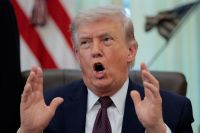
The international community eagerly awaits the announcement of an agreement between the United States and Iran to end the war in the Middle East. According to information published by the international press, the negotiations point to a treaty considered very favorable to Iran.
International Relations professor Maurício Santoro evaluated the terms that were being discussed. According to him, Iran would give up blocking the Strait of Hormuz and charging tolls on ships passing through the region.
In return, there would be a cessation of hostilities and the issue of Iran's nuclear program would not be discussed at this time.
"If this news is indeed confirmed, these would be decisions that are really very favorable to Iran in the current situation," said Santoro.
Cessation of conflicts and deadline for nuclear negotiations
From what has been reported so far, the agreement also provides for the cessation of all conflicts, not only in the Persian Gulf, but also in Lebanon.
Iran would gain a deadline of approximately 30 to 60 days before negotiations on the nuclear program would resume.
Regional expectations for the end of the war are intense, as the conflict has thrown the entire Persian Gulf region into an economic and political crisis, affecting countries such as Qatar and the United Arab Emirates, which depend heavily on international trade and business tourism.
Trump says blockade on Iran will continue until agreement is signed | NOW CNN
Iranian military capability
Santoro highlighted that Iran's military performance in recent months has been surprising.
"Last year there was a brief war between Iran and the United States, involving Israel as well, two weeks of fighting, and Iran's performance had been very bad. But, in one year, there was a very significant change in the Iranian armed forces", he explained.
Among the factors of this transformation, the analyst cited the improvement of the ballistic missile system and greater precision attacks.
In the Strait of Hormuz, Iran adopted a strategy similar to naval guerrilla warfare, using speedboats, drones, missiles and mines - low-cost equipment compared to the technological sophistication of the United States Navy - but which proved to be highly efficient in blocking the strait.
As the strait accounts for around 20% of all world oil trade, this tactic has given Iran a powerful tool of pressure on global energy markets, including oil, natural gas and derivative products such as fertilizers.
Nuclear negotiations
When asked about the prospects for a nuclear agreement, Santoro recalled that, in the past decade, there had been a series of negotiations on the Iranian nuclear program, through which Iran would accept international supervision to prevent the enrichment of uranium on a scale sufficient to manufacture nuclear weapons, while maintaining research for civilian purposes and medical use.
Brazil and Turkey tried to broker an agreement in the early 2010s, and a new treaty was signed in the middle of the same decade, during the administration of former US President Barack Obama.
For Santoro, the current scenario points to something similar to the 2015 treaty, although developments still depend on other factors, such as Iran's relationship with Israel and the situation in Lebanon.
"It took two wars to return to that status quo of 10 years ago. This shows this political-strategic impasse in the Middle East and this difficulty in actually advancing peace agreements in the region", concluded the analyst.
What is enriched uranium?
The texts generated by artificial intelligence on CNN Brasil are made based on video cuts from the newspapers in its programming. All information is investigated and checked by journalists. The final text is also reviewed by the CNN journalism team. Click here to find out more.
Source: CNN