Understand how Iran's power system works and who runs the country
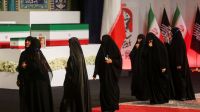
Iran's power structure was built after the 1979 Islamic Revolution, which overthrew the Iranian monarchy and established a system that combines characteristics of a theocracy and a republic.
Currently, the post of supreme leader is held by Mojtaba Khamenei, the highest authority in the State and responsible for concentrating the country's main political, military and institutional powers.
At the top of the structure is the supreme leader, who performs the functions of head of state and commander-in-chief of the Armed Forces. Furthermore, it has authority over the national police and the morality police. It is also responsible for nominating half of the 12 members of the Guardian Council, while the other half is chosen by the Iranian Parliament.
The Guardian Council is made up of 12 jurists and is tasked with supervising Parliament's activities. The body assesses whether approved laws are compatible with sharia and may require projects to be revised. It is also up to the council to approve candidates for Parliament, the Presidency and the Assembly of Experts, and may prevent certain candidacies for public office.
The Assembly of Experts brings together 88 jurists elected directly by the population from a list of candidates previously approved by the Council of Guardians. The collegiate is responsible for monitoring the authority of the supreme leader. However, it is unclear how this power is exercised, as the assembly only meets for one week a year, holds secret sessions, and there is no record of challenges to a supreme leader's decisions.
The president is the elected head of the government, but reports directly to the supreme leader. The term of office is four years, with a limit of two consecutive terms. Its duties include implementing defined policies within the guidelines established by the supreme leader and conducting Iranian diplomacy.
The Iranian Parliament is made up of 290 members, also elected for four-year terms. Parliament is responsible for drafting bills, ratifying international treaties and approving the budget. Sessions are open to the public and debates are broadcast.
In the security area, the Islamic Revolutionary Guard Corps (IRGC) is an elite military unit tasked with defending the regime. The force has between 150,000 and 190,000 members and includes the Army, Navy, Air Force and an intelligence sector.
Linked to the Revolutionary Guard, the Basij acts as a voluntary arm of the corporation and is responsible for monitoring compliance with Islamic morals by the population.
Analysis: Iran tries to force Ali Khamenei's funeral | WW
CNN correspondent attends funeral of supreme leader Ali Khamenei
Tens of thousands of Iranians gather in Tehran, this Saturday (4), for the funeral of Ayatollah Ali Khamenei, killed at the start of the war waged by the United States and Israel against Iran.
CNN correspondent Fred Pleitgen followed the ceremony exclusively, transmitting never-before-seen images of the event directly from the Iranian capital.
Khamenei's coffin, alongside those of other family members also killed during the American and Israeli bombing that took place on February 28, was displayed on a stage set up in an open-air prayer complex.
The ceremony brought together a crowd that sang songs and showed intense emotion, with many present in tears.
According to Fred Pleitgen, who spoke to funeral attendees, reactions ranged from deep sadness to anger directed at the United States and Donald Trump.
"I assure you we won't let them get a good night's sleep," said one of those present.
Another participant revealed the emotional bond he felt for the leader: "He was a father to me. I loved him even more than my own father. It's as if I had lost my father all over again."
The funeral ceremony should last until next Thursday (9), the date scheduled for Ali Khamenei's burial. The supreme leader ruled the Islamic Republic of Iran for 37 years before being killed earlier this year.
Exclusive: CNN accompanies funeral of supreme leader Ali Khamenei | NOW CNN
Source: CNN