Trump tariff: see which Brazilian products should be left out of the 25% rate proposed by the USA
US proposes 25% tariff on Brazilian goods to punish 'unreasonable' practices
A series of products are expected to be left out of the 25% tariff on Brazilian goods proposed by the Office of the United States Trade Representative (USTR), late Monday night (1st).
The announcement was made following the conclusion of an investigation, supported by Section 301 of the Trade Act of 1974, which began on 15 July 2025 by order of President Donald Trump. According to the document, the tariffs are justified by a series of acts, policies and practices of the Brazilian government that are "unreasonable" and "encumber or restrict" North American trade.
Some items should be spared from this tariff, including informational materials, donations and a specific list of products - such as certain meats, fruits, minerals, coffee, tea, spices, cereals, seeds, oilseed fruits, industrial and medicinal plants, straw and fodder.
Brazilian aircraft and aircraft parts, rare earths, organic chemicals, pharmaceuticals and fertilizers would also be exempt.
According to the US Ambassador and Trade Representative, Jamieson Greer, the American government maintains an intense dialogue with the government of President Luiz Inácio Lula da Silva, but there are still substantial differences.
The legal deadline for taking corrective measures expires on July 15, 2026.
"Over the last year, President Trump and I have had several constructive meetings with President Luiz Inácio Lula da Silva and his cabinet, which have intensified in recent weeks. However, we continue to have substantial disagreements in resolving the issues identified in this investigation," said Greer.
The conclusion of the investigation occurs within the deadline established for the negotiations of the working group created by the US governments and Brazil to address commercial issues and avoid the application of new tariffs. Although the negotiations are scheduled to end this Friday (5), the participants in the talks stated that there had not been enough progress to conclude the work, revealed Valdo Cruz's blog this Monday.
The working group was established after the visit of the Brazilian president to the American on May 7 at the White House. On social media, the USTR even celebrated the Brazilian government's "constructive engagement" to move forward on trade issues and stated that it looked forward to the continuation of discussions between the two countries.
The new decision frustrates Lula's intentions to have a new conversation with Trump to avoid financial retaliation and economic impacts on the classification of the PCC and CV as terrorist groups.
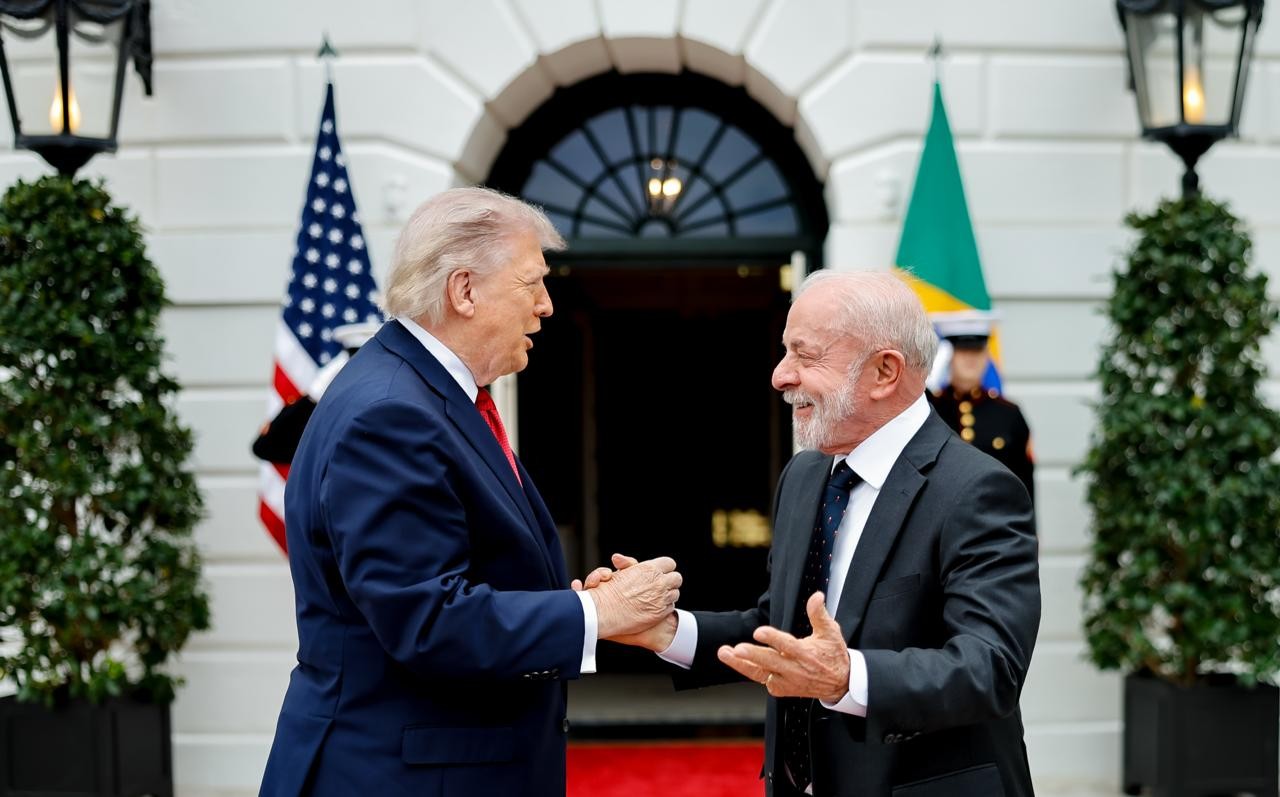
Lula and Trump in a meeting at the White House
Ricardo Stuckert
The points criticized by the USA
The report The USTR's final report points out irregularities and commercial barriers distributed across six main axes:
Digital Commerce and Payment Services (Pix): The USTR cites that Brazilian courts issued secret orders for American social media companies to remove political content and suspend profiles of US residents - in some cases, globally -, prohibiting the dissemination of the orders. The body also criticizes the imposition of severe fines, restrictions on assets and bank accounts and, in at least one case, the complete closure of a website. Furthermore, the text points out that the Central Bank of Brazil favors the Pix system to the detriment of American providers, acting simultaneously as regulator and owner of the system, imposing the use of Pix and limiting competitor fees;
Unfair Preferential Tariffs: The American government contests the commercial agreements maintained by Brazil with Mexico and India.
According to the USTR, Brazil grants lower tariffs to hundreds of products from these countries in sectors in which both are advanced and globally competitive producers;
Illegal Deforestation: The document states that, although Brazil has a legal framework to combat illegal deforestation, the country has historically failed to apply it effectively, allowing the problem to persist;
Ethanol Market Access: The American body argues that Brazil abruptly interrupted treatment in 2017 balanced tariff that it applied to ethanol and, since then, has not offered reciprocal treatment to fuel exports from the USA;
Intellectual Property Protection: The USA points out a lack of sufficient enforcement of criminal and customs laws against counterfeiting products, excessive slowness in examining patents and a lack of continuous anti-piracy measures.
The USA criticizes the National Institute of Industrial Property (INPI)'s delay in analyzing patents, especially biopharmaceuticals, which take up to 109 months.
Fighting Corruption: The American representation concluded that Brazil does not adopt sufficient measures to combat bribery and corruption.
The document specifically cites the annulment of Operation Lava Jato processes by the STF in 2023, the "without transparency" renegotiation of leniency agreements and Brazil's fall in Transparency International's Corruption Perception Index.
Next steps and deadlines
US Trade Representative, Jamieson Greer, speaks to the press on the day he participates in a working lunch with EU trade ministers, in Brussels, Belgium, November 24, 2025.
Piroschka van de Wouw/Reuters
Before the definitive application of any sanction or corrective measure, the US government established a schedule of public hearings and consultations to collect testimonies from interested parties:
Until June 22, 2026: Maximum deadline for sending requests to appear at the public hearing, accompanied by a summary of the testimony.
Until July 1, 2025. 2026: Deadline for submitting written comments on the measures proposed by the USTR.
July 6, 2026: Official public hearing held by the USTR to discuss the proposed actions.
July 15, 2026: Legal deadline for defining and applying corrective measures against Brazil.
During the initial phase of the investigation, the USTR had already collected statements from more than 30 witnesses and received more than 295 comments and replies before issuing the current opinion.
Why Brazil became the target of investigation
On July 15, 2025, the USTR began the trade investigation against Brazil at the request of American President Donald Trump.
In the document, the agency's representative stated that "it has documented Brazil's unfair trade practices that have restricted American exporters' access to its market for decades", but did not present evidence to support the allegations.
The document mixed commercial and political allegations to justify the 50% tariff on Brazilian products, including an alleged US trade deficit with Brazil. However, the US has exported more to Brazil than it imports since 2009.
In practice, the measure acts as an instrument of international pressure to protect US interests. The provision establishes a process led by the Trade Representative to determine whether any foreign government adopts abusive practices against the country.
The law also provides that the US can adopt measures to correct unfair trade practices, such as the imposition of tariffs or sanctions on the country being investigated.
In the past, the US used this same device to impose tariffs on Chinese products.
In September 2019, for example, Trump applied a 15% tax on more than US$120 billion in products from China.
A similar measure was adopted by former President Joe Biden, Trump's opponent, who also used the 1974 Law to impose tariffs on imports from China.
How did Brazil fare after the American court overturned tariffs?
US President Donald Trump points the finger during a cabinet meeting in the Cabinet Room of the House Branca, in Washington, DC, USA, on May 27, 2026
REUTERS/Evan Vucci
On February 20 of this year, the majority of justices of the United States Supreme Court concluded that the International Emergency Economic Powers Act (IEEPA), used by Trump, does not authorize the president to impose tariffs on his own.
In response to the decision, Trump announced the use of another legal instrument to impose a 10% global tariff, with some exceptions. The measure came into effect the following week and is valid until July 24.
In practice, the Supreme Court decision annulled all tariffs applied based on IEEPA.
This includes the so-called 10% reciprocal tariffs, announced in April last year.
Also the 40% surcharge on several Brazilian items, announced by Trump in a letter sent to President Lula in July 2025.
Foreign trade expert Jackson Campos explained at the time that, after the court's decision and Trump's announcement of new tariffs, the end result is a 10% tariff on Brazilian products.
"For most products, the item's normal tariff remains [i.e., the rates already in force before the tariff], plus the new global temporary additional of 10%", he states. He also remembers that steel and aluminum continue to have tax rates of 50%, which are in addition to the 10% recently announced.
Source: G1