Trump tariff: see how coffee, honey and fish will try to escape the new taxes
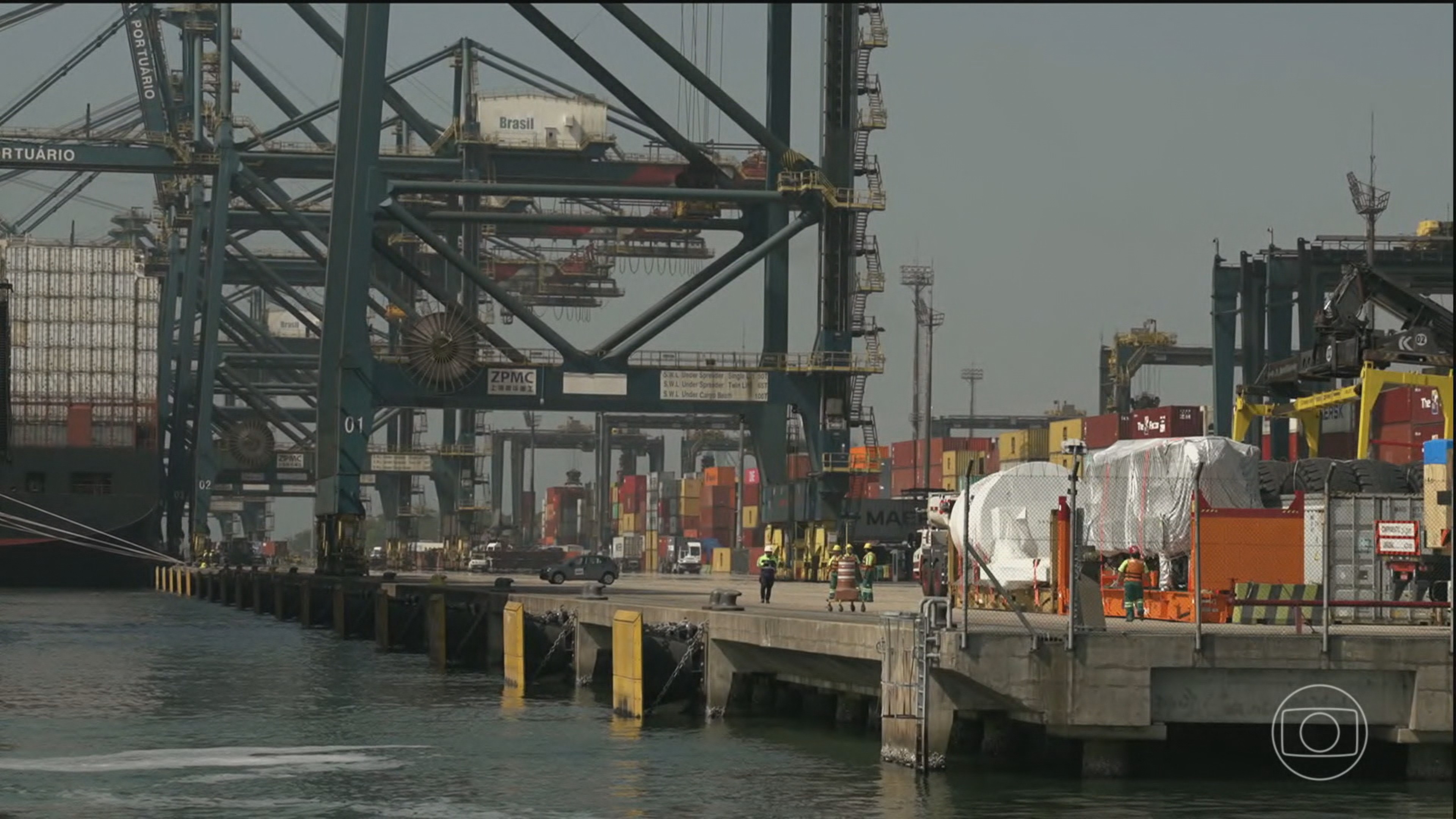
Experts assess that, as with the 2025 tariff, there is room for Brazil to negotiate this new US tariff threat.
Jornal Nacional/ Reproduction
At least three agribusiness sectors are in the US to try to reverse the new round of tariffs proposed by Donald Trump against Brazilian products, in a public hearing taking place this Monday (6), in Washington.
This is the case of companies and associations linked to the export of instant coffee, fish and honey, which are not among the main volumes sold to the United States, but ended up joining Trump's offensive to expand their negotiating power on other fronts.
Do you have any suggestions for reporting? Send to g1
"We know that all of this is part of a broader negotiation. The United States is seeking an agreement on issues such as critical minerals, rare earths, PIX, big techs and other issues", said Aguinaldo Lima, executive director of the Brazilian Soluble Coffee Industry Association (Abics).
On June 1, Trump proposed 25% tariffs on Brazilian goods, after an investigation into different topics, such as illegal deforestation, piracy and PIX. The following day, he announced additional fees of 12.5% for 60 countries for failures to combat forced labor, including Brazil.
In both cases, a long list of exceptions was presented to avoid a price rise in the American market.
Beef, one of the products most exported by Brazil to the USA, entered the list, despite being the target of criticism and investigations opened by the American president. One of them investigates whether Brazilian slaughterhouses that produce in the USA are concentrating the market and contributing to a spike in meat prices.
During the month of June, g1 spoke with companies and associations that are in the USA to defend Brazil against the threat of new surcharges. Next, see how each sector will be defended.
Honey will show that the USA cannot replace Brazil
☕ Instant coffee aims to impact prices and jobs
Fish highlights sustainability and food security
Honey will show that the USA cannot replace Brazil
Honey will be defended by both American and Brazilian importers, represented by the Brazilian Association of Honey Exporters and by Lambertucci Trade Solution, a company specialized in promoting the Brazilian product in other countries. countries.
According to the company's director, Joelma Lambertucci de Brito, the defense will highlight the following points:
that Brazil is the largest supplier of honey to the USA: Around 83% of organic honey imported by the USA is Brazilian. Considering only conventional honey, 75% of American imports originate in Brazil.
that there is no competition with the American producer in organic honey: while American beekeeping is mainly focused on pollination and conventional honey, Brazil has ideal conditions to produce organic honey.
the direct impact on the consumer: the imposition of tariffs should cause an increase in prices and even a lack of organic honey on American shelves. There is not enough domestic production to meet demand.
the difficulty of substitution: converting an area from conventional production to organic requires at least a year of transition. This means that the US would not be able to replace Brazilian supplies with another country in the short term.
the risk of losses and job losses in the US: this point of the defense will rely on the testimony of American importers, who have greater political weight.
Brito was one of the people who did lobbying work in the USA to explain the importance of Brazilian honey for the American market.
She participated in meetings with the Department of Agriculture (USDA) and the US Office of Trade (USTR) and, in these conversations, she noticed a huge lack of knowledge on the part of the American government about the importance of Brazilian honey in the USA.
She says she heard phrases like: "I consume this honey every day and I didn't know it came from Brazil."
According to Brito, this lack of knowledge happens because the Brazilian sector and government failed to publicize the importance of Brazilian honey for this market. "It's no use simply being the biggest supplier, you have to really propagate it", he comments.
"Let's believe that we will get this exemption. But if we don't, we will continue our lobbying work with opinion makers in Washington. This must be continuous to improve the support network for Brazilian honey", he concludes.
Individual coffee aims to impact prices and jobs
Among coffees, instant coffee is the only one that was left out of the list of tariff exemptions. Both coffee beans, roasted and ground coffee are protected if Trump goes ahead with the taxes.
The sector will be defended by the Brazilian Association of the Soluble Coffee Industry (Abics), with the support of BMJ Consultores Associados.
Among the points of defense are:
dependence on Brazilian soluble coffee: the USA produces only 6% of the soluble coffee it consumes. The rest is imported, mainly from Brazil and Mexico, says Abics.
Brazil's weight in imports: in 2024, before the tariffs, Brazil accounted for 37% of all soluble coffee imported by the United States.
the impact on inflation in the USA: without strong domestic production, tariffs should increase the price of soluble coffee for the American consumer.
the importance for the American economy: part of the added value of soluble coffee is done in USA: companies there fill and distribute, which creates jobs.
Aguinaldo Lima, executive director of Abics, says that tariffs on soluble coffee are illogical, precisely because Brazil is not a competitor to the Americans in this sector.
He also says that a curious fact is that flavored instant coffee benefited from the exemptions, while the traditional version was left out. "We believe there may have been some error in classifying the codes, because it doesn't make sense," he says.
Another hypothesis raised by Abics is that the Americans are trying to reindustrialize the sector.
"Even if the USA decides to produce more soluble coffee, they would still need to import the raw material. Furthermore, it is an industry that takes no less than four or five years to set up.
This, in fact, is one of the arguments we are presenting", he says.
Fish highlights sustainability and food security
The defense of Brazilian fish will be carried out by the largest fish association in the USA, the National Fisheries Institute (NFI), says Eduardo Lobo, president of the Brazilian Association of Fish Industries (Abipesca).
If the new rates are applied, the sector could be taxed at 37.5% in the United States.
According to him, the presentation should largely repeat the points made to the American government last year, when the sector faced tariffs of 50%.
Brazil does not compete with the USA: tilapia is the main example, since the USA depends on imports to supply the market.
Strategic supplier: according to the sector, Brazil functions as a security supplier for the USA, which today depends heavily on China to supply part of the demand for tilapia.
Sanitary, labor and environmental: the defense will highlight that Brazilian production follows international standards, without child or slave labor.
Low environmental impact production: the sector will also highlight that Brazilian fishing is predominantly artisanal, carried out by small family vessels, which reduces environmental impacts compared to large-scale industrial fishing.
G1 contacted the National Fisheries Institute to find out more details about the defense, but had no response until the publication of this report.
In testimony to the US Trade Office (USTR) on May 5, The entity's legal director, Bob DeHaan, asked the Trump administration not to tax fish imports. At the time, he said that the measure, if adopted, will put pressure on inflation for American consumers.
"US fish stocks are already exploited to their sustainable limit and, for climatic and geographic reasons, there are often no substitutes produced in the country itself. Therefore, American suppliers need to turn to the international market", said DeHaan, according to a note published by NFI.
The president of Abipesca reinforces that Brazil is not the main supplier of fish to the United States. The leadership in this market is occupied by China.
Currently, Brazilian products account for around 5% of all American fish imports. In recent years, however, US importers have been increasing purchases from Brazil in an attempt to reduce dependence on Chinese suppliers, he says Wolf.
Source: G1