Trump tariff: largest US fish association will defend Brazilian product at hearing
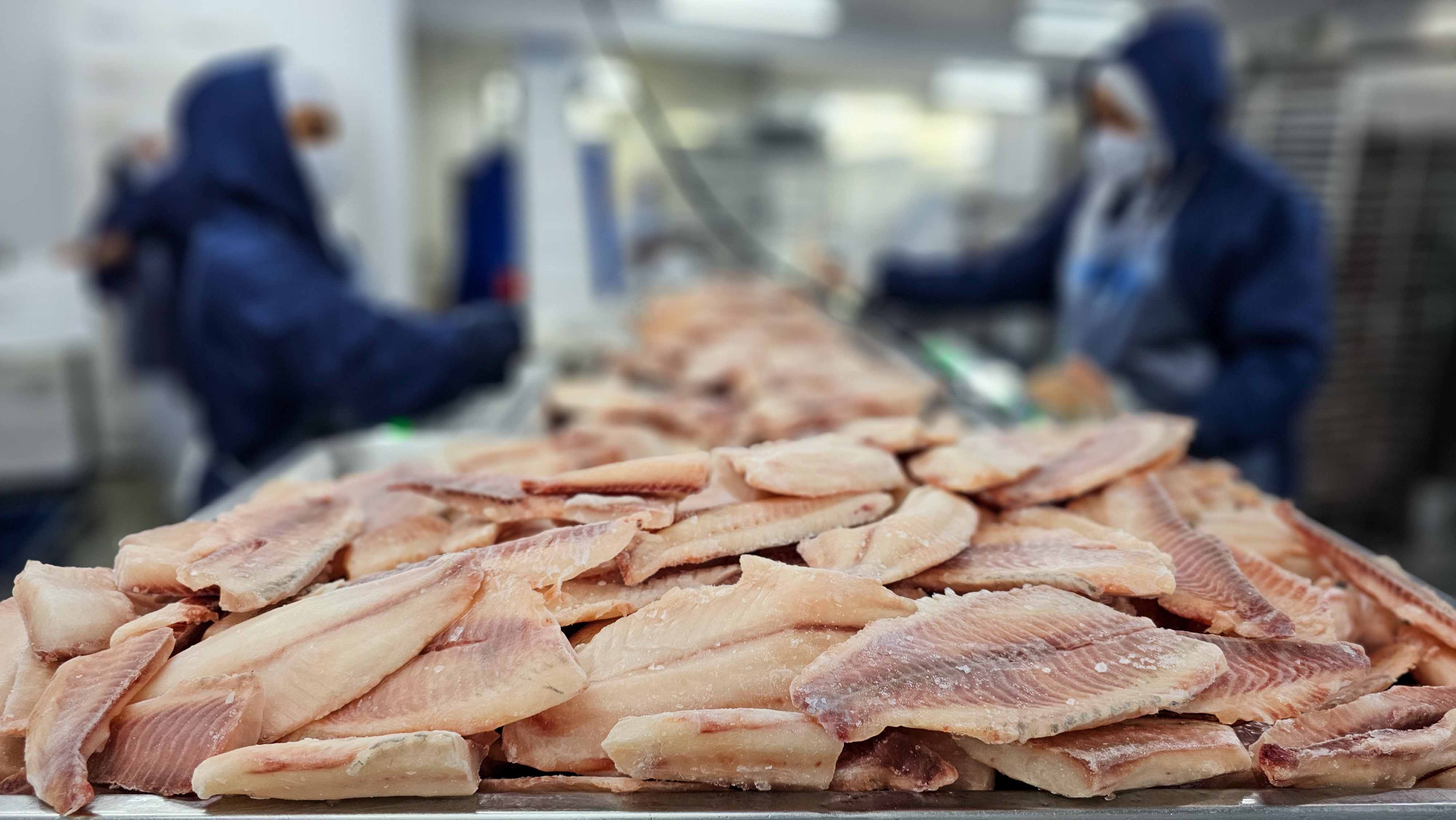
Tilapia Morada Nova de Minas
Diego Vargas/Seapa MG
Like instant coffee, Brazilian fish will be defended against the new tariffs proposed by Donald Trump, during a public hearing in the USA, on the 6th. If the new rates are applied, the sector could be taxed at 37.5% in the United States.
The defense of the national product will be carried out by the largest fish association in the USA, the National Fisheries Institute (NFI), says Eduardo Lobo, president of the Brazilian Association of Fish Industries (Abipesca).
According to him, the presentation should largely repeat the points made to the American government last year, when the sector faced 50% tariffs. a lot from China", he highlights.
➡ Context: on June 1st, Trump proposed 25% tariffs on Brazilian goods, following an investigation into illegal deforestation, piracy and PIX. The following day, it announced additional fees of 12.5% for 60 countries for failure to combat forced labor, including Brazil.
Lobo adds that the defense will also highlight the health, labor and environmental protocols adopted by Brazil. "We will emphasize that the country strictly complies with international standards and that there is no child or slave labor in our production", he says.
"Furthermore, unlike large-scale industrial fishing, our production is predominantly artisanal, carried out by small family vessels, which results in low environmental impact", he says.
G1 contacted the National Fisheries Institute to find out more details about the defense, but had no response until the publication of this report.
In testimony to the US Trade Office (USTR) on May 5, the entity's legal director, Bob DeHaan, asked the Trump administration not to tax fish imports. At the time, he said that the measure, if adopted, will put pressure on inflation for American consumers.
"US fish stocks are already exploited to their sustainable limit and, for climatic and geographical reasons, there are often no substitutes produced in the country itself. Therefore, American suppliers need to turn to the international market", said DeHaan, according to a note published by NFI.
The president of Abipesca reinforces that Brazil is not the main supplier of fish to the United States. The leadership in this market is occupied by China.
Currently, Brazilian products account for around 5% of all American fish imports. In recent years, however, US importers have been increasing purchases from Brazil in an attempt to reduce dependence on Chinese suppliers, says Lobo.
Read also:
Can US tariffs on Brazilian tilapia make the fish cheaper in Brazil? Understand
The soluble coffee sector goes to the US to ask for a review of new tariffs: 'There is no logic'
Exporters rush to escape new tariffs
Fish as a bargaining chip
When asked why fish were left out of the tariff exemption list, Lobo believes that the product is just one of the Brazilian items used by the US as bargaining chips in other negotiations.
"Every negotiation needs to have a bargaining chip. Like the fish has the lowest financial value in volumes traded with the USA when compared to other proteins, it ended up being used", comments Lobo.
Unlike fish, Brazilian beef has been a frequent target of criticism from Trump, who even accused the sector of using forced labor in production. Even so, the product was included in the list of exemptions from the two new tariffs.
Trump accuses Brazil of forced labor in livestock farming, but exempts beef from the new tariff
Sector seeks other markets
The Brazilian fish industry depends heavily on the American market.
According to Abipesca, 90% of all tilapia exported by Brazil goes to the USA. Considering all species, the American market absorbs around half of Brazilian exports.
"We are apprehensive, but the sector has matured a lot after everything it has been through. We are fighting hard not to reduce production or lose jobs", says Lobo. After the scare in 2025, the sector intensified the search for new customers.
Markets were opened in Asian countries, such as Singapore and Taiwan, in addition to Australia, in Oceania. In the Middle East, Brazil started exporting to the United Arab Emirates and Qatar. At the same time, it significantly increased its sales to China, which began to absorb an important portion of Brazilian production.
Despite the advances, the new markets have not yet compensated for the drop in exports to the United States.
"It has not compensated because it is the beginning of work. It is very difficult for you to replace the largest fish consumer market in the world in a year or two", he highlights.
Last year, Brazil exported US$ 370 million in fish to the United States, around US$100 million less than in 2024. For this year, the expectation was to reach US$500 million in sales, but the threat of new tariffs should frustrate this expectation.
Sectors anticipate exports with an eye on new US tariffs that begin in July
Source: G1